
Broken Blinds? Here’s When to Fix Them and When to Replace Them
When a blind stops working, the first instinct is to find a fix. That’s a reasonable starting point — but for most blind failures, repair isn’t as accessible as homeowners

Discover high-quality, affordable window treatments with your local, shop-at-home service.

Discover high-quality, affordable window treatments with your local, shop-at-home service.






Peace of mind with every install
Proudly serving Long Island
for over 10 years
We don’t leave until it’s perfect
5-Star Reviews on Google
| Feature | Long Island Custom Blinds | Big Box Stores |
|---|---|---|
| Free In-Home Consultation | Yes — we bring the showroom to you | No — visit the store and DIY |
| Custom Measurements | Every window is precisely measured | Often relies on standard sizes |
| Design Guidance | Expert help choosing colors, styles, and materials | You're on your own |
| Product Quality | Premium materials built to last | Often mass-produced, lower quality |
| Professional Installation | Offered with every order | May require 3rd party or self-install |
| Local Support & Service | Speak directly with your installer/designer | 1-800 number or store associate |
| Speed & Flexibility | Quick turnaround & flexible scheduling | Delays and rigid systems |
| Lifetime Client Relationship | We're your go-to for future projects & upgrades | One-and-done sale |
| Reputation in the Community | 5-Star reviews from Long Island homeowners | Mixed reviews, impersonal service |
| Pricing Transparency | Clear estimates — no surprise fees | Hidden fees for delivery or install |
| Value for Money | High quality at competitive prices | Lower upfront, higher long-term cost |
| Feature | Long Island Custom Blinds | Big Box Stores |
|---|---|---|
| Free In-Home Consultation | ✓ | × |
| Custom Measurements | ✓ | × |
| Design Guidance | ✓ | × |
| Product Quality | ✓ | × |
| Professional Installation | ✓ | × |
| Local Support & Service | ✓ | × |
| Speed & Flexibility | ✓ | × |
| Lifetime Client Relationship | ✓ | × |
| Reputation in the Community | ✓ | × |
| Pricing Transparency | ✓ | × |
| Value for Money | ✓ | × |
From cozy entryways to bright kitchens, get inspired by these curated looks and make every room feel like home.

Brighten your cooking space with blinds and shades that bring warmth, style, and light control to every meal.

Create a cozy retreat with blackout or light-filtering shades that help you rest and recharge in comfort.

Frame your view beautifully with drapes and blinds that balance natural light and privacy for everyday living.

Enjoy moisture-resistant window treatments that add privacy and durability without sacrificing design.

Keep playtime safe and stylish with cordless shades designed for light control, safety, and fun patterns.
Peace of mind with every install
Proudly serving Long Island
for over 10 years
We don’t leave until it’s perfect
5-Star Reviews on Google

We make finding the perfect window treatments easy with our shop-at-home service. Simply schedule a free consultation, and we’ll bring a wide selection of shades, blinds and shutters samples directly to your home. This allows you to see samples in your space, ensuring they fit perfectly with your décor and lighting.

Our experts will provide personalized recommendations, take precise measurements, and offer transparent, affordable pricing—without the hassle of visiting a showroom.

We offer installation, so you can enjoy a seamless, custom-fit solution, all while saving time and money. Experience the convenience of choosing quality window treatments from the comfort of your home.
Pair financing with our free in-home consultation, expert measuring,
and professional installation for a smooth, stress-free experience from start to finish.


Finding the right window blinds near you doesn’t have to be a challenge. At Long Island Custom Blinds, we make the process simple by offering in-home consultations, expert recommendations, and precise measurements to ensure a perfect fit.
Our team serves all of Sands Point and the surrounding areas, bringing samples directly to your door so you can see how different styles will look in your space.
From modern designs that maximize natural light to blackout options for bedrooms, we have something for every need and budget. Plus, with our professional installation services, you can rest assured that your window shades, blinds, or shutters will be securely mounted and built to last.
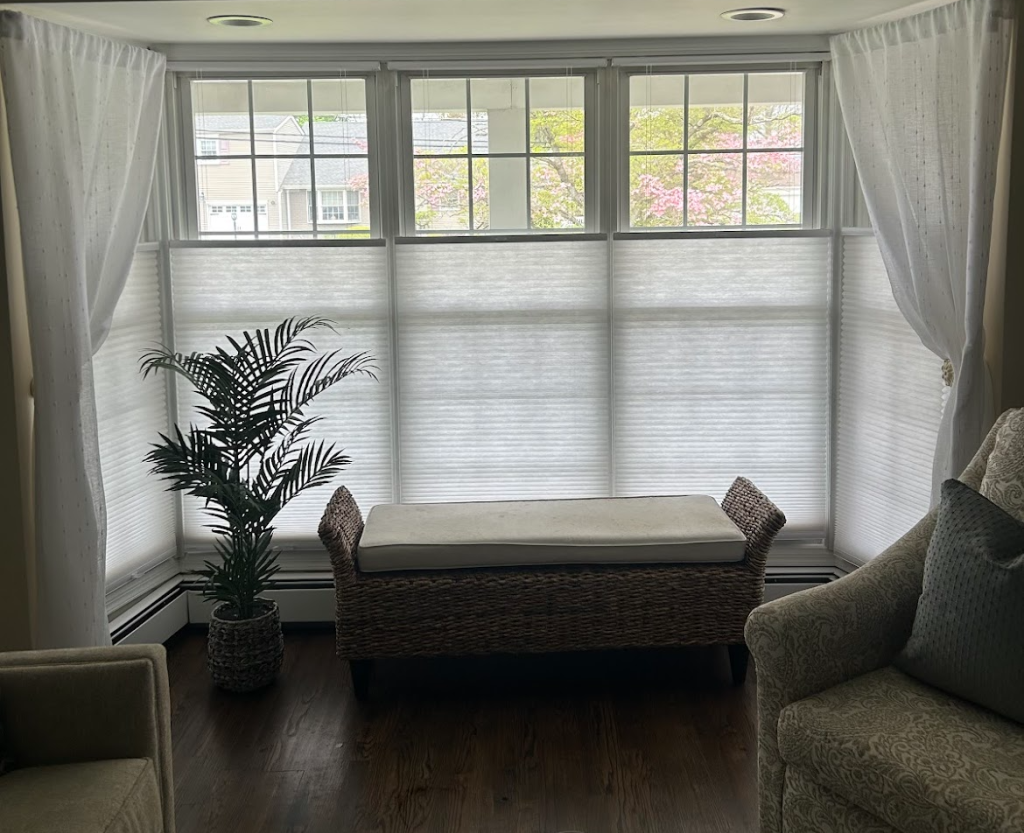

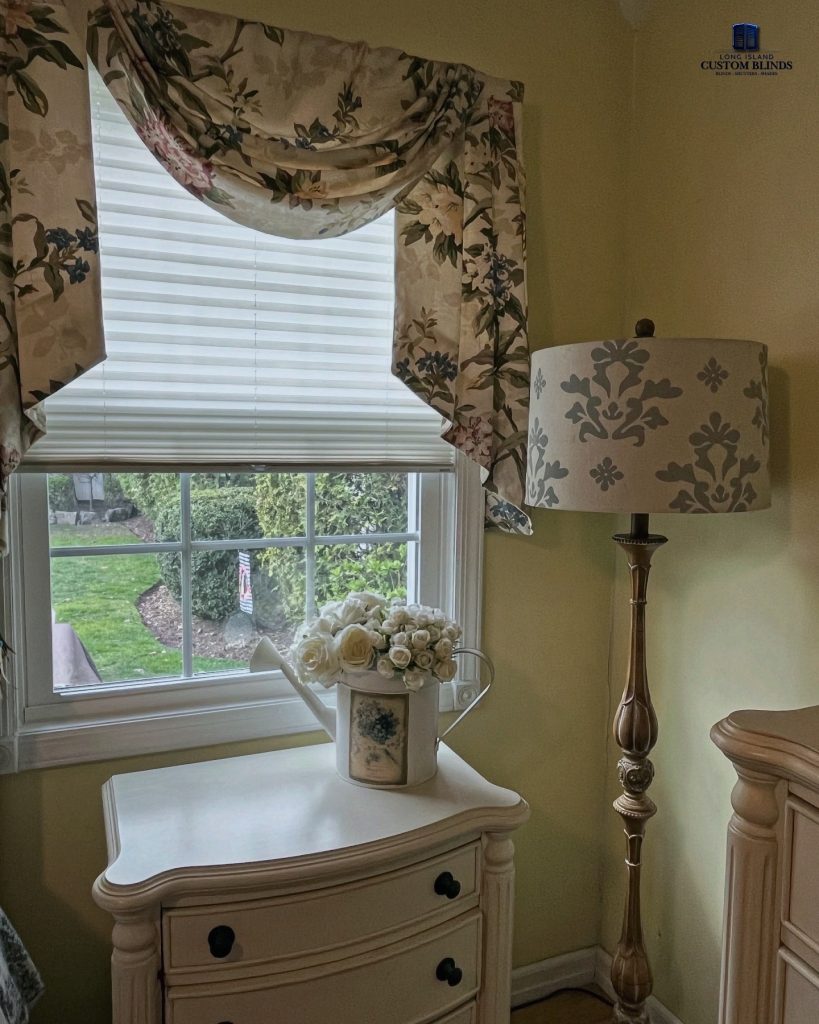





Occupying the northernmost tip of the Cow Neck Peninsula approximately 30 miles east of Manhattan, Sands Point represents the apotheosis of Gold Coast exclusivity—a village so deliberately isolated, so carefully preserved, and so thoroughly dominated by extraordinary wealth that it functions less as a conventional suburb than as a private estate district that happens to possess municipal governance. With a population of merely 2,700-2,800 residents spread across approximately 5.4 square miles, Sands Point maintains population density so low it approaches rural levels despite sitting squarely within the New York metropolitan region. This is no accident but rather the deliberate result of zoning restrictions, minimum lot requirements, and community preferences that prioritize preservation of estate character over all other considerations. If Manhasset represents old money and understated elegance, Sands Point represents old money taken to its logical conclusion: vast properties, near-total privacy, and wealth so established it requires no display.
The name “Sands Point” derives from the sandy composition of the peninsula’s northernmost point, though the area was known by various names before formal incorporation. The Matinecock people originally inhabited the region before European colonization brought Dutch and English settlers in the 17th century. For most of its history through the 19th century, the area remained agricultural and sparsely populated. The transformation began in the late 19th century when wealthy industrialists and financiers discovered the peninsula’s potential—dramatic water views on three sides (Long Island Sound to the north and east, Hempstead Harbor to the west), relative isolation from urban centers, and topography suited to grand estates. Between roughly 1890 and 1930, the greatest concentration of Gold Coast estates emerged here, with families like the Guggenheims, Goulds, and other Gilded Age titans establishing properties that would define the region’s character for generations.
The village incorporated in 1910, a defensive move by estate owners seeking control over land use and development to prevent the suburban subdivision and commercialization transforming other Long Island areas. This incorporation represented not the creation of a community in conventional terms but rather the establishment of legal structures to preserve estate character. That fundamental purpose—preservation rather than development—continues defining Sands Point’s identity and governance more than a century later.
Sands Point’s demographic profile reveals a community that exists in rarefied territory even among affluent American suburbs. The sheer extremity of wealth concentration, the deliberate limitation of population, and the unusual age of many residents create patterns found in few other places.
The population of approximately 2,700-2,800 residents has remained remarkably stable for decades, fluctuating only modestly despite enormous appreciation in property values and dramatic changes in surrounding regions. This stability reflects the village’s success at limiting development and maintaining estate character—there simply isn’t room for population growth given minimum lot sizes and resistance to subdivision. The low population density—roughly 500 residents per square mile—compares to rural areas rather than suburban communities, despite location within metropolitan New York. For context, neighboring Port Washington has roughly 3,500 residents per square mile; Manhattan exceeds 70,000 per square mile.
Racial and ethnic composition shows overwhelming homogeneity characteristic of the most exclusive American communities. White residents comprise approximately 90-93% of the population, with Asian residents representing the only minority group with meaningful presence at roughly 4-6%. Hispanic or Latino residents account for approximately 2-3%, and Black residents typically comprise 1% or less. These percentages have remained essentially unchanged for decades, suggesting whatever mechanisms maintain demographic composition continue operating effectively.
Arguments explaining demographic homogeneity:
Extreme wealth barriers: Sands Point properties routinely sell for $5-20 million, with waterfront estates frequently exceeding $15-30 million and some properties reaching $50 million+. These price points restrict access to perhaps the wealthiest 0.1-0.5% of American households. Given substantial racial wealth gaps in the United States—median white household wealth approximately 8-10 times higher than median Black household wealth—extreme property values create demographic filtering essentially guaranteeing overwhelming whiteness regardless of explicit preferences.
Minimum lot requirements: Zoning mandates minimum lot sizes of 1-2 acres throughout most of the village, with some areas requiring even larger minimums. These requirements prevent subdivision of existing estates and ensure that even “modest” new construction occupies substantial land, driving costs beyond all but the wealthiest buyers. Annual property taxes routinely exceed $50,000-100,000+ for larger properties, creating ongoing costs that require substantial wealth to sustain.
Social networks and institutional gatekeeping: Properties often sell through private networks before reaching open market. Estate sales, family succession, and social connections facilitate transactions among people who already belong to relevant social circles. The village’s country clubs, yacht clubs, and social organizations create networks that bond existing residents while potentially making outsiders feel unwelcome or simply unaware of available properties. These network effects naturally perpetuate demographic similarity.
Limited housing stock and restricted development: With approximately 700-800 housing units total in the village and minimal new construction allowed, opportunities to enter the community remain extraordinarily limited. In typical years, perhaps 10-20 properties sell, meaning access requires both extraordinary wealth and fortunate timing. The village strictly limits subdivision and essentially prohibits multi-family housing, apartment buildings, or any housing types that might provide entry at various price points.
Self-selection and cultural fit: Families choosing Sands Point self-select for characteristics correlated with the village’s demographic profile. Those seeking ethnic or economic diversity choose other communities; those valuing privacy, exclusivity, and estate living in predominantly white social contexts find Sands Point appealing. This selection perpetuates existing patterns.
The reality of exclusion:
Whether through intentional discrimination, structural barriers, market forces, or combination thereof, Sands Point maintains demographic homogeneity that raises questions about access and equity. The village’s extreme wealth requirements exclude not only racial minorities disproportionately but also the vast majority of white Americans—perhaps 99%+ of all American households regardless of race could not afford Sands Point properties. This represents less traditional racism than plutocratic exclusion, though racial disparities in wealth mean the practical effect maintains overwhelming whiteness. Whether this constitutes problematic segregation or legitimate private property rights and freedom of association remains philosophically contested.
Household income and wealth reach stratospheric levels difficult to quantify precisely. Median household income estimates exceed $200,000-250,000, though these figures dramatically understate actual financial resources. Many Sands Point residents derive income from investments, family trusts, business ownership, and wealth sources that may not appear as taxable income. Net worth among substantial portions of the population likely reaches tens or hundreds of millions of dollars, with some families possessing wealth measured in billions.
The village contains numerous properties owned by current or former CEOs of major corporations, hedge fund managers, private equity principals, entertainment industry executives, professional athletes, and inheritors of industrial-era fortunes. This concentration of extreme wealth creates a community where million-dollar expenditures constitute routine decisions and where neighbors may include individuals known internationally for business accomplishments or family names.
Age distribution skews older than typical suburbs, with median age approaching 50-55 years. This reflects several factors: the extreme wealth required for entry means most residents arrive already wealthy rather than building wealth after moving there, which correlates with older age; large estates suit empty-nesters more than young families needing proximity to schools and activities; and some families use Sands Point properties as secondary residences or seasonal homes, with primary residences elsewhere. However, the presence of families with school-age children means the community isn’t exclusively elderly, though younger residents remain minority.
Housing characteristics define Sands Point’s essential character. The housing stock consists almost exclusively of large single-family estates on substantial lots. Properties typically feature 5,000-15,000+ square foot houses, though some historic mansions exceed 20,000-30,000 square feet. Lots of 1-5 acres predominate, with some properties encompassing 10-20+ acres. Waterfront estates command the highest values, offering private beaches, yacht docks, and dramatic Long Island Sound views. Architectural styles vary—Tudor Revival, Colonial Revival, Mediterranean, contemporary—though all share scale and quality reflecting extraordinary construction budgets.
The village contains essentially no apartments, condominiums, townhouses, or other housing types that might provide access at various price points. A handful of smaller, older homes on less-than-acre lots provide the village’s “affordable” housing, though even these typically sell for $2-4 million.
Education in Sands Point presents unusual characteristics reflecting the small population and extreme wealth. The village operates its own school district—the Sands Point Union Free School District—though it consists of a single school, Sands Point Elementary School, serving approximately 40-60 students in grades K-4. This represents one of New York State’s smallest public school districts, serving only village residents and maintaining per-pupil expenditures that likely exceed $40,000-50,000 annually given the small enrollment and substantial tax base.
Students completing fourth grade must continue education elsewhere, as the village lacks middle or high schools. Most students attend Port Washington schools for grades 5-12, entering the Port Washington Union Free School District through contractual arrangements. Some families choose private schools—various prestigious institutions throughout the North Shore region or Manhattan private schools accessible via commute.
The Sands Point school situation creates unusual dynamics:
Arguments for the arrangement: The elementary school provides intimate educational environment with extraordinarily low student-teacher ratios, extensive resources, and close community connections. Families value local schooling for younger children while acknowledging that middle and high school students benefit from larger schools offering more extensive programming, extracurriculars, and social opportunities than a village of 2,800 could possibly support. The arrangement allows Sands Point to maintain village identity through local elementary education while accessing superior secondary education facilities.
Arguments against the arrangement: The extreme per-pupil spending at the elementary school reflects inefficiency rather than quality—similar or better education could be achieved at far lower per-pupil costs in normally-sized districts. Sending students to Port Washington for middle and high school creates discontinuity and social adjustment challenges. The two-district arrangement complicates governance, administration, and educational coherence. Students may struggle integrating into Port Washington’s more diverse, larger school environment after elementary years in an insular, wealthy micro-school.
The balanced reality: The arrangement persists because Sands Point residents prefer maintaining village elementary school for community identity reasons while pragmatically acknowledging that secondary education requires resources only larger districts provide. The system works for families who can afford it—and all Sands Point families certainly can—though efficiency considerations suggest the arrangement makes limited rational sense from pure educational perspective.
Private school usage runs high among Sands Point families, with substantial percentages choosing private education for some or all grades. Private schools offer social network access, smaller environments, particular educational philosophies, or simply preference for exclusive institutions. However, the quality of Port Washington public schools means many families utilize public education for middle and high school without sacrificing educational outcomes.
For higher education, Sands Point students pursue prestigious institutions nationally and internationally, with Ivy League universities, highly selective liberal arts colleges, and top universities heavily represented. The combination of family wealth, strong preparation, legacy admissions advantages for many families, and social capital creates educational opportunities unavailable to most Americans.
Tourism in Sands Point operates entirely through Sands Point Preserve, the 216-acre public park encompassing three Gold Coast mansions—Hempstead House, Falaise, and Castlegould—that provide the only public access to the village for most people. Beyond the preserve, Sands Point remains almost entirely private, with public roads providing scenic drives past gated estates but essentially no tourist infrastructure, commercial districts, or attractions.
Sands Point Preserve represents Long Island’s most significant Gold Coast historic site open to the public, offering tangible connection to the Gilded Age and Jazz Age wealth that defined the region. The preserve’s history embodies Gold Coast patterns: Howard Gould, son of railroad magnate Jay Gould, purchased the property in 1900 and built Castlegould (the estate’s original mansion). Finding it inadequate, he commissioned Hempstead House, a castle-like structure completed in 1912. After Howard and his wife Katherine divorced, the estate eventually passed to his nephew, who sold it to Daniel Guggenheim in 1917. Daniel’s son, Captain Harry Guggenheim (aviator, publisher, philanthropist), built Falaise in 1923, a Norman-style manor house that would serve as his residence for decades.
The Guggenheim family owned the property until 1971, when Nassau County purchased it to create a public preserve preventing private development. This acquisition—controversial at the time given the substantial cost—now appears prescient, preserving one of the few Gold Coast estates accessible to the public in largely original condition.
The three mansions provide varied experiences:
Hempstead House: The castle-like structure exemplifies early 20th-century grandeur, with approximately 50 rooms encompassing roughly 40,000 square feet. The building suffered decades of neglect before preservation efforts began, resulting in partial restoration that limits what can be displayed. Tours showcase remaining architectural features, original details, and interpretation of Gould family history and Gold Coast lifestyle. The building also hosts events, weddings, and cultural programming.
Falaise: Captain Harry Guggenheim’s Norman manor house remains the preserve’s most completely furnished mansion, containing period furnishings, art collections, and personal artifacts that provide intimate glimpses into Guggenheim family life. The building’s smaller scale (relative to Hempstead House) and more complete preservation create more evocative historical experience. Tours interpret Guggenheim’s fascinating life—aviator in World War I, friend of Charles Lindbergh, publisher of Newsday, ambassador to Cuba—and his role in Long Island’s cultural and social history.
Castlegould: The original Gould mansion now functions primarily as the preserve’s visitor center and event space, with some interpretive exhibits but less focus on historical tours. The building provides essential preserve infrastructure while representing the estate’s earliest phase.
Beyond the mansions, the preserve offers approximately 6 miles of nature trails through forests, meadows, and along shoreline, providing hiking, nature study, and ecological education. The trails attract walkers, runners, school groups, and families seeking outdoor recreation. Interpretive signage explains ecological features, though trail infrastructure remains relatively basic compared to more developed parks.
The preserve attracts approximately 50,000-75,000 visitors annually—substantial for a local historic site but modest compared to major museums or attractions. Visitation includes school groups (thousands of students annually participate in educational programming), tourists seeking Gold Coast history, local residents using trails for recreation, and event attendees (the mansions host weddings, corporate events, and cultural programming).
Arguments supporting the preserve’s significance:
The preserve provides irreplaceable public access to authentic Gold Coast history, offering experiences impossible to replicate. The three mansions represent different eras, families, and architectural styles, creating educational variety. Nature trails preserve ecological resources and provide recreation in an increasingly developed region. Educational programming serves important purposes connecting students to local and national history. The preserve protects 216 acres from development that would otherwise have occurred, maintaining open space and waterfront access. Without public acquisition, these estates would have been demolished or subdivided, eliminating historical resources forever.
Arguments acknowledging limitations:
The preserve operates with limited resources, constraining interpretive programming, mansion restoration, maintenance, and visitor services. Decades of neglect before public acquisition left buildings requiring millions in restoration work not yet completed. Visitor numbers remain modest, raising questions about cost-effectiveness given the substantial public investment required. The preserve primarily attracts local and regional visitors rather than destination tourists. Competition from numerous other attractions in the metropolitan region limits visitation growth. The preserve requires ongoing public subsidy rather than operating self-sufficiently.
The balanced assessment:
Sands Point Preserve provides genuine value for heritage tourism, education, and conservation despite resource limitations and modest visitation. The preserve represents public investment worthwhile for historical preservation, educational access, and conservation purposes even if economic returns alone wouldn’t justify costs. Visitors seeking Gold Coast history find the most accessible, authentic experience on Long Island, though expectations should be calibrated—this is a well-preserved local resource with significant limitations rather than a major destination attraction comparable to Vanderbilt mansions in the Hudson Valley or Newport estates.
Beyond the preserve, Sands Point offers essentially no tourism infrastructure. The village contains no hotels, restaurants, shops, or commercial establishments catering to visitors. Public roads wind through the village past gated estates, offering scenic drives and glimpses of extraordinary properties through gates and hedges, but deliberate privacy makes tourism based on architecture or estate viewing essentially impossible. The village’s beaches, yacht clubs, and recreational facilities operate privately for residents and members only, preventing public access. This exclusion is deliberate—Sands Point residents value privacy and oppose tourism development that would increase traffic, parking demands, or public presence.
Arguments for tourism development:
The village’s Gold Coast heritage, waterfront location, architectural treasures, and Fitzgerald connections (Sands Point inspired aspects of “The Great Gatsby”) provide foundation for expanded tourism. Enhanced interpretation, estate tours (if owners cooperated), heritage trails, and cultural programming could generate economic activity and educational value. The preserve alone cannot adequately tell the Gold Coast story when 95% of relevant properties remain inaccessible.
Arguments against tourism development:
Sands Point residents overwhelmingly oppose tourism development that would compromise privacy, increase traffic, or alter community character. The village’s wealth means tourism revenue is unnecessary for fiscal health. Property values depend partially on exclusivity that tourism would compromise. The village lacks infrastructure—parking, roads, commercial facilities—to support tourism and residents oppose investments that would enable it. Legal and practical barriers prevent accessing private estates even if tourism development were desired. The community’s essential purpose—preserving estate character and privacy—contradicts tourism promotion.
The realistic reality:
Sands Point will remain a private enclave with tourism limited entirely to Sands Point Preserve. The rest of the village functions as residential sanctuary for extraordinarily wealthy residents who can afford privacy and have structured their community to preserve it. Visitors seeking Gold Coast experiences should visit the preserve and adjust expectations accordingly—Sands Point itself remains deliberately closed to tourism, accessible only to residents and their guests. This exclusion represents the logical conclusion of wealth and zoning power: a community that has successfully isolated itself from the public despite occupying desirable geography within a major metropolitan region.
