Most people assume shopping for window treatments works like any other home purchase — walk in, look around, pick something. But window treatments are one of the few products where seeing them in a showroom is almost useless compared to seeing them in your actual home. The lighting is different. The walls are different. The window dimensions are different.
Here’s an honest breakdown of both options — and why one consistently produces better results.
The Difference in Experience and Convenience
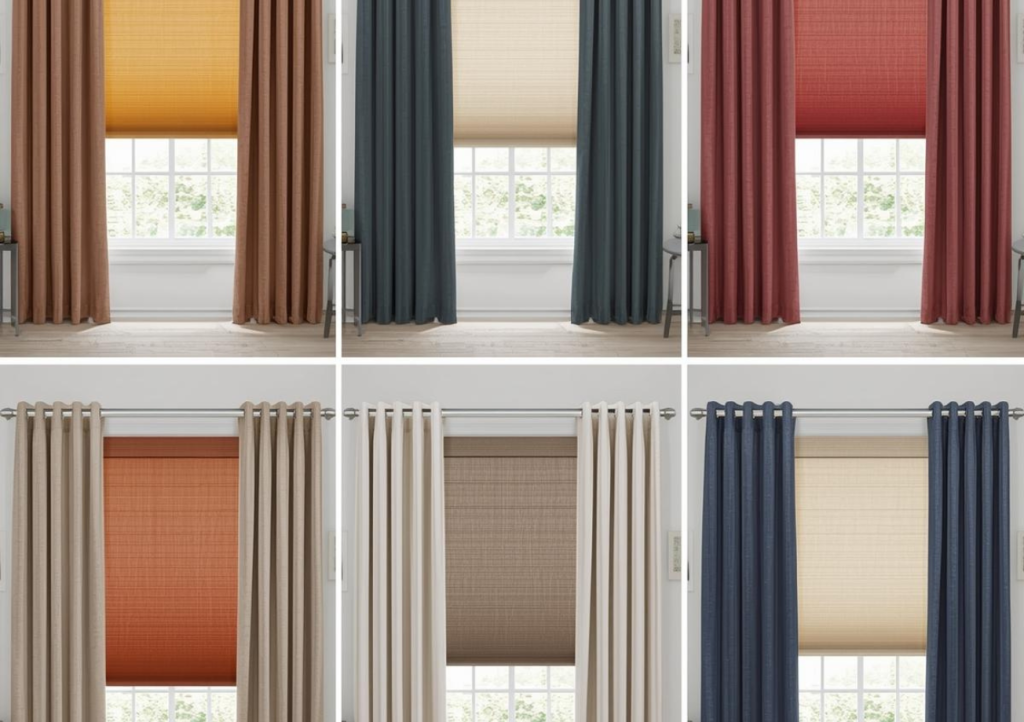
A shop-at-home appointment means a design specialist comes to you with full sample collections — including switches of different textures, fabrics and colors across every style and price point. You’re making decisions standing in the room where the treatments will actually live.
A store visit works the other way. You travel to a showroom, view samples under controlled lighting that has nothing to do with the afternoon sun that hits your living room window, and try to mentally transpose what you’re seeing onto a room you’re no longer standing in. Then you go home, second-guess your choices, and often end up scheduling a second trip.
The time difference is significant. A single in-home appointment typically handles every window in one visit. Store-based shopping routinely takes two or three visits before an order is placed — and that’s before any measurement or installation is scheduled.
Why Measurements and Design Decisions Are More Accurate at Home
This is the part that trips people up most often. Window treatment sizing is precise in a way that leaves almost no margin for error. Inside-mount blinds need exact clearance depth. Outside-mount shades need specific overlap measurements to actually block light. Being off by a quarter inch changes how a blind hangs, seals, and operates.
When a specialist is in your home, they measure every window themselves — accounting for handles, cranks, sill depth, and any obstructions that would affect installation. That information feeds directly into the order. Nothing gets lost in translation.
When you visit a store and measure yourself, or estimate, or rely on dimensions from when you bought the house — that’s where mistakes happen. And fabrication errors on custom window treatments often can’t be returned. You’re either living with a bad fit or reordering at your own cost.
Beyond measurements, design decisions just land differently at home. A fabric that looks warm in a showroom can feel completely off against your specific wall color and natural light. Seeing a sample held up to your actual window — at the time of day you’re usually in that room — removes the guesswork entirely.
Overall Value: What You Actually Get Out of Each Option
A store visit gives you a physical space to browse without commitment. That has some value if you’re in early research mode and want to understand what’s available before making any decisions.
But for the actual selection and purchase process, shop-at-home wins on almost every metric:
- Personalized recommendations — A specialist sees your room, your furniture, your light, and makes suggestions specific to that context. Showroom staff are working without that context entirely.
- Fewer costly mistakes — Wrong sizes, wrong fabrics, and style mismatches happen far more often when decisions are made away from the actual installation environment.
- One continuous process — Consultation, measurement, and ordering happen in the same appointment. No multiple trips, no handoff between a salesperson and a separate measurement team, no gaps where details get lost.
- Faster installation timelines — When measurements are accurate the first time, there are no delays from remeasurement or reorders. The order goes in clean and comes back ready to install.
The economics favor in-home service too. Mistakes in custom window treatments are expensive. A single reorder on a set of cellular shades for a standard-sized room can run several hundred dollars. The cost of a professional in-home consultation — which most reputable local providers offer free — is nothing compared to the cost of one fabrication error caused by imprecise self-measurement.
When a Store Visit Still Makes Sense
To be fair: if you’re entirely new to window treatments and want to touch fabrics, see hardware options, and understand the range before you talk to anyone, a showroom visit is a reasonable starting point. It can shorten the in-home consultation because you already have a general sense of direction.
But it should be a first step, not the whole process. Choosing and ordering from a showroom without a professional in-home measurement is the version of this process that leads to the complaints you read in reviews — blinds that don’t fit, shades that gap at the sides, and installation appointments that turn into problems.
The Bottom Line
For most homeowners buying window treatments, shop-at-home service is the better option — not because it’s more convenient (though it is), but because the decisions made in your actual space are more accurate, more confident, and less likely to result in expensive corrections later.
The showroom is useful for browsing. The home is where you buy.
Ready to see the difference? Call Long Island Custom Blinds at (516) 580-1958 to schedule a free in-home consultation. A specialist will bring samples directly to your home, measure every window, and help you find the right fit — without a single trip to a store.