Aluminum blinds are lightweight, affordable, and moisture-resistant, making them ideal for humid spaces like bathrooms and kitchens, but they dent easily, offer minimal insulation, and can look utilitarian. Faux wood blinds provide superior insulation, an upscale wood-like appearance, better durability against impacts, and enhanced privacy, but come at a higher price point. For Long Island homeowners, the choice often depends on room location, budget, and whether you’re dealing with high-humidity environments or seeking energy efficiency against our region’s temperature extremes.
Understanding Aluminum Blinds: Benefits and Limitations
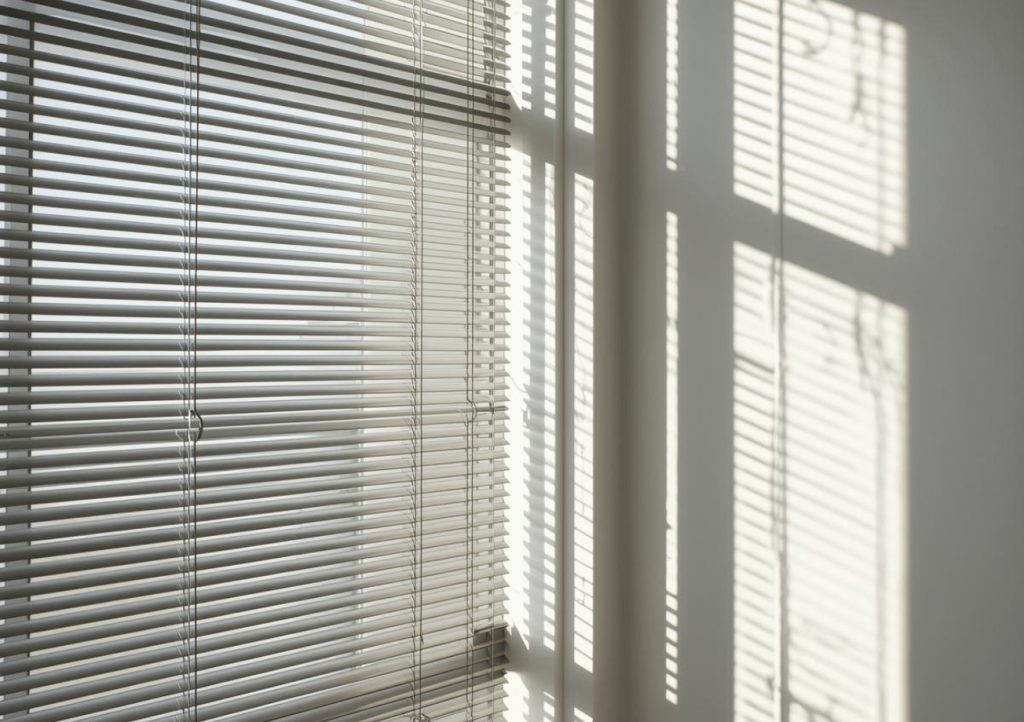
Aluminum blinds have been a staple in window treatments for decades, and for good reason. These metal blinds consist of horizontal slats connected by cords or tapes, offering adjustable light control through a tilting mechanism.
Advantages of Aluminum Blinds
Affordability stands out as aluminum blinds’ most compelling feature. They typically cost 30-50% less than faux wood alternatives, making them budget-friendly for homeowners covering multiple windows throughout Nassau County or Suffolk County properties.
Moisture resistance makes aluminum blinds particularly suitable for Long Island’s humid summers and waterfront environments. Unlike real wood that warps in moisture, aluminum withstands bathroom steam, kitchen humidity, and the salt air prevalent in coastal communities from the Hamptons to Oyster Bay without deteriorating.
Lightweight construction simplifies installation and operation, especially important for larger windows common in Long Island ranch homes and newer construction. The slim profile works well in shallow window frames typical of many Garden City colonials and Roslyn Cape Cods.
Easy maintenance requires only occasional dusting or wiping with a damp cloth—a practical advantage for busy households in Great Neck, Huntington, or anywhere across our service area.
Drawbacks of Aluminum Blinds
Denting susceptibility represents aluminum’s most significant weakness. The slats bend easily from accidental impacts, pet contact, or even aggressive cleaning. Once dented, they’re nearly impossible to repair and create an unsightly appearance.
Poor insulation means aluminum blinds do little to block Long Island’s summer heat gain or winter cold loss. The metal actually conducts temperature, potentially making rooms less comfortable and increasing your energy bills—a consideration given our region’s AC-intensive summers and cold winter months.
Noise factor can be annoying, as aluminum slats clink together when windows are open to ocean breezes or when adjusting the blinds. This metallic sound bothers many homeowners seeking a peaceful environment.
Limited aesthetic appeal gives aluminum blinds an institutional, office-like appearance that doesn’t complement the traditional architecture of Long Island homes or the upscale interiors common in Manhasset, Cold Spring Harbor, or Southampton properties.
Exploring Faux Wood Blinds: The Premium Alternative
Faux wood blinds combine composite materials or PVC construction with wood-grain textures and finishes, creating an appearance nearly indistinguishable from real wood at a fraction of the cost and with superior performance characteristics.
Advantages of Faux Wood Blinds
Superior insulation helps faux wood blinds combat Long Island’s climate challenges. The composite material provides an insulating barrier against summer heat and winter cold, potentially reducing energy costs—particularly valuable given our extended air conditioning season and heating requirements.
Authentic wood appearance elevates any room’s design without the maintenance headaches of real wood. Available in numerous stains and painted finishes, faux wood complements everything from historic North Shore estates in Locust Valley to contemporary Bridgehampton beach houses.
Exceptional durability means faux wood resists warping, cracking, fading, and peeling even in challenging conditions. The slats won’t dent like aluminum, making them ideal for active households in Commack, Babylon, or Bay Shore with children and pets.
Moisture resistance rivals aluminum while offering better aesthetics. Faux wood performs beautifully in bathrooms, kitchens, and waterfront properties throughout Montauk, Greenport, and other coastal communities where humidity and salt air challenge traditional materials.
Enhanced privacy comes from thicker slats with tighter closure compared to aluminum, blocking more light when closed—addressing the privacy concerns of homes with close neighbors common throughout Nassau County developments.
Drawbacks of Faux Wood Blinds
Higher cost typically runs 40-70% more than aluminum blinds. However, Long Island Custom Blinds helps homeowners understand this investment often pays dividends through longevity, energy savings, and home value enhancement.
Heavier weight requires sturdier mounting hardware and may limit sizing for extremely large windows. Extra-wide windows in Smithtown great rooms or Patchogue sunrooms may need center support brackets or divided configurations.
Potential for sagging exists in wider blinds over time, particularly in south-facing windows exposed to Long Island’s intense summer sun. Quality matters significantly—premium faux wood options maintain their structure better than budget alternatives.
Making the Right Choice for Your Long Island Home
Consider aluminum blinds when working with tight budgets, covering rental properties, addressing purely functional spaces like laundry rooms, or equipping windows in garages and basements. They also work well as temporary solutions while planning comprehensive window treatment upgrades.
Choose faux wood blinds for living spaces, bedrooms, dining rooms, and anywhere appearance matters. They’re particularly worthwhile for homes in Rockville Centre, Hauppauge, Islip, Sayville, or East Hampton where property values justify quality investments. Faux wood also makes sense for energy-conscious homeowners throughout Syosset, Jericho, Plainview, and other communities seeking to reduce utility costs.
For waterfront properties from Port Washington to Sag Harbor, faux wood’s combination of moisture resistance and aesthetic appeal typically outweighs the cost difference. Similarly, families throughout Massapequa, Northport, and Glen Cove appreciate faux wood’s durability against the wear and tear of daily life.
Experience the Difference with Professional Consultation
Choosing between aluminum and faux wood blinds involves considerations beyond basic pros and cons. Window size, room function, architectural style, light control needs, and Long Island’s unique climate challenges all factor into the optimal selection.
Long Island Custom Blinds brings decades of experience helping homeowners throughout Nassau County, Suffolk County, and all Long Island communities select window treatments that balance aesthetics, functionality, and budget. Our free in-home consultations include personalized recommendations, exact measurements, material samples you can view in your actual lighting conditions, and transparent pricing without pressure.
Contact Long Island Custom Blinds today at https://longislandcustomblinds.com to schedule your complimentary design consultation. Let us help you choose the perfect blinds—whether aluminum, faux wood, or another solution entirely—that enhance your home’s comfort, beauty, and value for years to come.