
Broken Blinds? Here’s When to Fix Them and When to Replace Them
When a blind stops working, the first instinct is to find a fix. That’s a reasonable starting point — but for most blind failures, repair isn’t as accessible as homeowners

Discover high-quality, affordable window treatments with your local, shop-at-home service.
Discover high-quality, affordable window treatments with your local, shop-at-home service.






Peace of mind with every install
Proudly serving Long Island
for over 10 years
We don’t leave until it’s perfect
5-Star Reviews on Google
| Feature | Long Island Custom Blinds | Big Box Stores |
|---|---|---|
| Free In-Home Consultation | Yes — we bring the showroom to you | No — visit the store and DIY |
| Custom Measurements | Every window is precisely measured | Often relies on standard sizes |
| Design Guidance | Expert help choosing colors, styles, and materials | You're on your own |
| Product Quality | Premium materials built to last | Often mass-produced, lower quality |
| Professional Installation | Offered with every order | May require 3rd party or self-install |
| Local Support & Service | Speak directly with your installer/designer | 1-800 number or store associate |
| Speed & Flexibility | Quick turnaround & flexible scheduling | Delays and rigid systems |
| Lifetime Client Relationship | We're your go-to for future projects & upgrades | One-and-done sale |
| Reputation in the Community | 5-Star reviews from Long Island homeowners | Mixed reviews, impersonal service |
| Pricing Transparency | Clear estimates — no surprise fees | Hidden fees for delivery or install |
| Value for Money | High quality at competitive prices | Lower upfront, higher long-term cost |
| Feature | Long Island Custom Blinds | Big Box Stores |
|---|---|---|
| Free In-Home Consultation | ✓ | × |
| Custom Measurements | ✓ | × |
| Design Guidance | ✓ | × |
| Product Quality | ✓ | × |
| Professional Installation | ✓ | × |
| Local Support & Service | ✓ | × |
| Speed & Flexibility | ✓ | × |
| Lifetime Client Relationship | ✓ | × |
| Reputation in the Community | ✓ | × |
| Pricing Transparency | ✓ | × |
| Value for Money | ✓ | × |
From cozy entryways to bright kitchens, get inspired by these curated looks and make every room feel like home.

Brighten your cooking space with blinds and shades that bring warmth, style, and light control to every meal.

Create a cozy retreat with blackout or light-filtering shades that help you rest and recharge in comfort.

Frame your view beautifully with drapes and blinds that balance natural light and privacy for everyday living.
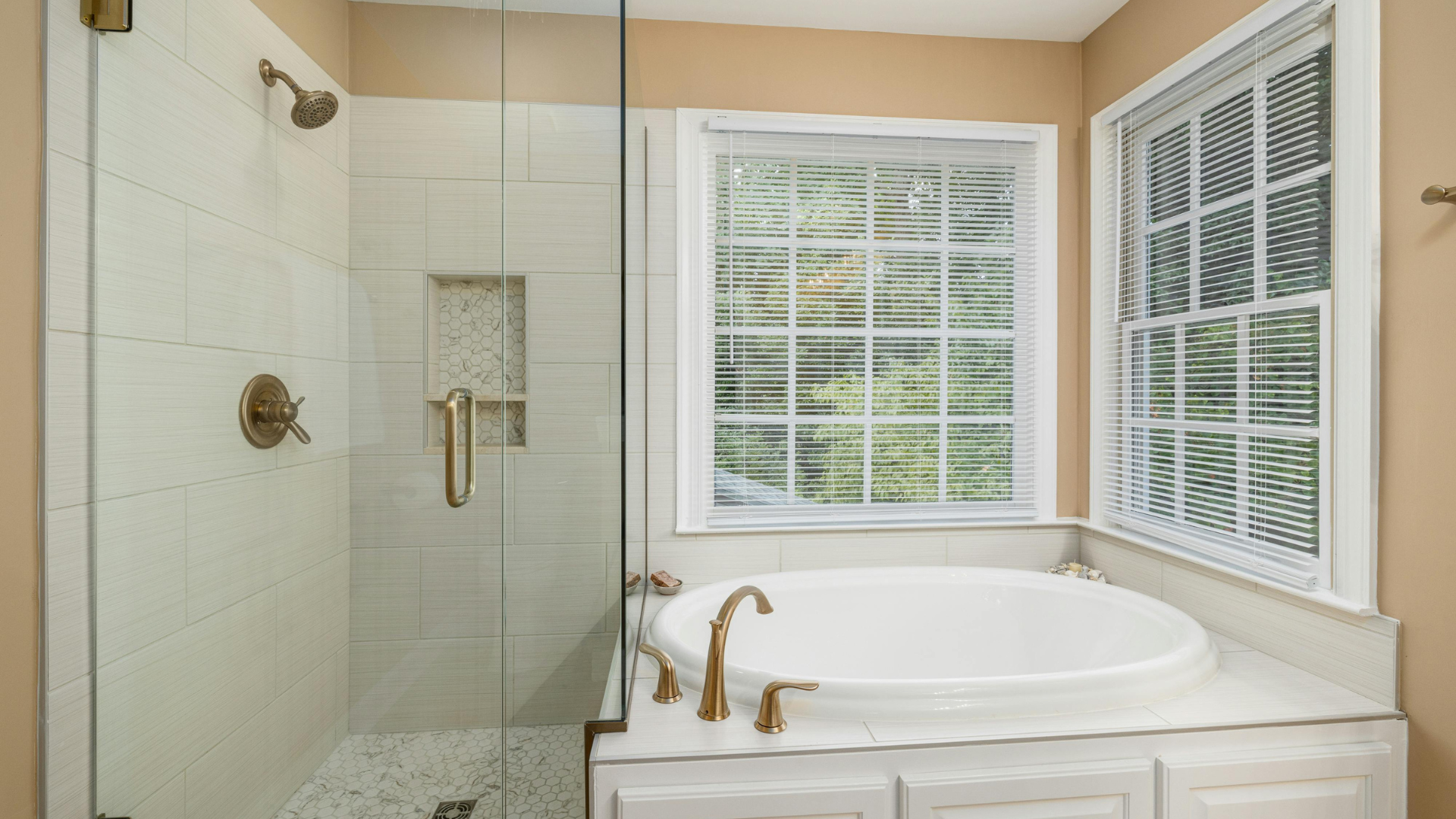
Enjoy moisture-resistant window treatments that add privacy and durability without sacrificing design.

Keep playtime safe and stylish with cordless shades designed for light control, safety, and fun patterns.
Peace of mind with every install
Proudly serving Long Island
for over 10 years
We don’t leave until it’s perfect
5-Star Reviews on Google

We make finding the perfect window treatments easy with our shop-at-home service. Simply schedule a free consultation, and we’ll bring a wide selection of shades, blinds and shutters samples directly to your home. This allows you to see samples in your space, ensuring they fit perfectly with your décor and lighting.

Our experts will provide personalized recommendations, take precise measurements, and offer transparent, affordable pricing—without the hassle of visiting a showroom.

We offer installation, so you can enjoy a seamless, custom-fit solution, all while saving time and money. Experience the convenience of choosing quality window treatments from the comfort of your home.
Pair financing with our free in-home consultation, expert measuring,
and professional installation for a smooth, stress-free experience from start to finish.


Finding the right window blinds near you doesn’t have to be a challenge. At Long Island Custom Blinds, we make the process simple by offering in-home consultations, expert recommendations, and precise measurements to ensure a perfect fit.
Our team serves all of Glen Head and the surrounding areas, bringing samples directly to your door so you can see how different styles will look in your space.
From modern designs that maximize natural light to blackout options for bedrooms, we have something for every need and budget. Plus, with our professional installation services, you can rest assured that your window shades, blinds, or shutters will be securely mounted and built to last.




Situated in the rolling terrain of Long Island’s North Shore approximately 28 miles east of Manhattan, Glen Head represents a particular type of American community—a solidly middle-to-upper-middle-class suburb that functions effectively, serves its residents well, and maintains quality schools and safe neighborhoods without possessing the distinctive character, dramatic history, or exceptional attributes that generate broader recognition. With a population of approximately 4,700-4,900 residents in the census-designated place (though the broader Glen Head postal area serves significantly more), Glen Head exists comfortably in the shadow of more famous North Shore communities: lacking the Victorian charm of neighboring Sea Cliff, the historic Main Street of nearby Roslyn, the Gold Coast grandeur of Old Westbury, or the waterfront drama of communities along Long Island Sound. This very ordinariness constitutes Glen Head’s defining characteristic—a community that delivers suburban quality of life without pretension, exceptional wealth, or tourism aspirations, serving residents who prioritize good schools, safe neighborhoods, and convenient location over distinctive community identity or social prestige.
The name “Glen Head” derives from the topography—a glen or valley formed by streams draining toward Hempstead Harbor, with the “head” referring to the elevated terrain at the watershed’s upper reaches. The area remained agricultural through most of the 19th century, with scattered farms and rural estates occupying the gently rolling landscape. The Long Island Rail Road’s arrival in the mid-19th century (Glen Head station opened in 1867) created development potential, though substantial growth awaited the post-World War II suburban expansion that transformed Long Island. Glen Head developed primarily during the 1950s-1970s as returning veterans, growing families, and suburban migration patterns drove residential construction throughout Nassau County. This mid-century development created the housing stock, street patterns, and community character visible today: single-family homes on modest lots, curving streets through residential neighborhoods, and commercial strips along major roads serving local populations.
Glen Head never incorporated as a village, remaining instead a hamlet within the Town of Oyster Bay. This unincorporated status means Glen Head lacks independent municipal governance, instead receiving services from town government, county agencies, and special districts. The absence of village governance creates different community dynamics than incorporated neighbors—no village board making local decisions, no independent police force, no municipal identity distinct from the broader town—while reducing administrative overhead and potentially lowering costs.
Glen Head’s demographic profile reveals a community of comfortable prosperity—affluent by national standards but modest compared to the extreme wealth concentrations in nearby Gold Coast communities, creating a middle-class suburban character that has remained relatively stable over decades.
The population of approximately 4,700-4,900 residents in the census-designated place has remained stable for decades, with minimal growth reflecting the largely built-out character of the community and limited available land for new development. This stability typifies mature Long Island suburbs where major development occurred mid-century and current change involves property turnover and renovation rather than new construction. The broader Glen Head postal area (ZIP code 11545) serves a larger population including portions of adjacent communities, creating some confusion about population figures depending on geographic definition.
Racial and ethnic composition shows a predominantly white community with modest diversity, reflecting both historical development patterns and contemporary demographics:
White residents comprise approximately 85-90% of the population—higher than more diverse North Shore communities like Great Neck or East Hills but comparable to many Long Island suburbs. Asian residents represent roughly 5-8% of the population, a meaningful presence though smaller than the concentrations found in educationally-focused communities targeting specific school districts. Hispanic or Latino residents account for approximately 3-5%, and Black or African American residents comprise roughly 1-2%.
Arguments explaining Glen Head’s demographic patterns:
Mid-century development creating homogeneous base: Glen Head developed primarily during the 1950s-1970s when Long Island suburbs attracted predominantly white, middle-class families through combinations of housing availability, discriminatory practices (restrictive covenants, steering by real estate agents, redlining), and network effects where homogeneous populations attracted similar newcomers. These historical patterns created demographic foundations that persist through contemporary turnover.
Housing stock characteristics: Glen Head’s housing consists predominantly of single-family homes on modest lots (typically 0.2-0.5 acres), with property values in ranges ($600,000-1.2 million) accessible to upper-middle-class professional families but less attractive to the ultra-wealthy seeking estate properties or to working-class families unable to afford North Shore prices. This housing profile creates economic filtering producing demographic outcomes correlated with income and wealth distributions.
School district as selection mechanism: Glen Head participates in the North Shore Central School District alongside Sea Cliff, Glen Cove, and other communities. Families targeting specific school districts self-select into communities served by those districts, and North Shore’s solid-but-not-elite academic profile attracts different populations than the highest-performing districts. Families prioritizing the very highest academic metrics might choose Jericho or Manhasset; those seeking excellent-but-not-obsessive education might find North Shore appropriate.
Absence of distinctive attractions or identity: Glen Head lacks the distinctive characteristics—historic architecture, waterfront location, cultural institutions, famous schools—that attract particular demographic groups. This absence of distinctive identity means Glen Head attracts families seeking generic suburban quality rather than specific community attributes, producing demographics reflecting broad suburban preferences rather than particular community appeal.
Household income and wealth levels place Glen Head comfortably among Long Island’s affluent communities without reaching the extraordinary levels found in estate communities:
Median household income estimates range from $130,000 to $160,000—well above national medians (approximately $75,000) and Nassau County medians (approximately $120,000), placing Glen Head in solidly upper-middle-class territory. However, these figures fall substantially below the $200,000+ medians found in Old Westbury, Sands Point, or the wealthiest Great Neck areas.
The income distribution shows relatively compressed range compared to more economically diverse communities. Glen Head contains few extremely wealthy households (those with $500,000+ annual incomes or net worth exceeding $20-30 million) and few lower-income households struggling economically. The population clusters around comfortable professional incomes—dual-professional families earning $150,000-250,000, successful small business owners, and similar middle-to-upper-middle-class households.
Home values reflect this economic positioning. Single-family homes typically range from $550,000-700,000 for smaller or less updated properties to $900,000-1.4 million for larger, renovated, or well-located homes. Exceptional properties might exceed $1.5-2 million, but such prices remain rare. These values represent substantial appreciation from earlier decades while remaining accessible to affluent families without requiring extraordinary wealth. Annual property taxes typically range from $15,000-25,000, creating ongoing costs requiring solid household income but not the $50,000-100,000+ tax bills found in estate communities.
Age distribution shows a mature suburban profile with median age around 42-46 years. The community contains both families with school-age children (drawn by North Shore schools) and substantial numbers of empty-nesters and retirees who have aged in place. Some original purchasers from the 1960s-1980s development era remain in homes they’ve occupied for 40-50+ years, while younger families purchase from those aging out of the community.
Educational attainment runs high, with bachelor’s degree attainment approaching 55-60% and graduate/professional degrees held by roughly 25-30% of adults. These figures exceed national and state averages, reflecting the professional character of most households. The community contains substantial representation of teachers, nurses, mid-level corporate employees, small business owners, and similar professional occupations that require education without reaching elite credential levels.
Housing characteristics reflect mid-century suburban development patterns. The housing stock consists predominantly of single-family detached homes built between 1950-1980: ranch houses, split-levels, colonials, and cape cods occupying lots typically ranging from 0.2-0.5 acres. Many homes have undergone renovation and expansion as owners updated original modest construction for contemporary expectations. Street patterns follow typical suburban forms—curving roads, cul-de-sacs, limited through-traffic routes—creating quiet residential neighborhoods but limiting walkability.
The housing lacks the architectural distinction found in Victorian communities like Sea Cliff or historic villages like Roslyn. Glen Head’s homes are functional, comfortable, and well-maintained but architecturally unremarkable—mass-produced suburban housing characteristic of its era. This ordinariness reflects the community’s identity: a place for living rather than showing, for raising families rather than impressing visitors.
Homeownership rates exceed 90%—among the highest rates on Long Island—reflecting the single-family character and economic stability of resident households. Rental housing remains extremely limited, with few apartments or multi-family structures available.
Education in Glen Head operates through the North Shore Central School District, the same district serving neighboring Sea Cliff, creating shared educational experiences across communities with different characters and demographics. For Glen Head residents, the school district represents a primary community asset—the element most directly affecting family decisions about where to live and the institution creating connections among otherwise unconnected households.
North Shore Central School District serves Glen Head alongside Sea Cliff, Glenwood Landing, and portions of other nearby communities. The district operates Glenwood Landing Elementary School (serving Glen Head students along with Sea Cliff Elementary for Sea Cliff students), North Shore Middle School (grades 6-8), and North Shore High School (grades 9-12). Total district enrollment approaches 2,400-2,600 students, creating intimate scale enabling personalized attention while supporting comprehensive programming.
Glenwood Landing Elementary School serves many Glen Head students in grades K-5, though district boundaries mean some Glen Head addresses feed to different elementary schools. The elementary experience creates community connections among Glen Head families, though less intensely than in communities like Sea Cliff where a single village elementary school creates concentrated community identity.
Academic performance metrics place North Shore among Long Island’s stronger districts:
SAT scores average approximately 1250-1300 (out of 1600)—well above the national average of about 1050 and competitive with strong suburban districts. These scores don’t quite reach the 1350+ averages of elite districts like Manhasset or Jericho but represent solid college-preparatory performance.
Graduation rates approach 96-97%, exceeding state and national averages and demonstrating effective support for student completion. College attendance exceeds 90% of graduates, with students pursuing diverse post-secondary pathways.
Per-pupil expenditures exceed $30,000 annually—among the higher rates in New York State—supporting small class sizes, competitive teacher compensation, and comprehensive programming.
Advanced Placement participation provides college-level coursework across core subjects, with pass rates exceeding state averages.
Arguments supporting North Shore schools’ quality:
The district delivers genuinely strong educational outcomes that justify family decisions to purchase in Glen Head for school access. Small district size enables community connection and personalized attention impossible in larger systems. Teacher quality appears strong, supported by competitive compensation and desirable working conditions. The combination of Sea Cliff’s artistic community and Glen Head’s professional families creates student body diversity beyond pure economic homogeneity. Per-pupil spending reflects community investment in education. The outcomes prepare students well for competitive colleges and professional success.
Arguments for skepticism or recognition of limitations:
Academic metrics, while strong, don’t reach elite levels of the highest-performing Long Island districts. Families prioritizing the very highest academic outcomes—those targeting Ivy League admissions and similar competitive endpoints—might prefer Jericho, Manhasset, or other districts with stronger metrics. The smaller district size limits course offerings, extracurricular breadth, and athletic competition levels compared to larger districts. The district serves a relatively homogeneous population, limiting exposure to socioeconomic and demographic diversity. Achievement gaps between different student groups may exist, though small minority populations make statistical analysis difficult.
The balanced assessment:
North Shore schools perform solidly, delivering strong educational experiences that compare favorably with most American public schools while acknowledging they don’t quite reach the elite levels of Long Island’s highest performers. For families seeking excellent-but-not-obsessive education—quality academics without the intense pressure characterizing the most competitive districts—North Shore represents an appropriate choice. The district’s combination of strong outcomes, manageable size, and reasonable (by North Shore standards) housing costs creates appeal for families prioritizing balanced education over maximum academic intensity.
Glen Head’s educational identity differs subtly from Sea Cliff’s within the shared district. Sea Cliff’s artistic heritage, walkable village character, and bohemian traditions create a particular educational culture emphasizing creativity alongside academics. Glen Head’s more conventional suburban character may produce different emphases—perhaps more traditional academic focus, less arts-oriented culture—though shared middle and high schools create substantial overlap. The distinction matters most at elementary level, where community-specific schools create different experiences.
Tourism in Glen Head operates at essentially zero levels, reflecting the community’s fundamental character as a residential suburb lacking distinctive attractions, historic sites, natural features, or cultural resources that might draw visitors. Unlike neighboring Sea Cliff with its Victorian architecture and artistic heritage, or Roslyn with its historic Main Street and dining scene, Glen Head offers nothing to attract visitors from outside the immediate area.
The complete absence of tourism reflects several factors:
No historic or architectural distinction: Glen Head’s housing stock consists of mid-century suburban homes—functional but architecturally unremarkable—lacking the Victorian character, historic preservation interest, or aesthetic appeal that draws heritage tourism. The community developed during an era when mass-produced suburban housing prioritized affordability and functionality over design distinction. No historic districts, landmark structures, or architectural attractions exist.
No natural attractions or scenic resources: Glen Head occupies pleasant but undramatic terrain—rolling hills typical of Long Island’s North Shore—without waterfront access, dramatic bluffs, preserved natural areas, or scenic viewpoints that attract visitors. The community lacks beaches, parks of regional significance, hiking trails, or other recreational resources drawing outside visitation.
No cultural institutions or entertainment venues: Glen Head contains no museums, galleries, performance venues, or cultural institutions attracting visitors. Cultural needs are met through institutions in neighboring communities (Sea Cliff, Roslyn, Glen Cove) or through travel to Manhattan.
No distinctive commercial district: Commercial activity in Glen Head concentrates along Glen Head Road and other arterials in typical suburban strip patterns—shopping centers, convenience retail, professional offices, and chain establishments serving local populations. No walkable downtown, restaurant district, or specialty shopping area exists that might attract visitors from surrounding communities.
Unincorporated status limiting community identity: As an unincorporated hamlet rather than incorporated village, Glen Head lacks the municipal identity, community branding, or organized promotion that might generate recognition beyond immediate residents. The community has no visitor center, no chamber of commerce promoting tourism, no organized efforts to attract outside attention.
Arguments that minimal tourism suits the community:
Glen Head residents value residential tranquility and have no desire for visitor traffic, commercial tourism development, or the impacts that tourism brings to other communities. The absence of tourism-related traffic, parking demands, and commercial pressures preserves quiet residential character. Property values depend on school quality and residential amenity rather than tourism appeal, creating appropriate incentives for community investment. The community’s economy functions entirely through residential property taxes without tourism dependence, providing fiscal stability. Glen Head serves its intended purpose—comfortable suburban living—without needing to be anything more.
Arguments exploring hypothetical tourism potential:
Theoretical perspective: Could Glen Head develop tourism if desired? The community’s location—central to North Shore attractions, convenient to Long Island Rail Road, accessible from major highways—provides infrastructure for tourism access. Proximity to Sea Cliff, Roslyn, and other attractions could support overflow tourism or complementary positioning. Development of parks, trails, cultural facilities, or commercial districts could create attractions where none currently exist.
Practical reality: Glen Head has no unused land for significant attraction development, no community interest in tourism, no municipal governance structure to organize tourism initiatives, and no distinctive assets to market. Creating tourism where none exists would require substantial investment with uncertain returns. The community’s competitive advantage lies in being an excellent place to live, not a place to visit.
The realistic assessment:
Glen Head will remain a non-destination suburb where tourism essentially doesn’t exist. Visitors to the North Shore seeking attractions should visit Sea Cliff for Victorian architecture and artistic heritage, Roslyn for historic Main Street and dining, Old Westbury Gardens for estate heritage, or the waterfront communities for coastal experiences. Glen Head offers nothing to visitors and has no aspirations to change this situation.
This absence of tourism represents neither failure nor limitation but rather accurate reflection of community purpose. Glen Head exists to provide comfortable suburban living for families seeking good schools, safe neighborhoods, and convenient location. It succeeds admirably at this purpose without needing to be a tourism destination, cultural center, or historic attraction. The community’s value lies entirely in residential quality rather than visitor appeal.
Comparison with neighboring communities:
The contrast with Sea Cliff proves instructive. Sea Cliff’s Victorian architecture, dramatic topography, artistic heritage, and walkable village character create genuine tourism appeal—modest but meaningful visitor interest that generates economic activity and shapes community identity. Glen Head’s mid-century suburban development, conventional topography, absence of distinctive heritage, and automobile-oriented form create no comparable appeal. This contrast reflects different development eras, different community purposes, and different contemporary identities—not superior or inferior outcomes but different types of places serving different functions.
Similarly, the contrast with Roslyn (historic village character, restaurant district, heritage resources) or Old Westbury (estate landscapes, formal gardens, preserved mansions) demonstrates how Glen Head’s conventional suburban character distinguishes it from communities possessing distinctive tourism assets. Glen Head competes with these communities for residents based on schools, housing, and location rather than character or attractions.
