
Broken Blinds? Here’s When to Fix Them and When to Replace Them
When a blind stops working, the first instinct is to find a fix. That’s a reasonable starting point — but for most blind failures, repair isn’t as accessible as homeowners

Discover high-quality, affordable window treatments with your local, shop-at-home service.
Discover high-quality, affordable window treatments with your local, shop-at-home service.






Peace of mind with every install
Proudly serving Long Island
for over 10 years
We don’t leave until it’s perfect
5-Star Reviews on Google
| Feature | Long Island Custom Blinds | Big Box Stores |
|---|---|---|
| Free In-Home Consultation | Yes — we bring the showroom to you | No — visit the store and DIY |
| Custom Measurements | Every window is precisely measured | Often relies on standard sizes |
| Design Guidance | Expert help choosing colors, styles, and materials | You're on your own |
| Product Quality | Premium materials built to last | Often mass-produced, lower quality |
| Professional Installation | Offered with every order | May require 3rd party or self-install |
| Local Support & Service | Speak directly with your installer/designer | 1-800 number or store associate |
| Speed & Flexibility | Quick turnaround & flexible scheduling | Delays and rigid systems |
| Lifetime Client Relationship | We're your go-to for future projects & upgrades | One-and-done sale |
| Reputation in the Community | 5-Star reviews from Long Island homeowners | Mixed reviews, impersonal service |
| Pricing Transparency | Clear estimates — no surprise fees | Hidden fees for delivery or install |
| Value for Money | High quality at competitive prices | Lower upfront, higher long-term cost |
| Feature | Long Island Custom Blinds | Big Box Stores |
|---|---|---|
| Free In-Home Consultation | ✓ | × |
| Custom Measurements | ✓ | × |
| Design Guidance | ✓ | × |
| Product Quality | ✓ | × |
| Professional Installation | ✓ | × |
| Local Support & Service | ✓ | × |
| Speed & Flexibility | ✓ | × |
| Lifetime Client Relationship | ✓ | × |
| Reputation in the Community | ✓ | × |
| Pricing Transparency | ✓ | × |
| Value for Money | ✓ | × |
From cozy entryways to bright kitchens, get inspired by these curated looks and make every room feel like home.

Brighten your cooking space with blinds and shades that bring warmth, style, and light control to every meal.

Create a cozy retreat with blackout or light-filtering shades that help you rest and recharge in comfort.

Frame your view beautifully with drapes and blinds that balance natural light and privacy for everyday living.
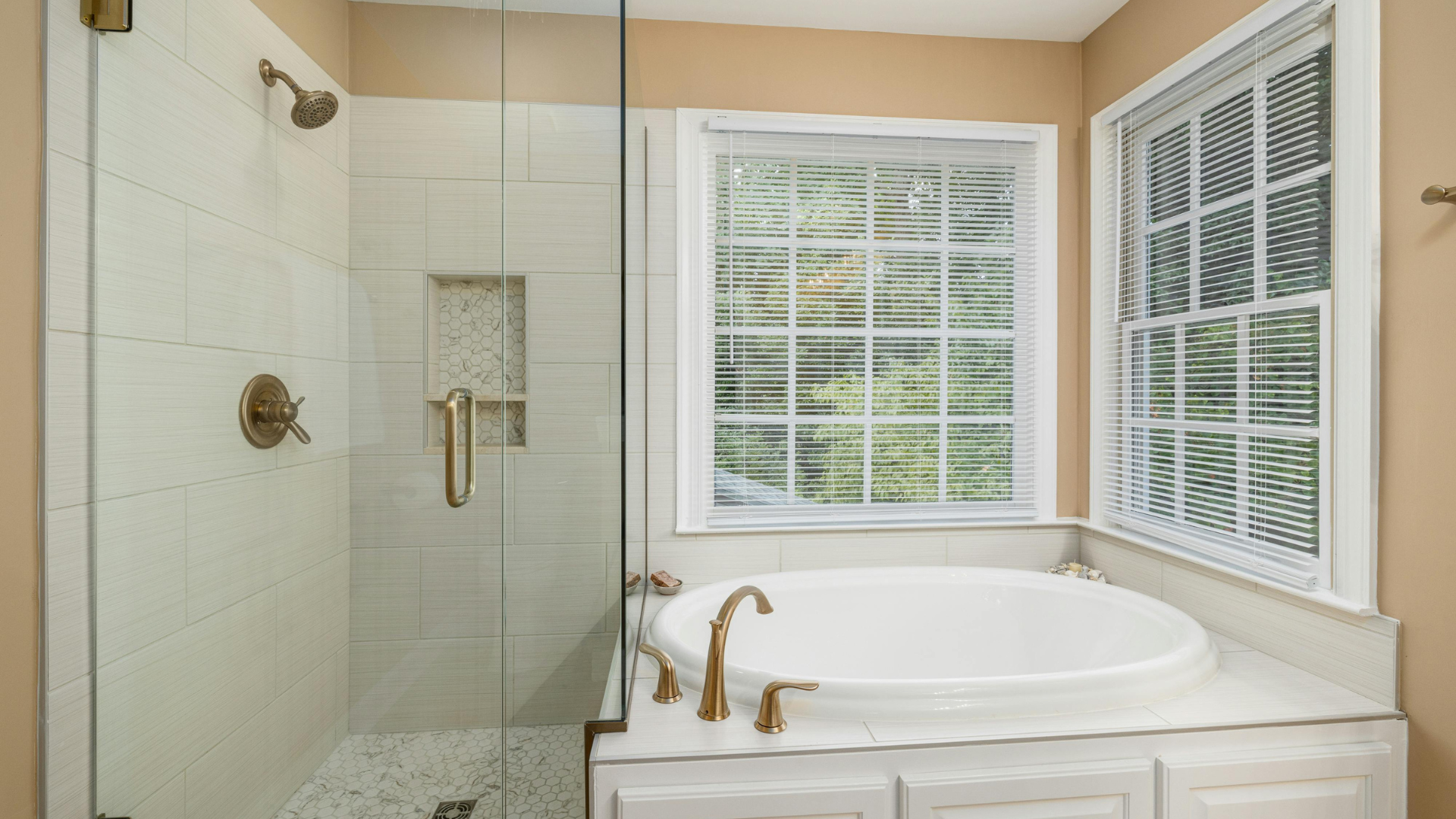
Enjoy moisture-resistant window treatments that add privacy and durability without sacrificing design.

Keep playtime safe and stylish with cordless shades designed for light control, safety, and fun patterns.
Peace of mind with every install
Proudly serving Long Island
for over 10 years
We don’t leave until it’s perfect
5-Star Reviews on Google

We make finding the perfect window treatments easy with our shop-at-home service. Simply schedule a free consultation, and we’ll bring a wide selection of shades, blinds and shutters samples directly to your home. This allows you to see samples in your space, ensuring they fit perfectly with your décor and lighting.

Our experts will provide personalized recommendations, take precise measurements, and offer transparent, affordable pricing—without the hassle of visiting a showroom.

We offer installation, so you can enjoy a seamless, custom-fit solution, all while saving time and money. Experience the convenience of choosing quality window treatments from the comfort of your home.
Pair financing with our free in-home consultation, expert measuring,
and professional installation for a smooth, stress-free experience from start to finish.


Finding the right window blinds near you doesn’t have to be a challenge. At Long Island Custom Blinds, we make the process simple by offering in-home consultations, expert recommendations, and precise measurements to ensure a perfect fit.
Our team serves all of Port Washington and the surrounding areas, bringing samples directly to your door so you can see how different styles will look in your space.
From modern designs that maximize natural light to blackout options for bedrooms, we have something for every need and budget. Plus, with our professional installation services, you can rest assured that your window shades, blinds, or shutters will be securely mounted and built to last.

Situated on the Cow Neck Peninsula jutting into Long Island Sound approximately 25 miles east of Manhattan, Port Washington occupies a unique position among Long Island’s North Shore communities—close enough to the Gold Coast’s wealthy enclaves to share some of their affluence and prestige, yet sufficiently distinct in character, accessibility, and demographics to function as something quite different. With a population of approximately 16,000-17,000 residents in the census-designated place, Port Washington presents as a community wrestling with multiple identities: historic maritime village, commuter suburb, ethnically diverse enclave in a predominantly white region, and a place where working-class and wealthy residents coexist in patterns increasingly rare in contemporary suburban America. The community’s peninsular geography, excellent rail access to Manhattan, and complex social composition create a suburban experience that defies easy categorization.
The name “Port Washington” reflects the community’s maritime heritage, though various origin stories exist regarding the “Washington” component—some attributing it to George Washington, others to early landowners. The area was originally inhabited by the Matinecock people before Dutch and English colonists arrived in the 17th century. For most of its history through the 19th century, Port Washington functioned as a maritime community—fishing, sand mining, and boat building sustained the local economy. The late 19th and early 20th centuries brought estates and wealthy residents to portions of the peninsula, particularly Sands Point at the northern tip, though Port Washington proper retained more working-class and middle-class character than Manhasset or other pure Gold Coast communities. The post-World War II era brought suburban development and demographic changes that would fundamentally shape the modern community.
Port Washington’s demographic profile reveals one of its most interesting characteristics: substantial ethnic and economic diversity unusual among Long Island’s North Shore communities, creating a social complexity that distinguishes it from the overwhelming homogeneity of nearby Manhasset or the particular Jewish and Iranian character of Great Neck.
The population of approximately 16,000-17,000 has remained relatively stable over recent decades, constrained by the peninsula’s geography and limited available land for development. This stability contrasts with high-growth suburban communities but reflects typical patterns for mature Long Island suburbs where development occurred primarily in the mid-20th century.
Racial and ethnic composition reveals Port Washington’s most distinctive demographic feature: diversity that substantially exceeds surrounding North Shore communities. White residents comprise approximately 70-75% of the population—lower than Manhasset’s 85-90% but higher than Great Neck’s 60-70%. Asian residents represent roughly 12-15% of the population, with particularly significant Chinese, Korean, and Indian communities. Hispanic or Latino residents account for approximately 10-12% of the population—substantially higher than Manhasset (3-5%) and comparable to or exceeding Great Neck’s percentages. Black or African American residents comprise roughly 2-3% of the population.
Arguments explaining Port Washington’s diversity:
Housing stock diversity: Unlike Manhasset’s almost exclusively single-family estates or Great Neck’s predominantly detached homes, Port Washington contains substantial apartment and cooperative housing, particularly concentrated in certain areas like Baxter Estates. These multi-family housing options provide entry points at various price levels, enabling economic and demographic diversity impossible in communities with only expensive single-family homes. Garden apartments, co-ops, and rental buildings house working-class families, recent immigrants, and middle-income households alongside the single-family homeowners who dominate other North Shore communities.
Employment patterns: Port Washington’s maritime heritage created blue-collar employment that attracted working-class immigrants—Italian, Irish, Polish, and Eastern European populations established communities in the early-to-mid 20th century. More recent immigration from Asia and Latin America has followed similar patterns, with service workers, tradespeople, and working professionals finding affordable housing options unavailable in wealthier nearby communities.
Geographic accessibility with relative affordability: Port Washington offers excellent Manhattan access via the Long Island Rail Road Port Washington Branch (terminus at Port Washington station, approximately 50-minute commute to Penn Station), making it attractive to commuters. However, housing costs, while substantial by national standards, remain meaningfully below Manhasset or prime Great Neck areas, creating opportunities for families who couldn’t afford those communities.
Cultural institutions and community character: Port Washington developed a reputation for relative openness and community integration across ethnic and economic lines. Public schools serve economically diverse populations, community organizations emphasize inclusivity, and social structures remain less rigidly exclusive than in some neighboring communities. This reputation becomes self-reinforcing as families seeking diverse environments choose Port Washington over more homogeneous alternatives.
The Italian-American community maintains particularly strong presence and cultural influence, with Italian surnames common, Italian cultural organizations active, and Italian-American traditions shaping community life. This reflects mid-20th-century immigration patterns when Italian families, often excluded from or unable to afford more exclusive North Shore communities, established strong presence in Port Washington’s more accessible neighborhoods.
The Asian community, particularly East Asian (Chinese and Korean) populations, has grown substantially in recent decades, attracted by good schools, Manhattan access, and housing options at various price points. Asian-owned businesses, restaurants, and cultural organizations have become integral to community character, creating ethnic enclaves within the broader community while maintaining integration in schools and civic life.
Household income and wealth levels show substantial variation—a key distinguishing feature from more economically homogeneous nearby communities. Median household income estimates range from $100,000 to $130,000, placing Port Washington comfortably above national and state medians but well below Manhasset ($150,000-$200,000+) and somewhat below prime Great Neck areas. However, these medians obscure significant internal variation. Port Washington contains both wealthy waterfront estates valued at $3-10 million+ and modest apartments or smaller homes where working-class families live on household incomes of $60,000-80,000. This economic diversity creates a community where doctors and lawyers live alongside teachers, tradespeople, and service workers—an increasingly rare suburban pattern.
Home values reflect this diversity. Waterfront properties and larger single-family homes in desirable neighborhoods frequently exceed $1.5-3 million, while smaller homes, co-ops, and condominiums can be found (though increasingly rarely) in the $400,000-700,000 range. Rental apartments provide additional housing options, though even these command premiums reflecting Long Island’s generally high housing costs. Property taxes vary substantially by location and housing type but can easily exceed $15,000-25,000 annually for single-family homes, creating ongoing affordability pressures.
Age distribution shows a mature suburban profile with median age around 42-45 years, reflecting both established families and empty-nesters. The presence of multi-family housing enables some younger families to enter the community through rental or co-op purchase, maintaining better generational diversity than communities where entry requires purchasing million-dollar single-family homes.
Educational attainment runs high though with more variation than ultra-affluent neighbors. High school graduation rates approach 90-92%, and bachelor’s degree attainment sits around 55-60%—well above national and state averages but below Manhasset’s levels. Graduate and professional degrees are held by approximately 20-25% of adults, reflecting the professional character of substantial portions of the population while acknowledging the working-class households that would be entirely absent from more exclusive communities.
Education in Port Washington operates through the Port Washington Union Free School District, serving the community with a reputation for strong academic performance that attracts families while facing challenges associated with demographic and economic diversity that more homogeneous districts avoid.
The district operates four elementary schools (Daly Elementary, Guggenheim Elementary, Manorhaven Elementary, and Salem Elementary), one middle school (Schreiber Middle School), and one high school (Paul D. Schreiber High School), with total enrollment approximately 5,000-5,500 students across all schools. This enrollment substantially exceeds Manhasset’s despite similar geographic area, reflecting Port Washington’s higher-density housing and larger population.
Academic performance metrics place Port Washington among Long Island’s stronger districts, though with more variation than the most elite North Shore districts. SAT scores average approximately 1200-1250 (out of 1600)—well above the national average of about 1050 but meaningfully below Manhasset’s 1350-1400 or Great Neck’s similar elite levels. Graduation rates hover around 93-95%, strong but not quite matching the 97-98% rates of the wealthiest districts. College attendance approaches 85-90% of graduates, with students pursuing four-year colleges, community colleges, and various post-secondary pathways.
Advanced Placement participation runs high, with extensive AP course offerings across subjects. AP exam pass rates typically exceed state averages, though again not quite matching the 90%+ pass rates common in Manhasset or Great Neck. The district offers honors tracks, advanced mathematics sequences, strong arts programming, and comprehensive extracurricular offerings that provide opportunities for high-achieving students while serving broader populations.
Per-pupil expenditures exceed $30,000 annually—among the highest in New York State and roughly double the national average, though below Manhasset’s $40,000+. This substantial spending supports small class sizes, competitive teacher compensation, modern facilities, and comprehensive programming, though resource constraints appear more binding than in the wealthiest districts.
Arguments supporting Port Washington’s educational quality:
The district delivers genuinely strong educational experiences across diverse student populations. Teachers demonstrate commitment to serving students with varying needs, backgrounds, and preparation levels. The district invests in support services—English Language Learner programs, special education, counseling, enrichment—that address diverse student needs. Academic outcomes, while not matching the very highest-performing districts, substantially exceed state and national averages, demonstrating effectiveness across populations. The district’s diversity exposes students to varied perspectives and backgrounds, providing social preparation arguably more valuable than marginally higher test scores in homogeneous environments.
Arguments for concern about performance gaps:
Achievement gaps between different demographic and economic groups exist and persist, suggesting the district succeeds better with affluent, already-advantaged students than with working-class or immigrant students facing language barriers or economic challenges. The district’s outcomes, while strong in absolute terms, reflect demographic advantages—affluent families comprise substantial portions of the population—more than exceptional educational practice. Resource constraints appear in facilities, course offerings, and support services that fall short of the wealthiest districts. The pressure to maintain outcomes attractive to affluent families may conflict with investments needed to serve struggling students, creating tension between equity and competitive positioning.
The balanced assessment:
Port Washington schools perform well, delivering solid educational experiences to demographically diverse populations. The outcomes—test scores, graduation rates, college attendance—place the district among Long Island’s stronger performers, though not quite at elite levels. Families moving to Port Washington for schools make reasonable decisions based on genuine quality, though expectations should be calibrated: this is a very good district serving diverse populations rather than an elite district optimized for already-advantaged students.
The district’s demographic diversity creates both challenges and opportunities. Managing English Language Learner needs, economic disparities, and varied preparation levels requires resources and expertise that homogeneous districts never develop. However, this same diversity provides authentic cross-cultural experiences increasingly valuable in diverse American society. Students graduating from Port Washington schools may be better prepared for diverse colleges and workplaces than peers from more insular environments, even if standardized test scores sit slightly lower.
Private school alternatives exist for families seeking different educational experiences. Various private schools throughout the North Shore region serve families preferring religious education, smaller environments, or different pedagogical approaches. Some affluent Port Washington families choose private schools, though the public schools compete effectively for most families given genuine quality and diversity benefits.
For higher education, Port Washington students pursue diverse pathways. Selective four-year colleges attract strong students, SUNY and CUNY systems serve many others, and community colleges provide additional options. The range of post-secondary paths reflects the community’s economic diversity—not all students pursue identical elite college pathways, and the district increasingly recognizes the value of diverse definitions of success.
Tourism in Port Washington operates modestly, with the community possessing attractions that draw some visitors while remaining primarily a residential suburb rather than a tourism destination. The maritime heritage, waterfront location, and proximity to Manhattan create potential that has been only partially realized.
Sands Point Preserve represents Port Washington’s most significant tourism attraction, though technically located in the Village of Sands Point at the peninsula’s northern tip rather than Port Washington proper. The preserve encompasses approximately 216 acres of former Gold Coast estates, including three historic mansions open to the public: Hempstead House (a castle-like structure built for Howard Gould, son of railroad magnate Jay Gould), Falaise (built for Captain Harry Guggenheim in Norman manor style), and Castlegould (the original Gould mansion). The preserve offers tours, nature trails, special events, and educational programming that attract approximately 50,000-75,000 visitors annually.
Arguments for Sands Point Preserve’s significance:
The preserve provides the most accessible, authentic Gold Coast estate experience on Long Island’s North Shore, offering visitors tangible connection to the Gilded Age and Jazz Age wealth that defined the region. The three mansions represent different architectural styles and periods, creating variety in visitor experience. Nature trails through preserved forests and along Long Island Sound shoreline provide ecological education and recreation. The preserve’s educational programming serves thousands of students annually. Special events—from history lectures to outdoor concerts—activate the space and generate community engagement.
Arguments acknowledging limitations:
The preserve operates with limited resources compared to major museums, constraining interpretive programming, maintenance, and visitor services. The mansions, while impressive, suffered decades of neglect before preservation efforts, resulting in partial restoration that limits what can be displayed. Visitor numbers remain modest compared to major attractions, reflecting limited marketing, seasonal operation constraints, and competition from numerous other attractions in the metropolitan region. The preserve primarily attracts local and regional visitors rather than destination tourists.
Balanced perspective:
Sands Point Preserve provides genuine value for heritage tourism, local recreation, and education while acknowledging its modest scale and limited resources. Visitors seeking Gold Coast history and natural beauty find worthwhile experiences, though expectations should be calibrated—this is a well-preserved local resource rather than a major destination attraction.
Port Washington waterfront provides scenic appeal and recreational opportunities, though development patterns limit public access. Town Dock and surrounding areas offer boating access, fishing, waterfront dining, and scenic views. However, much waterfront remains in private hands—marinas, yacht clubs, private properties—limiting public access and tourism potential. Efforts to enhance public waterfront access face conflicts between development pressures, environmental concerns, and competing visions for waterfront use.
Downtown Port Washington centers around Main Street and surrounding areas, offering a walkable commercial district with local businesses, restaurants, shops, and services. The downtown maintains more authentic character than many suburban commercial strips—independent businesses alongside chains, diverse restaurants reflecting community demographics (Italian, Asian, American cuisines), and a scale conducive to pedestrian activity. However, the downtown faces typical challenges: parking limitations, competition from shopping malls and online retail, and pressure from rising commercial rents. The downtown serves primarily local residents rather than functioning as a regional destination, though its walkable character and restaurant diversity attract some visitors from surrounding communities.
Cow Neck Peninsula Historical Society maintains a small museum and archives documenting local history, serving primarily educational functions and local interest rather than attracting significant tourism. The organization preserves historical materials, offers educational programs, and maintains awareness of Port Washington’s maritime and social history, though limited resources constrain programming and facilities.
Recreational amenities include various town parks, beaches, and athletic facilities serving primarily residents. Sunset Park and Manorhaven Beach provide waterfront access for swimming and recreation, though access policies often restrict non-residents or charge higher fees. Tennis facilities, playgrounds, and athletic fields throughout the community serve youth sports and casual recreation. The peninsula’s geography provides scenic beauty and waterfront location that enhance quality of life even when public access remains limited.
Arguments for tourism development:
Port Washington’s maritime heritage, Gold Coast connections (via Sands Point Preserve), waterfront location, and Manhattan accessibility provide foundation for expanded tourism. Enhanced waterfront access, heritage tourism development, cultural programming, and restaurant/retail development could generate economic activity and community vitality. The community’s authentic character—less manicured than Manhasset, more accessible than exclusive enclaves—could appeal to visitors seeking genuine suburban experiences rather than manufactured attractions.
Arguments against tourism focus:
Port Washington’s economy functions successfully as a residential community without heavy tourism dependence. Substantial tourism development would require public investment producing uncertain returns. The community’s residential character could be compromised by increased traffic, parking demands, and commercial activity. Infrastructure limitations—parking, road capacity, waterfront access constraints—would struggle to accommodate substantially increased visitation. Community preferences generally favor residential quality of life over tourism-driven development.
The realistic path:
Port Washington will likely continue as primarily a residential community with modest tourism centered on Sands Point Preserve, waterfront recreation, and downtown dining/shopping that attracts regional visitors without becoming a major destination. Incremental improvements—enhanced waterfront access, downtown revitalization, heritage interpretation, trail connectivity—can enhance both resident experience and visitor appeal without requiring major infrastructure investments or compromising residential character. The goal should be creating a vibrant community where residents enjoy high quality of life, with tourism as beneficial byproduct rather than primary economic driver.
