If You’re Buying Blinds in Syosset or Great Neck, Avoid This Common Mistake
The mistake isn’t picking the wrong color. It isn’t even picking the wrong style. The most common — and most expensive — mistake homeowners in Syosset and Great Neck make

Discover high-quality, affordable window treatments with your local, shop-at-home service.
Discover high-quality, affordable window treatments with your local, shop-at-home service.






Peace of mind with every install
Proudly serving Long Island
for over 10 years
We don’t leave until it’s perfect
5-Star Reviews on Google
| Feature | Long Island Custom Blinds | Big Box Stores |
|---|---|---|
| Free In-Home Consultation | Yes — we bring the showroom to you | No — visit the store and DIY |
| Custom Measurements | Every window is precisely measured | Often relies on standard sizes |
| Design Guidance | Expert help choosing colors, styles, and materials | You're on your own |
| Product Quality | Premium materials built to last | Often mass-produced, lower quality |
| Professional Installation | Offered with every order | May require 3rd party or self-install |
| Local Support & Service | Speak directly with your installer/designer | 1-800 number or store associate |
| Speed & Flexibility | Quick turnaround & flexible scheduling | Delays and rigid systems |
| Lifetime Client Relationship | We're your go-to for future projects & upgrades | One-and-done sale |
| Reputation in the Community | 5-Star reviews from Long Island homeowners | Mixed reviews, impersonal service |
| Pricing Transparency | Clear estimates — no surprise fees | Hidden fees for delivery or install |
| Value for Money | High quality at competitive prices | Lower upfront, higher long-term cost |
| Feature | Long Island Custom Blinds | Big Box Stores |
|---|---|---|
| Free In-Home Consultation | ✓ | × |
| Custom Measurements | ✓ | × |
| Design Guidance | ✓ | × |
| Product Quality | ✓ | × |
| Professional Installation | ✓ | × |
| Local Support & Service | ✓ | × |
| Speed & Flexibility | ✓ | × |
| Lifetime Client Relationship | ✓ | × |
| Reputation in the Community | ✓ | × |
| Pricing Transparency | ✓ | × |
| Value for Money | ✓ | × |
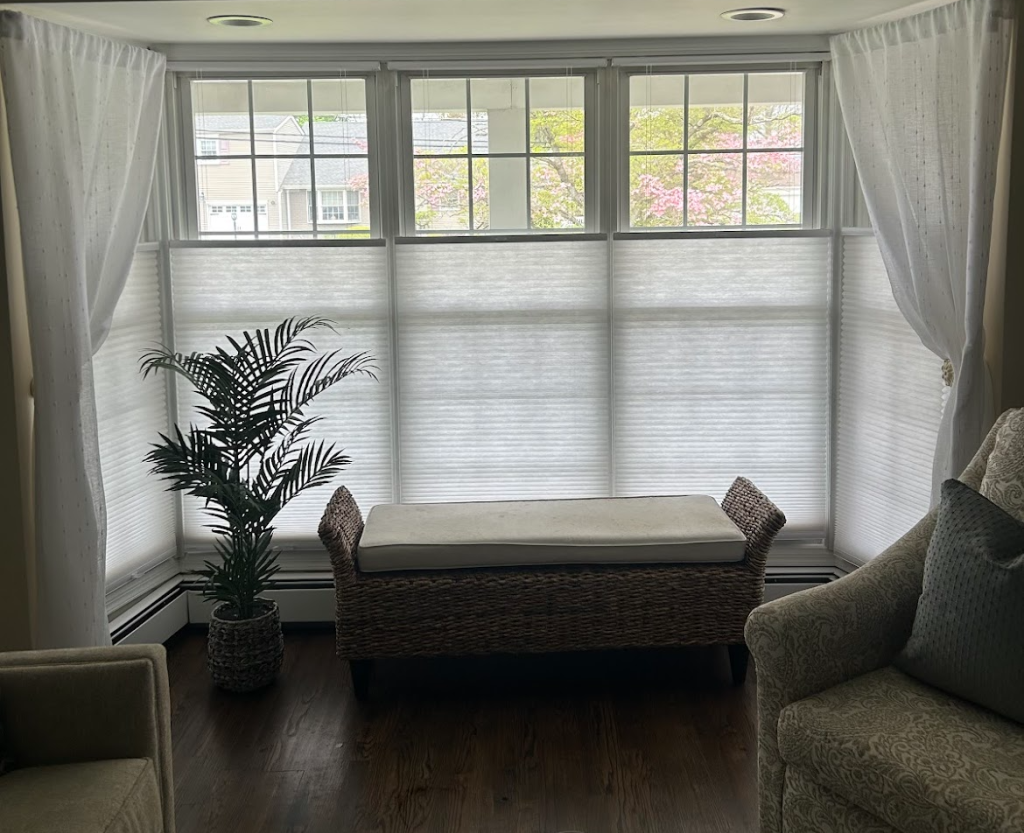
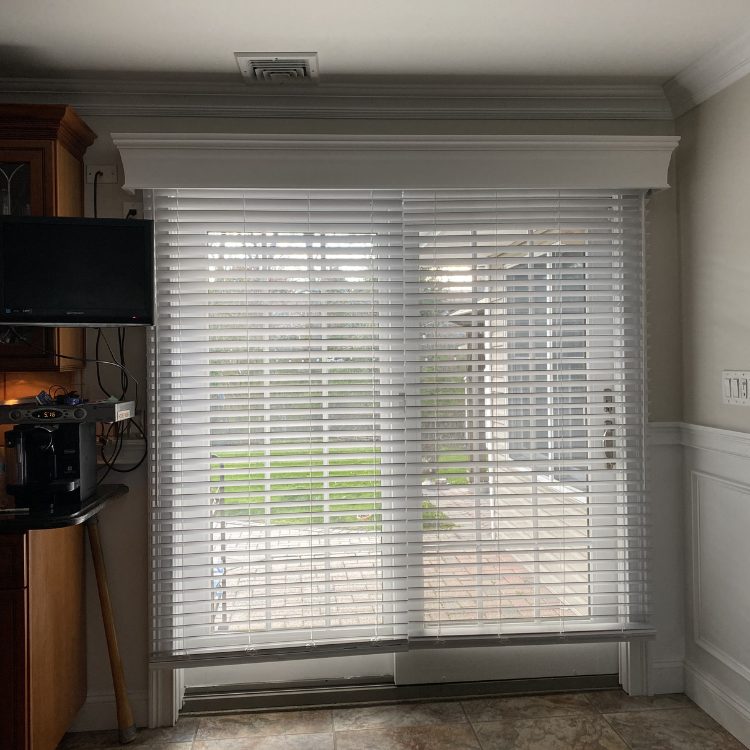
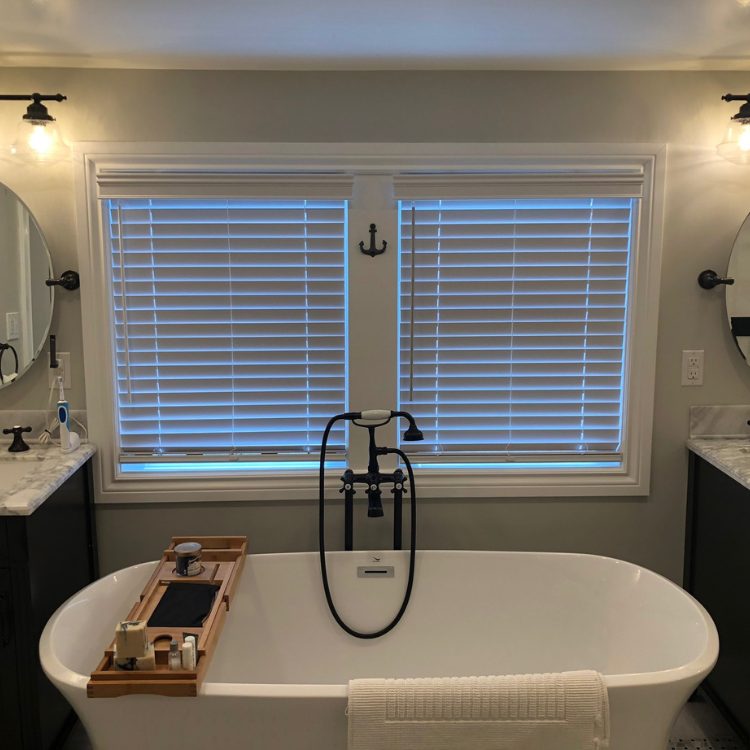
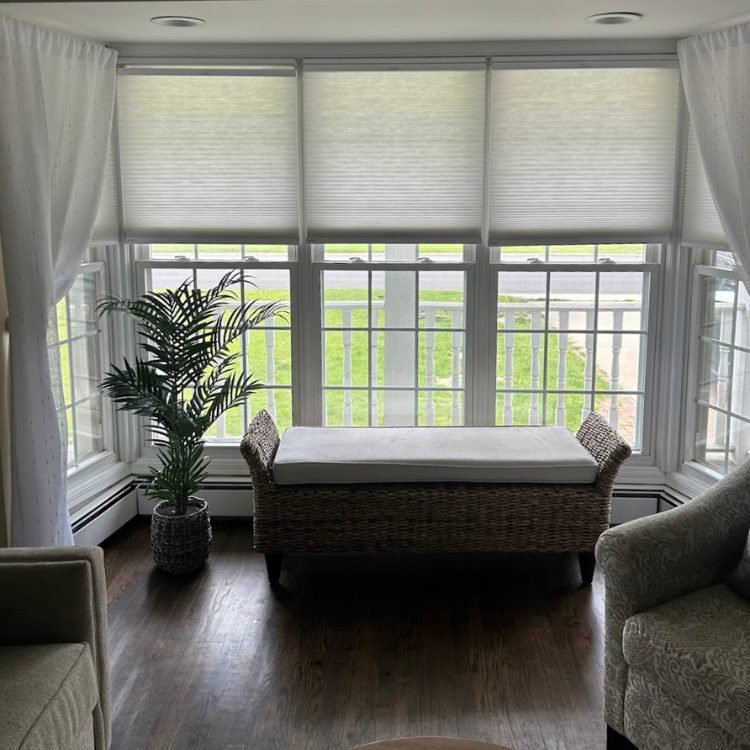
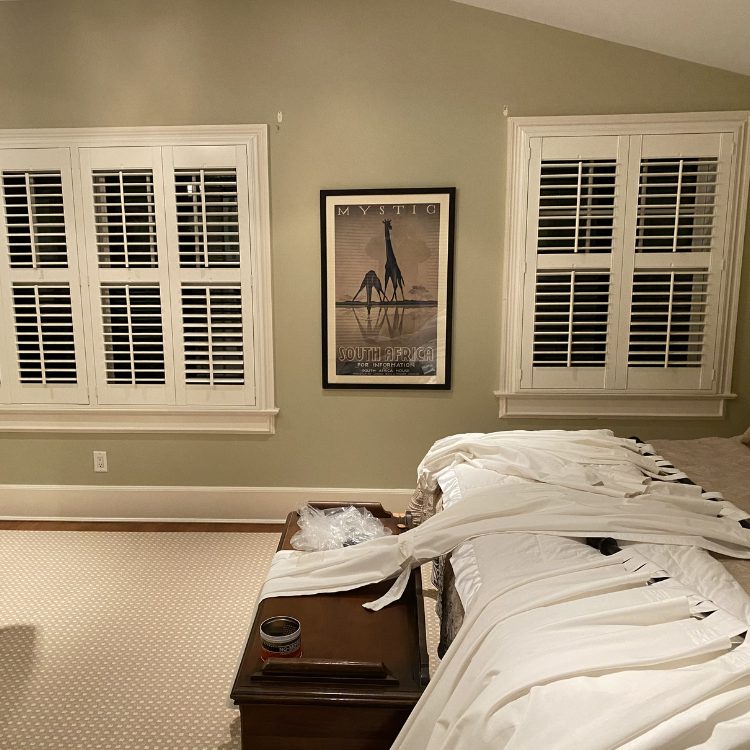
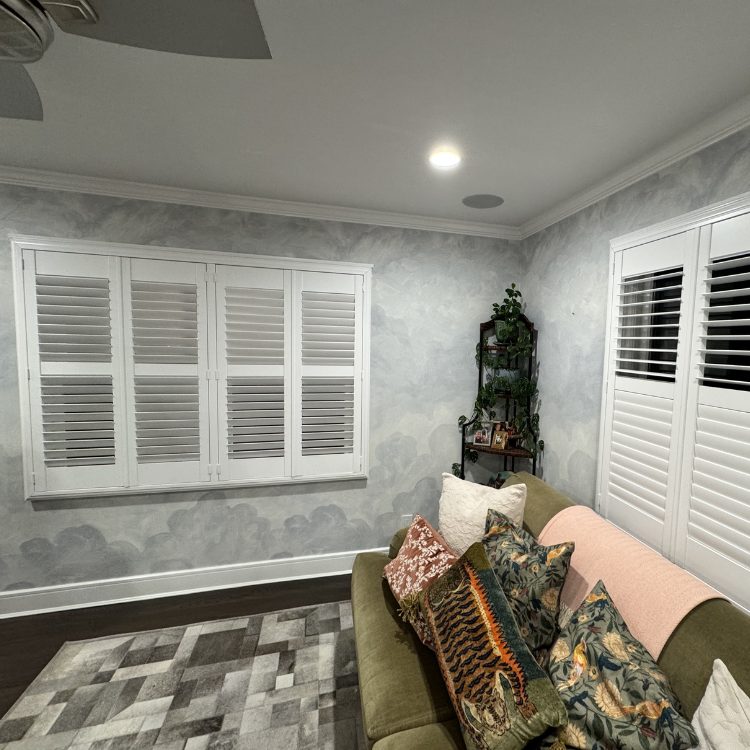
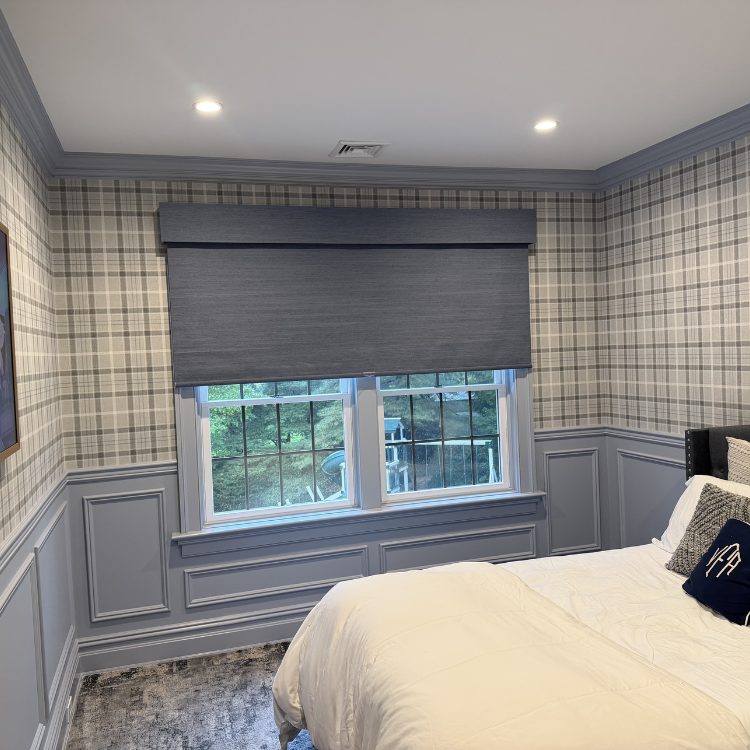
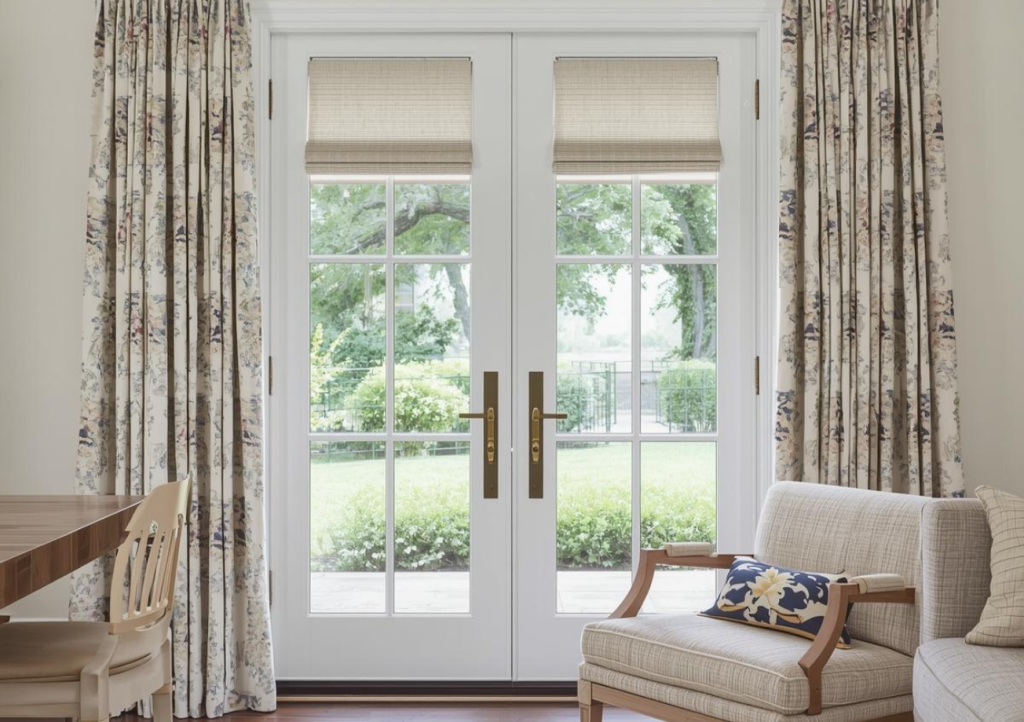
From cozy entryways to bright kitchens, get inspired by these curated looks and make every room feel like home.

Brighten your cooking space with blinds and shades that bring warmth, style, and light control to every meal.

Create a cozy retreat with blackout or light-filtering shades that help you rest and recharge in comfort.

Frame your view beautifully with drapes and blinds that balance natural light and privacy for everyday living.

Enjoy moisture-resistant window treatments that add privacy and durability without sacrificing design.

Keep playtime safe and stylish with cordless shades designed for light control, safety, and fun patterns.

We make finding the perfect window treatments easy with our shop-at-home service. Simply schedule a free consultation, and we’ll bring a wide selection of shades, blinds and shutters samples directly to your home. This allows you to see samples in your space, ensuring they fit perfectly with your décor and lighting.

Our experts will provide personalized recommendations, take precise measurements, and offer transparent, affordable pricing—without the hassle of visiting a showroom.

We offer installation, so you can enjoy a seamless, custom-fit solution, all while saving time and money. Experience the convenience of choosing quality window treatments from the comfort of your home.


Finding the right window blinds near you doesn’t have to be a challenge. At Long Island Custom Blinds, we make the process simple by offering in-home consultations, expert recommendations, and precise measurements to ensure a perfect fit.
Our team serves all of Manhasset and the surrounding areas, bringing samples directly to your door so you can see how different styles will look in your space.
From modern designs that maximize natural light to blackout options for bedrooms, we have something for every need and budget. Plus, with our professional installation services, you can rest assured that your window shades, blinds, or shutters will be securely mounted and built to last.


Situated directly across Manhasset Bay from Great Neck on Long Island’s North Shore, approximately 20 miles east of Manhattan, Manhasset represents the Gold Coast’s most carefully preserved embodiment—a community where wealth, exclusivity, and understated elegance have been maintained with remarkable consistency through generations of social and economic change. Unlike its neighbor Great Neck, which underwent dramatic demographic transformation in the post-World War II era, Manhasset has retained much of its original character: predominantly white, Protestant, and wealthy in ways that evoke the aristocratic suburban ideal chronicled by F. Scott Fitzgerald. With a population of roughly 8,000 residents concentrated in a small geographic area, Manhasset functions less as a conventional suburb than as an exclusive enclave where family lineages, social networks, and substantial wealth create a community largely insulated from the forces reshaping much of suburban America.
The name “Manhasset” derives from the Matinecock Native American term meaning “island neighborhood,” though the community occupies a peninsula rather than an island. European settlement began in the 17th century, with the area remaining primarily agricultural until the late 19th century when wealthy industrialists and financiers began establishing estates along the North Shore. This Gold Coast development reached its zenith in the 1920s, precisely the era Fitzgerald immortalized in “The Great Gatsby,” with Manhasset serving as primary inspiration for East Egg—the old-money counterpart to Great Neck’s nouveau riche West Egg. While many Gold Coast estates were subdivided or demolished in the mid-20th century, Manhasset preserved more of its original character than most North Shore communities, maintaining large properties, restrictive zoning, and social structures that perpetuate exclusivity.
Manhasset’s demographic profile stands in stark contrast to the diversity characterizing much of contemporary suburban New York, revealing a community that has successfully—whether through deliberate policy, market forces, social networks, or combination thereof—maintained remarkable demographic consistency over decades when surrounding communities diversified substantially.
The population of approximately 8,000 residents has remained relatively stable, with modest growth reflecting limited available land and restrictive zoning that prevents significant housing development. This stability itself distinguishes Manhasset from high-growth suburbs experiencing rapid demographic change. The small population concentrated in a compact area creates intimacy unusual in suburban contexts—residents frequently encounter neighbors, social networks overlap extensively, and community cohesion remains strong.
Racial and ethnic composition reveals Manhasset’s most striking demographic characteristic: overwhelming whiteness in a region increasingly characterized by diversity. White residents comprise approximately 85-90% of the population—dramatically higher than Nassau County overall (approximately 60% white) and neighboring Great Neck (60-70% white). Asian residents represent roughly 7-10% of the population, substantially lower than Great Neck’s 20-25%. Hispanic or Latino residents account for approximately 3-5%, and Black residents typically comprise 1-2% or less. These percentages have remained remarkably stable over recent decades, suggesting that whatever forces maintain demographic composition continue operating effectively.
Religious composition skews heavily Christian, particularly Episcopal, Presbyterian, and Catholic traditions, though precise figures are unavailable. The Jewish population, while present, remains substantially smaller than in Great Neck or other nearby communities—perhaps 10-15% at most, and predominantly Reform or secular rather than observant. This religious composition reflects both historical patterns (restrictive covenants and social exclusion historically limited Jewish access to Manhasset) and contemporary selection effects (Jewish families seeking strong Jewish community infrastructure often prefer Great Neck or other communities with larger Jewish populations and institutions).
Arguments explaining demographic homogeneity:
Market forces perspective: Manhasset’s extreme housing costs—median home values frequently exceeding $1.5-2 million, with many properties costing $3-10 million or more—create economic barriers that restrict access to the very wealthy. This wealth barrier disproportionately excludes minorities given racial wealth gaps in the United States. High property taxes (often $30,000-50,000+ annually even for middle-range properties) create additional economic filtering. The lack of apartment buildings or affordable housing options means economic diversity cannot exist, and economic homogeneity correlates strongly with racial homogeneity.
Social network effects: Real estate in Manhasset often sells through personal networks before reaching open market. Families pass properties to relatives, friends recommend friends, and social connections facilitate transactions. These network effects naturally perpetuate demographic similarity when existing residents are overwhelmingly white. Exclusive social institutions (country clubs, private schools, social organizations) create shared experiences that bond residents while potentially making outsiders feel unwelcome.
Zoning and policy: Large minimum lot sizes, restrictions on housing types, opposition to multi-family development, and other land use policies restrict housing supply and maintain high prices. Whether intentionally or incidentally, these policies create demographic outcomes by determining who can afford to live in the community. Historical restrictive covenants, while legally unenforceable since 1948, created patterns that persist through more subtle mechanisms.
Selection effects: Families choosing Manhasset self-select for characteristics correlated with demographic profile. Those seeking Jewish community infrastructure choose Great Neck; those seeking diversity might choose more heterogeneous communities. Manhasset attracts those who value precisely what Manhasset offers: a homogeneous, quiet, exclusive enclave. This selection perpetuates existing patterns.
Arguments for concern about homogeneity:
The lack of diversity raises questions about exclusion, whether intentional or structural. Racial and economic segregation perpetuate inequality and limit opportunities for cross-cultural understanding. Children raised in homogeneous environments may be poorly prepared for diverse workplaces and society. The community’s demographic profile suggests that barriers—whether economic, social, or otherwise—prevent access for qualified families who happen not to fit the dominant demographic profile.
The balanced reality:
Manhasset’s demographic homogeneity results from multiple reinforcing factors: extreme housing costs, restrictive zoning, social networks, self-selection, and historical patterns. Whether this constitutes problematic exclusion or legitimate freedom of association remains contentious. What’s clear is that Manhasset has preserved demographic consistency unusual in contemporary suburban America, and this consistency represents—depending on perspective—either admirable community preservation or troubling segregation.
Household income and wealth place Manhasset among America’s most affluent communities. Median household income estimates range from $150,000 to $200,000+, though these figures understate true wealth. Many Manhasset residents derive income from investments, family wealth, or business ownership rather than wages, meaning reported income may not reflect actual financial resources. Net worth among Manhasset residents often reaches into tens of millions for substantial portions of the population, though precise wealth figures are unavailable.
Age distribution shows a mature suburban profile with relatively older residents. Median age approaches 45-48 years, reflecting empty-nesters and established families rather than young families starting out. The community’s housing costs make it nearly impossible for young professionals to purchase entry-level homes, meaning residents typically arrive in Manhasset already wealthy rather than building wealth after moving there. This creates an aging demographic profile and raises questions about long-term community sustainability if younger families cannot afford entry.
Education in Manhasset operates through the Manhasset Union Free School District, serving the community and achieving academic outcomes that place it among New York State’s highest-performing districts. The district operates three elementary schools (Munsey Park, Shelter Rock, and Wayne Avenue), one middle school (Manhasset Middle School), and one high school (Manhasset High School), with total enrollment around 2,800-3,000 students across all schools.
Academic performance metrics consistently rank among the state’s best. SAT scores average approximately 1350-1400 (out of 1600)—well above the national average of about 1050 and comparable to Great Neck’s elite performance. Graduation rates approach 98%, with virtually all graduates pursuing four-year college education. College placement includes substantial representation at Ivy League institutions, highly selective liberal arts colleges, and top universities—acceptance rates to elite institutions substantially exceed national averages.
Advanced Placement participation runs extremely high, with the district offering extensive AP coursework across subjects. AP exam pass rates exceed 90% in many courses, with large percentages scoring 4 or 5 (the highest scores). The district offers honors tracks, advanced mathematics sequences, extensive foreign language offerings, and enrichment programs that challenge high-achieving students.
Per-pupil expenditures exceed $40,000 annually—among the highest in New York State and roughly three times the national average. This extraordinary spending supports small class sizes (often 15-20 students), extensive course offerings, strong teacher compensation ($100,000+ salaries common for experienced teachers), state-of-the-art facilities, comprehensive support services, and enrichment programming. The high school campus features athletic facilities, performing arts centers, and technology resources rivaling many colleges.
Arguments supporting Manhasset’s educational excellence:
The district delivers genuine educational quality that justifies its reputation. Teacher quality appears exceptionally strong, with competitive compensation and working conditions attracting highly capable educators from selective preparation programs. Small class sizes enable individualized attention impossible in larger classes. Extensive course offerings provide authentic choice and challenge for diverse interests and ability levels. The combination of resources and engaged families creates optimal educational environments that produce measurable outcomes.
Arguments for skepticism:
Manhasset’s academic success overwhelmingly reflects student demographics rather than exceptional educational practice. Children from families with median incomes of $150,000-200,000+, extensive parental education, cultural capital, stable home environments, and resources for tutoring, test preparation, and enrichment would achieve at high levels in virtually any school system. The district essentially educates the easiest-to-educate student population in America—affluent children with every advantage—and produces expected results given inputs.
The $40,000+ per-pupil spending, while producing comfortable facilities and small classes, yields diminishing returns compared to well-run districts spending $20,000-25,000 per pupil. Much spending supports amenities (luxurious facilities, extensive athletics, arts programming) that enhance experience but may not improve core academic outcomes. The intense focus on college admissions to elite institutions may not serve all students optimally or prepare them well for life success beyond credential accumulation.
Achievement gaps between different student groups, while smaller than in many districts, still exist, suggesting the district succeeds better with some populations. The competitive academic culture produces stress and mental health concerns among students, with anxiety, depression, and pressure documented in student surveys and counseling data. The homogeneous student body limits exposure to diverse perspectives and experiences.
The balanced assessment:
Manhasset schools deliver strong educational experiences supported by extraordinary resources and favorable student demographics. The outcomes—test scores, graduation rates, college placements—genuinely place the district among the nation’s best, though these outcomes substantially reflect who the students are rather than what the schools do. Families moving to Manhasset for schools make a reasonable decision based on measurable quality, though the extreme housing costs make this decision available only to the very wealthy.
The district faces less demographic diversity, fewer economically disadvantaged students, and fewer English Language Learners than virtually any comparable-sized New York district, making comparisons to more diverse districts of limited validity. Manhasset schools succeed brilliantly at educating affluent children—a task they’re optimally designed for and that their resources support—but demonstrate limited capacity to address challenges facing most American schools.
Private school alternatives exist for families seeking different educational experiences. Several prestigious private schools serve the North Shore, including Friends Academy (Quaker), various Catholic schools, and Manhattan private schools accessible via commute. Some families choose private schools for social network access, smaller environments, or educational philosophies not available in public schools, though Manhasset’s public schools generally compete effectively with private alternatives.
For higher education, Manhasset students pursue prestigious institutions nationwide, with Ivy League, “Little Ivies,” and other selective colleges heavily represented. The community’s emphasis on elite college placement means students often attend residential colleges rather than commuting to local institutions, though New York City’s universities remain accessible for those preferring that path.
Tourism in Manhasset operates in muted fashion—the community possesses attributes that might attract visitors but actively discourages tourism development that would compromise residential character. Unlike communities economically dependent on tourism, Manhasset’s wealth enables it to prioritize exclusivity and privacy over economic activity that increased visitation might generate.
The Americana Manhasset represents the community’s most significant visitor attraction—an outdoor luxury shopping center featuring high-end retailers (Louis Vuitton, Hermès, Gucci, Cartier, Dior, etc.) that draws affluent shoppers from throughout the metropolitan region. The center occupies the site of what was once an estate, though the current development bears no resemblance to historical structures. Americana Manhasset generates substantial sales tax revenue for the town and provides luxury retail experience rare outside Manhattan, though its presence creates tension between commercial activity and residential character.
The shopping center attracts tourists and shoppers who might not otherwise visit Manhasset, creating traffic, parking demands, and commercial activity in an otherwise purely residential community. Some residents appreciate the convenience and tax revenue; others resent the tourism and traffic the center generates. This tension—between economic benefits and quality-of-life impacts—reflects broader questions about appropriate development in exclusive residential communities.
Estate remnants and architecture provide subtle attractions for those interested in Gold Coast history. While many estates have been subdivided, several properties and institutions maintain historical character. Sands Point Preserve, while technically in neighboring Sands Point, sits nearby and preserves several Gold Coast estates (Hempstead House, Falaise, Castlegould) as museums open to the public, offering the closest accessible experience of the era Manhasset exemplifies.
Manhasset itself contains numerous properties of architectural and historical interest, though virtually all remain private residences inaccessible to tourists. Tree-lined streets with large estates behind gates and hedges provide scenic drives, but deliberate privacy makes tourism based on architecture or history essentially impossible. The community values privacy over heritage tourism, and zoning, property rights, and community preferences ensure this continues.
The Fitzgerald connection applies to Manhasset as East Egg inspiration, though even less tangibly than Great Neck’s West Egg association. No Daisy Buchanan mansion survives for visitors to identify; no museum or interpretation explains the connection. Literary tourists seeking Gatsby connections find a wealthy community that evokes East Egg’s spirit—old money, exclusivity, understated elegance—but offers no concrete attractions related to the novel.
Religious and institutional architecture includes several notable structures. Various churches serving the community feature attractive traditional architecture, though again, these serve congregations rather than functioning as tourist attractions. The Manhasset Bay Yacht Club and other private institutions maintain presence but operate exclusively for members.
Parks and public spaces remain limited, reflecting the community’s character as a collection of private estates rather than a town with extensive public amenities. Residents access beaches, parks, and recreation through private clubs (beach clubs, yacht clubs, golf clubs) rather than public facilities, perpetuating exclusivity and limiting access for non-residents.
Arguments for tourism development:
The Fitzgerald connection, Gold Coast history, and Americana Manhasset provide foundation for expanded tourism. Heritage tourism focused on Gold Coast estates, literary tourism around Gatsby, and luxury shopping tourism could generate economic activity. The community’s proximity to Manhattan and affluent demographics make it accessible to wealthy tourists. Increased tourism could support restaurants, cultural institutions, and businesses while generating tax revenue.
Arguments against tourism development:
Manhasset residents overwhelmingly value privacy, exclusivity, and residential character over economic activity from tourism. The community’s wealth means tourism revenue is unnecessary for fiscal health. Tourism development would increase traffic, parking demands, and commercial activity incompatible with residential character. Property values depend partially on exclusivity that tourism would compromise. Zoning restrictions, community opposition, and practical constraints make significant tourism development politically and practically impossible.
The realistic assessment:
Manhasset will remain primarily a residential enclave with minimal tourism beyond Americana Manhasset shopping and incidental visitation. The community’s wealth and values prioritize preservation of exclusive residential character over tourism development. Visitors interested in Manhasset should expect to observe from a distance—driving through tree-lined streets, shopping at Americana, perhaps attending services at churches—rather than accessing estates, historical sites, or experiencing the community intimately. The East Egg quality—old money, exclusivity, privacy—persists precisely because the community can afford to prioritize these values over economic development requiring openness to outsiders.
