What are zebra shades or dual shades?
Zebra shades, also called dual shades or layered shades, feature two layers of fabric with alternating solid and sheer horizontal stripes that roll on a single mechanism. By adjusting the

Discover high-quality, affordable window treatments with your local, shop-at-home service.

Discover high-quality, affordable window treatments with your local, shop-at-home service.






Peace of mind with every install
Proudly serving Long Island
for over 10 years
We don’t leave until it’s perfect
5-Star Reviews on Google
| Feature | Long Island Custom Blinds | Big Box Stores |
|---|---|---|
| Free In-Home Consultation | Yes — we bring the showroom to you | No — visit the store and DIY |
| Custom Measurements | Every window is precisely measured | Often relies on standard sizes |
| Design Guidance | Expert help choosing colors, styles, and materials | You're on your own |
| Product Quality | Premium materials built to last | Often mass-produced, lower quality |
| Professional Installation | Offered with every order | May require 3rd party or self-install |
| Local Support & Service | Speak directly with your installer/designer | 1-800 number or store associate |
| Speed & Flexibility | Quick turnaround & flexible scheduling | Delays and rigid systems |
| Lifetime Client Relationship | We're your go-to for future projects & upgrades | One-and-done sale |
| Reputation in the Community | 5-Star reviews from Long Island homeowners | Mixed reviews, impersonal service |
| Pricing Transparency | Clear estimates — no surprise fees | Hidden fees for delivery or install |
| Value for Money | High quality at competitive prices | Lower upfront, higher long-term cost |
| Feature | Long Island Custom Blinds | Big Box Stores |
|---|---|---|
| Free In-Home Consultation | ✓ | × |
| Custom Measurements | ✓ | × |
| Design Guidance | ✓ | × |
| Product Quality | ✓ | × |
| Professional Installation | ✓ | × |
| Local Support & Service | ✓ | × |
| Speed & Flexibility | ✓ | × |
| Lifetime Client Relationship | ✓ | × |
| Reputation in the Community | ✓ | × |
| Pricing Transparency | ✓ | × |
| Value for Money | ✓ | × |
From cozy entryways to bright kitchens, get inspired by these curated looks and make every room feel like home.

Brighten your cooking space with blinds and shades that bring warmth, style, and light control to every meal.

Create a cozy retreat with blackout or light-filtering shades that help you rest and recharge in comfort.

Frame your view beautifully with drapes and blinds that balance natural light and privacy for everyday living.

Enjoy moisture-resistant window treatments that add privacy and durability without sacrificing design.

Keep playtime safe and stylish with cordless shades designed for light control, safety, and fun patterns.
Peace of mind with every install
Proudly serving Long Island
for over 10 years
We don’t leave until it’s perfect
5-Star Reviews on Google

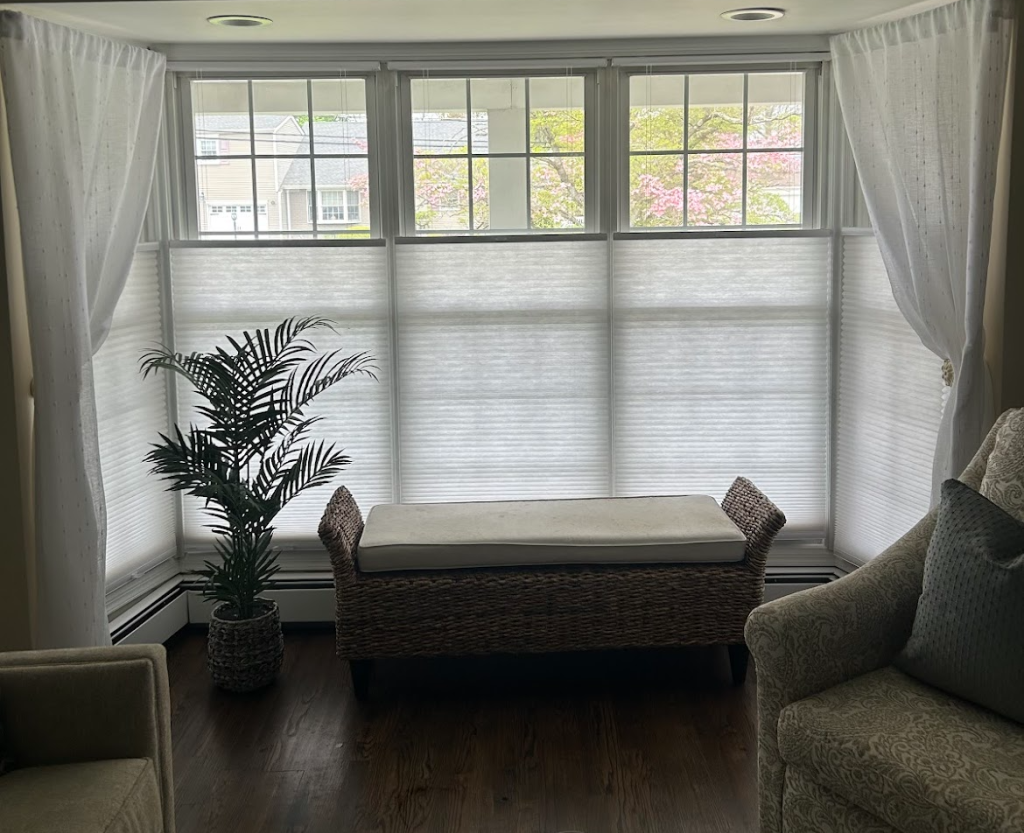
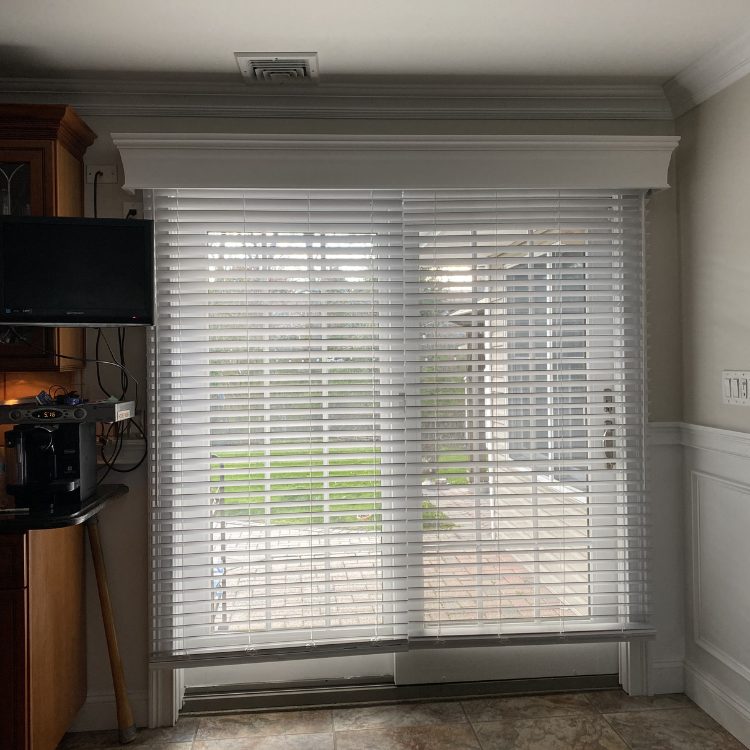
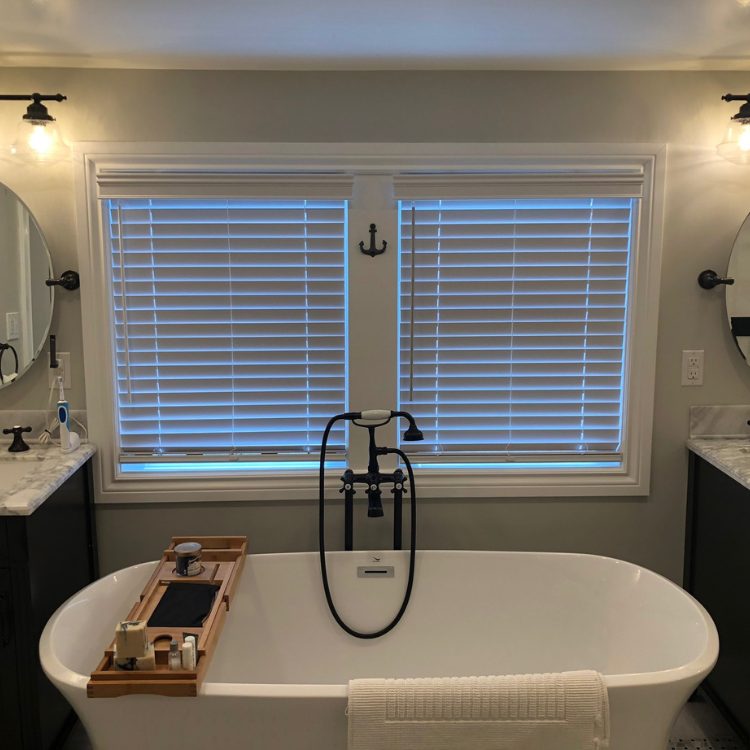
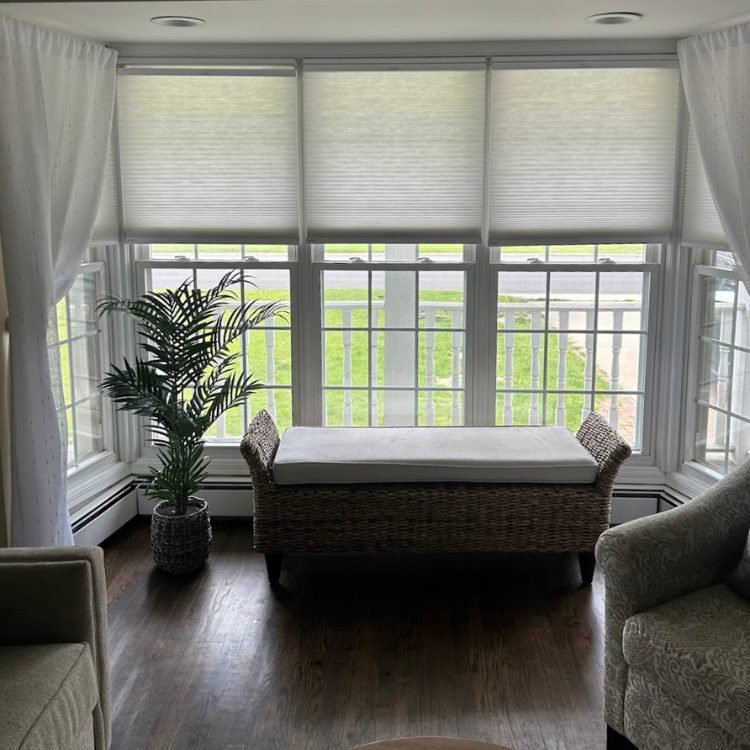
We make finding the perfect window treatments easy with our shop-at-home service. Simply schedule a free consultation, and we’ll bring a wide selection of shades, blinds and shutters samples directly to your home. This allows you to see samples in your space, ensuring they fit perfectly with your décor and lighting.

Our experts will provide personalized recommendations, take precise measurements, and offer transparent, affordable pricing—without the hassle of visiting a showroom.

We offer installation, so you can enjoy a seamless, custom-fit solution, all while saving time and money. Experience the convenience of choosing quality window treatments from the comfort of your home.


Finding the right window blinds near you doesn’t have to be a challenge. At Long Island Custom Blinds, we make the process simple by offering in-home consultations, expert recommendations, and precise measurements to ensure a perfect fit.
Our team serves all of Jericho and the surrounding areas, bringing samples directly to your door so you can see how different styles will look in your space.
From modern designs that maximize natural light to blackout options for bedrooms, we have something for every need and budget. Plus, with our professional installation services, you can rest assured that your window shades, blinds, or shutters will be securely mounted and built to last.



Sprawling across approximately 10 square miles of Nassau County’s interior roughly 28 miles east of Manhattan, Jericho represents the purest distillation of Long Island’s achievement-oriented suburbia—a community where educational excellence has become so central to identity that virtually every other dimension of community life subordinates to the singular purpose of producing academically accomplished children who will attend elite universities and pursue prestigious professional careers. With a population of approximately 13,500-14,500 residents, Jericho functions less as conventional community than as educational sorting mechanism, attracting families whose primary residential criterion involves accessing what is consistently ranked among the top public school districts in New York State and, by various measures, the nation. The community’s identity has become so thoroughly fused with its school district that understanding Jericho requires understanding not a place with particular geography, heritage, or character, but rather an educational institution around which residential patterns have organized.
The name “Jericho” derives from biblical reference, though the specific origin of its application to this Long Island location remains obscure. The area remained agricultural through most of its history, with farms and rural properties occupying the gently rolling terrain. Unlike North Shore communities that developed as Gold Coast estates or historic villages accumulating centuries of significance, Jericho remained sparsely populated until post-World War II suburban expansion transformed Long Island’s interior. The transformation came rapidly: farms became subdivisions, rural roads became suburban streets, and population exploded as returning veterans and growing families sought suburban housing.
What distinguishes Jericho’s subsequent development isn’t physical form—the housing resembles countless other post-war suburbs—but rather the educational reputation that emerged over decades, creating self-reinforcing cycle where strong schools attracted achievement-oriented families, whose children’s performance strengthened school reputation, which attracted more achievement-oriented families. This cycle has produced a community whose demographics, culture, and property values all derive substantially from educational reputation rather than from geographic features, historical significance, or community amenities.
Jericho’s demographic profile reveals perhaps the most striking example on Long Island of educational reputation shaping population characteristics—a community where the school district’s excellence has attracted particular populations whose presence both reflects and reinforces the achievement culture that defines community identity.
The population of approximately 13,500-14,500 residents has remained relatively stable over recent decades, constrained by the built-out character of the community. More significant than population size is demographic composition, which has shifted dramatically over recent decades as educational reputation attracted particular populations.
Racial and ethnic composition shows extraordinary concentration reflecting educational migration:
White residents comprise approximately 35-42% of the population—dramatically lower than surrounding communities and representing remarkable demographic transformation over recent decades. As recently as 1990, Jericho was approximately 90% white; the shift to minority-white status represents one of Long Island’s most dramatic demographic transformations.
Asian residents represent approximately 50-58% of the population—majority status representing the most extreme concentration of Asian population in any Long Island community of comparable size. This Asian majority consists primarily of Chinese, Korean, and Indian families who have systematically targeted Jericho for its educational reputation.
Hispanic or Latino residents account for approximately 3-5%, and Black or African American residents comprise roughly 2-3%.
Arguments explaining Jericho’s demographic transformation:
Educational reputation as primary driver: Jericho’s demographic transformation reflects direct targeting by Asian immigrant families prioritizing educational achievement above virtually all other residential considerations. These families—predominantly Chinese, Korean, and Indian—systematically research school district performance, identify highest-achieving districts, and purchase homes specifically to access those schools. Jericho’s consistent ranking among New York’s top districts made it primary target for educational migration.
Network effects and community infrastructure: As Asian populations established presence, community infrastructure developed serving these populations: Asian restaurants, grocery stores, supplementary education businesses, religious institutions, and cultural organizations. This infrastructure made Jericho more attractive to additional Asian families, creating self-reinforcing concentration. Families could maintain cultural connections while accessing elite education.
Cultural values emphasizing education: Many Asian immigrant families—particularly those from Chinese, Korean, and Indian backgrounds—hold cultural values placing extraordinary emphasis on educational achievement as pathway to professional success and intergenerational advancement. These values align with Jericho’s achievement-oriented culture, creating strong attraction for families whose priorities match community orientation.
Housing stock enabling access: Unlike estate communities where multi-million-dollar prices restrict access, Jericho’s housing stock—ranging from approximately $700,000 to $1.8 million for typical properties—enables access for affluent professional families without requiring extraordinary wealth. Dual-income professional families, successful business owners, and similar upper-middle-class households can afford Jericho entry, creating economic filtering that produces particular demographic patterns.
Self-selection and cultural fit: Families choosing Jericho specifically seek maximum educational optimization, self-selecting for characteristics correlated with intense academic focus. Both Asian and white families in Jericho likely share more with each other—in terms of educational values, professional aspirations, and priorities for children—than with co-ethnics in communities with different orientations.
The demographic transformation creates a community that is simultaneously extraordinarily homogeneous (in terms of educational values, professional aspirations, and socioeconomic status) and dramatically diverse (in terms of ethnic composition). This paradox—diversity in ethnicity, homogeneity in values—defines contemporary Jericho.
Household income and wealth levels reflect the professional character of achievement-oriented families:
Median household income estimates range from $170,000 to $210,000—substantially above national medians (approximately $75,000), above Nassau County medians (approximately $120,000), and among the highest on Long Island. These figures reflect dual-income professional households: doctors, engineers, financial professionals, corporate executives, business owners, and similar occupations requiring advanced education and providing substantial compensation.
The income distribution shows concentration at high levels: most households cluster in the $150,000-400,000 range, reflecting the professional credentials and occupations of families who can afford Jericho’s housing costs and who prioritize educational investment.
Home values reflect Jericho’s position as premier educational destination:
Single-family homes typically range from $700,000-950,000 for smaller or less updated properties to $1.2-1.8 million for larger, renovated homes in desirable locations. Exceptional properties might approach $2.5-3 million, though such prices remain uncommon. These values have appreciated dramatically—homes that cost $250,000-400,000 in the 1990s now command $900,000-1.4 million—driven primarily by school district demand.
The price premium attributable to school district access is substantial and measurable. Similar homes in adjacent communities with different school districts sell for meaningfully less, demonstrating that purchasers pay primarily for educational access. This premium represents the capitalized value of educational reputation—families essentially prepaying for educational quality through housing costs.
Annual property taxes typically range from $22,000-38,000—substantial burden reflecting property values and educational investment. These high taxes fund the educational spending that creates school quality, creating self-reinforcing cycle where taxes fund excellence, excellence drives demand, demand drives property values, and values generate tax revenue.
Age distribution reflects family-oriented community:
Median age approaches 42-46 years, with substantial concentration in the 35-55 cohort—parents with school-age children present specifically to access schools. The community contains many families in peak child-rearing years. Empty-nesters and retirees exist but represent smaller proportion than in communities where school quality matters less to residential decisions.
This age pattern means Jericho’s population turns over substantially as children complete education. Families who purchased for school access may sell when children graduate, creating residential patterns driven by educational lifecycle rather than long-term community attachment.
Educational attainment among adult residents reaches extraordinary levels:
Bachelor’s degree attainment approaches 75-80%—among the highest rates in the nation and dramatically exceeding national averages (approximately 33%). Graduate and professional degrees are held by approximately 45-50% of adults—similarly exceptional figures reflecting the professional character of families attracted by educational reputation.
These credentials concentrate in particular fields: engineering, medicine, finance, law, technology, and business. The credential concentration creates community culture where advanced education is norm rather than exception, where professional achievement is expected, and where children grow up surrounded by highly educated parents with high expectations.
Housing characteristics reflect post-World War II suburban development:
The housing stock consists predominantly of single-family homes built between 1955-1985: colonials, split-levels, expanded ranches, and contemporaries occupying lots typically ranging from 0.25-0.6 acres. Many homes have undergone substantial renovation—finishing basements, expanding kitchens, adding bedrooms, modernizing systems—as owners update properties for contemporary expectations and growing families.
Architectural styles lack distinction—mass-produced suburban housing characteristic of its era. Jericho contains no historic buildings of significance, no architectural heritage, no design features meriting preservation. The homes serve functional purposes without generating aesthetic interest.
Street patterns follow typical suburban forms: curving roads, cul-de-sacs, limited through-traffic. Commercial development concentrates along major roads (Jericho Turnpike, Broadway) in strip patterns.
Homeownership rates exceed 92%, reflecting family orientation and wealth levels enabling purchase.
Education represents Jericho’s singular defining characteristic—the institution that creates community identity, attracts residents, shapes property values, and generates the achievement culture pervading community life. Understanding Jericho requires understanding the Jericho Union Free School District with depth beyond typical community analysis.
Jericho Union Free School District operates three elementary schools (Cantiague, Jackson, and Robert Seaman), one middle school (Jericho Middle School), and one high school (Jericho Senior High School), serving approximately 3,000-3,300 students across all grades. The district’s relatively compact size—smaller than many Long Island districts—creates intimate educational environment while concentrating resources.
Academic performance metrics place Jericho consistently among New York State’s highest-performing districts and among the nation’s elite public schools:
SAT scores average approximately 1400-1450 (out of 1600)—among the highest averages in New York State and dramatically exceeding national averages of about 1050. These exceptional scores reflect both student characteristics and educational preparation. In some years, Jericho’s average scores have ranked first or near-first among all New York public school districts.
Graduation rates approach 99%—essentially universal completion reflecting both student capability and support systems ensuring virtually no students fall through cracks.
Advanced Placement participation reaches extraordinary levels. Large percentages of students take multiple AP courses, with many completing 8-12+ AP courses during high school. AP exam pass rates (scores of 3+) exceed 90-95% across most subjects, with substantial percentages scoring 4 or 5 (highest scores). The breadth of AP offerings covers virtually every subject area.
College placements include exceptional representation at the nation’s most selective institutions. Each year, meaningful numbers of Jericho graduates matriculate at Ivy League universities, MIT, Stanford, elite liberal arts colleges, and other highly selective institutions. The guidance office tracks and publicizes these placements, and college admissions outcomes feature prominently in community consciousness.
Academic competitions produce exceptional results. Jericho students regularly win recognition in Intel/Regeneron Science Talent Search, Math Olympiad, debate competitions, and other academic competitions, generating accolades that reinforce district reputation.
Per-pupil expenditures exceed $30,000-35,000 annually—among the highest in New York State and roughly 2.5 times the national average. This substantial spending reflects high property values generating tax revenue and community willingness to invest heavily in education.
Arguments supporting Jericho’s educational excellence:
Genuine quality: The district delivers measurable educational excellence that produces impressive outcomes by any standard metric. Teacher quality appears exceptional, with competitive compensation attracting talented educators. Curriculum rigor, course offerings, and instructional quality create genuine educational value beyond what student demographics alone would produce. Facilities, technology, and resources enable excellent educational delivery. The outcomes reflect real educational achievement, not merely demographic advantages.
Comprehensive programming: Beyond academics, the district offers extensive programming in arts, athletics, extracurriculars, and enrichment enabling well-rounded development. Students can pursue diverse interests while receiving strong academic preparation. The comprehensive programming reflects both resource availability and community values supporting multiple dimensions of student development.
Support systems: The district provides strong support services—counseling, special education, intervention programs—ensuring students receive assistance when needed. The comprehensive support helps explain near-universal graduation rates despite challenging curriculum.
Community investment: The exceptionally high property taxes residents pay represent genuine collective investment in educational excellence. The community has consistently supported educational funding through budget votes and bond referendums, creating sustained resource commitment enabling quality.
Arguments acknowledging concerns or limitations:
Demographic advantages versus educational value-add: Much of Jericho’s academic success reflects student demographics rather than exceptional educational practice. Children of highly educated, affluent parents who intensively invest in education—providing supplementary tutoring, test preparation, enrichment activities, and extensive parental support—would achieve at exceptional levels in virtually any school system. Jericho’s outcomes may demonstrate primarily who the students are rather than what unique value the schools add. Studies attempting to measure “value-added” educational impact often find that demographic factors explain most outcome variation across districts.
Intense pressure and mental health concerns: The achievement culture creates documented mental health concerns among students. Anxiety, depression, stress, and perfectionism affect meaningful portions of student population. The competitive atmosphere—driven by college admissions pressure, parental expectations, peer comparison, and internalized achievement ideology—harms student wellbeing while producing impressive metrics. Some students thrive in this environment; others suffer significantly.
The pressure manifests in multiple ways: students taking excessive AP course loads, sacrificing sleep for homework and test preparation, experiencing anxiety about grades and test scores, feeling inadequate despite objective success, and defining self-worth through academic achievement. The prevalence of these concerns has prompted district attention to social-emotional learning and wellbeing, though whether such interventions can substantially moderate achievement pressure within the existing culture remains uncertain.
Narrowness of achievement definition: The overwhelming emphasis on academic metrics—test scores, grades, AP courses, college admissions—creates narrow definition of success that may poorly serve students with different strengths, interests, or aspirations. Students oriented toward trades, arts, entrepreneurship, or non-traditional pathways may find the environment poorly suited to their development. The implicit message that success means admission to elite colleges and pursuit of prestigious professional careers may constrain students whose authentic interests lie elsewhere.
Supplementary education ecosystem: Jericho students extensively supplement school education with tutoring, test preparation, and enrichment programs—creating questions about what school district versus private investment produces the outcomes. The supplementary education culture—particularly extensive among Asian families but present across the community—represents substantial private spending (often $10,000-30,000+ annually per child) that compounds educational advantages. The high achievement may reflect private educational spending as much as public school quality.
This supplementary ecosystem includes: tutoring centers providing additional instruction; SAT/ACT preparation courses and private tutoring; academic enrichment in mathematics, science, and other subjects; private college counseling supplementing school guidance; competition preparation for academic olympiads and competitions; and various programs marketed as providing competitive advantages.
Homogeneity of experience: Despite ethnic diversity, Jericho students experience substantial socioeconomic and values homogeneity. Few economically disadvantaged students, few students whose families don’t prioritize academic achievement, and few students with significantly different life circumstances create insular educational experience. This homogeneity may poorly prepare students for diverse colleges, workplaces, and society.
Sustainability questions: Can the achievement culture sustain indefinitely? As pressure intensifies, supplementary investment increases, and college admissions become ever more competitive, the system may approach limits. Students can only take so many AP courses, parents can only invest so much, and the psychological toll may eventually prompt reconsideration. Whether the current equilibrium remains stable or whether it represents unsustainable intensification remains uncertain.
The balanced assessment:
Jericho schools deliver genuine educational excellence producing impressive measurable outcomes that place the district among the nation’s best by conventional metrics. Families choosing Jericho for schools make rational decisions based on demonstrated quality. The educational investment—both public through taxes and private through supplementary education—produces results valued by families making these investments.
However, the excellence comes with costs: psychological pressure on students, narrow achievement definitions, substantial financial investment, and insular community culture. The outcomes reflect both district quality and demographic characteristics that would produce high achievement in many settings. Whether the particular intensity characterizing Jericho represents optimal educational approach or problematic pressure depends on values and individual student characteristics.
Prospective families should evaluate whether Jericho’s particular culture suits their children and values. For families seeking maximum academic intensity, rigorous preparation for selective college admissions, and environment where achievement is paramount, Jericho delivers exceptionally. For families seeking more balanced, lower-pressure education, or whose children might struggle in intensely competitive environments, other strong districts might prove more appropriate.
Tourism in Jericho operates at zero levels, reflecting the community’s character as educational destination lacking any features, heritage, or attractions beyond school quality that might generate outside interest.
The complete absence of tourism reflects multiple factors:
No historic sites or heritage resources: Jericho developed primarily after World War II, accumulating no historical significance. No historic buildings, preserved sites, or heritage resources exist. The community’s history as suburb involves nothing worth memorializing.
No natural attractions or scenic resources: Jericho occupies interior Nassau County terrain without waterfront, dramatic topography, or preserved natural areas. No geographic features attract visitors.
No distinctive architecture or design: The housing stock consists of generic post-war suburban development—functional but architecturally unremarkable. No architectural features merit attention.
No commercial district or destination retail: Commercial activity concentrates along arterials in strip development serving local needs. No downtown, no unique shops, no notable restaurants create destination appeal.
No cultural institutions: Jericho contains no museums, galleries, or cultural facilities attracting outside visitors.
Identity solely through schools: Jericho’s identity exists entirely through its school district. The community possesses no identity, character, or significance beyond educational reputation. Remove the schools, and nothing distinguishes Jericho from countless similar suburbs.
The Asian commercial infrastructure:
While not constituting tourism, Jericho and surrounding areas have developed extensive Asian commercial infrastructure serving the majority Asian population:
Asian restaurants offering Chinese, Korean, Japanese, Indian, and other cuisines—some achieving regional reputation for quality and authenticity.
Asian grocery stores (H Mart and others) providing specialty ingredients and products.
Supplementary education businesses serving the community’s intense educational focus—tutoring centers, test preparation, academic enrichment.
Professional services operating in Asian languages.
This infrastructure may attract Asian families from other areas for authentic dining, specialty shopping, or specific services—creating modest “cultural commerce” without constituting tourism in conventional sense.
Arguments about community character:
Achievement as identity: Jericho’s identity centers entirely on educational achievement. Residents identify with school district, academic culture, and achievement orientation rather than with place-based characteristics. This identity proves functional—it attracts residents, creates shared values, generates community bonds around educational experiences. Whether community requires place-based identity or can function effectively around institutional identity (schools) remains debatable.
Absence of broader identity: Beyond schools, Jericho possesses nothing generating community identity. No geography, no heritage, no character, no institutions beyond schools create meaning or attachment. This absence may limit community depth—residents present instrumentally for school access rather than from genuine community attachment.
Functional community serving functional needs: Jericho exists to serve particular purpose: housing families seeking educational optimization for children. The community accomplishes this purpose exceptionally well. Whether it needs to accomplish anything else depends on expectations for residential community.
Comparison with other community types:
The contrast with place-based communities proves stark:
Oyster Bay combines historic significance, commercial village, and tourism identity. Jericho possesses none of these dimensions.
Sea Cliff combines Victorian architecture, artistic heritage, and beach-town character. Jericho possesses nothing comparable.
Glen Cove combines urban infrastructure, diverse populations, and waterfront location. Jericho possesses none of these features.
Even compared to similar achievement-oriented communities, Jericho’s identity seems more singular:
Syosset shares achievement orientation but contains somewhat more varied housing and slightly less intense concentration.
Great Neck combines achievement orientation with distinctive ethnic character, historic areas, and waterfront proximity.
Jericho represents achievement culture in purest form—community identity reduced entirely to educational function without additional dimensions providing meaning or attachment.
