For rental properties and investment homes on Long Island, prioritize durable, low-maintenance window treatments that can withstand tenant turnover while remaining attractive to potential renters. Faux wood blinds, roller shades, and aluminum blinds offer the best combination of longevity, moisture resistance, and cost-effectiveness. Choose neutral colors that appeal to broad audiences, opt for cordless or motorized lifts to meet safety standards and reduce mechanical failures, and select materials that resist Long Island’s humidity, salt air, and intense UV exposure without requiring frequent replacement.
Why Window Treatment Selection Matters for Investment Properties
As a Long Island landlord or property investor, your window treatment choices directly impact tenant satisfaction, maintenance costs, and property value. The right selections reduce replacement frequency, minimize repair calls, and help your rental property stand out in competitive markets like the Hamptons, Huntington, Garden City, and Babylon. Poor choices lead to frequent replacements, tenant complaints, and unnecessary expenses that erode your investment returns.
Long Island’s challenging climate—from salt air in waterfront communities like Sag Harbor and Montauk to humidity throughout Nassau and Suffolk Counties—demands materials specifically engineered for durability. Your window treatments must survive multiple tenant cycles while maintaining their appearance and functionality.
Top Material Choices for Rental Properties
Faux Wood Blinds: The Gold Standard
Faux wood blinds represent the optimal choice for most Long Island rental properties. These composite materials resist warping, cracking, and fading far better than real wood while providing an upscale appearance that attracts quality tenants. They’re ideal for waterfront rentals in Southampton, East Hampton, or Port Washington where salt air destroys real wood, and perfect for bathrooms and kitchens where moisture causes wood to deteriorate.
Faux wood blinds withstand cleaning between tenants, resist damage from temperature fluctuations, and typically last 7-10 years with minimal maintenance—far exceeding the typical 1-2 year lease cycle. They work beautifully in Long Island’s colonial and Cape Cod-style homes with standard double-hung windows.
Roller Shades: Modern and Minimal Maintenance
Roller shades offer exceptional durability with virtually no moving parts to malfunction. Choose light-filtering or room-darkening fabrics in neutral colors like white, beige, or gray that complement any décor. For properties in Massapequa, Commack, or Smithtown with significant sun exposure, solar shades protect furnishings from UV damage while reducing cooling costs—a selling point for energy-conscious tenants.
The continuous loop or cordless lift systems on roller shades eliminate the dangling cords that create safety hazards and meet current child safety regulations—essential for family-friendly rentals. Their streamlined appearance appeals to modern renters while requiring only occasional dusting.
Aluminum Blinds: Budget-Friendly Basics
For basic rental units or properties requiring the most cost-effective solution, aluminum blinds provide functionality at minimal investment. While less attractive than faux wood, they’re essentially waterproof, making them suitable for high-humidity environments like basement apartments or beach cottages in Bay Shore or Patchogue.
Aluminum blinds work well for properties targeting budget-conscious tenants where appearance takes lower priority than functionality. However, they dent easily and look institutional, potentially limiting your ability to command premium rents in upscale communities like Great Neck, Manhasset, or Roslyn.
Critical Features for Rental Property Window Treatments
Cordless and Motorized Safety Options
Current window covering safety standards strongly recommend cordless options, especially for family rentals. Cordless lift systems and motorized shades eliminate strangulation hazards while reducing mechanical failure points. For investment properties in family-oriented communities like Jericho, Syosset, or Rockville Centre, advertising cordless window treatments demonstrates tenant safety consciousness and reduces liability concerns.
Motorized options, while requiring higher upfront investment, eliminate cords entirely and appeal to tech-savvy renters seeking smart home features in newer construction throughout Long Island.
Neutral Colors and Universal Appeal
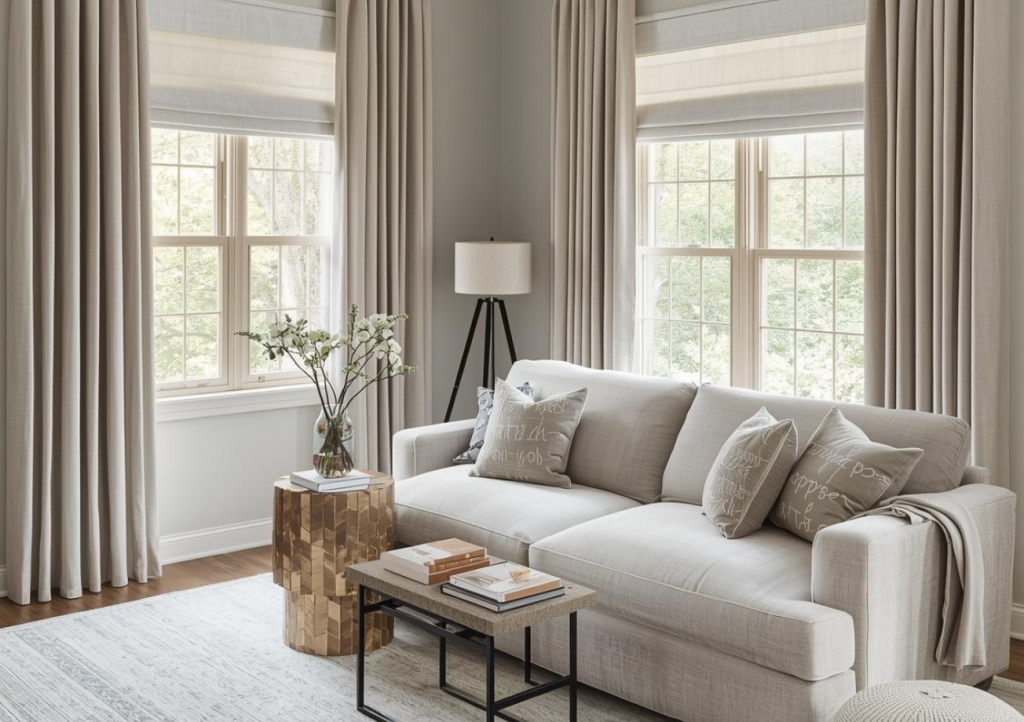
Select colors that work with any furniture and décor: whites, off-whites, beiges, taupes, and soft grays. These neutrals photograph well for rental listings, make spaces feel larger and brighter, and don’t clash with tenants’ belongings. Avoid trendy colors or patterns that limit appeal or quickly date your property.
For properties in the Hamptons rental market where you’re competing for premium tenants, cohesive neutral window treatments throughout create a polished, intentional look that justifies higher rents.
Moisture and UV Resistance
Long Island’s summer humidity and year-round sun exposure—particularly intense on south and west-facing windows—demand fade-resistant, moisture-tolerant materials. Faux wood and vinyl products resist warping in humid bathrooms and kitchens, while UV-resistant fabrics on roller shades prevent the rapid deterioration common with cheaper materials.
For waterfront investment properties in Oyster Bay, Cold Spring Harbor, Greenport, or Southold, specify salt air-resistant hardware to prevent corrosion that causes operational failures and unsightly rust stains.
Balancing Cost with Quality and Longevity
While budget constraints matter for investment properties, cheap window treatments become expensive through frequent replacement. Calculate your cost-per-year rather than upfront price. A $100 faux wood blind lasting eight years costs $12.50 annually, while a $40 vinyl blind requiring replacement every two years costs $20 annually—making quality the better investment.
For multi-unit properties, buying treatments in bulk from a Long Island supplier often secures volume discounts while ensuring consistent appearance across units.
Installation Considerations
Inside-mount installations create cleaner lines and protect treatments from damage, but require precise measurements and sufficient window depth. Outside-mount installations work better for older Long Island homes with inconsistent window frames and provide better light blockage—important for bedrooms facing early summer sunrises.
Professional installation ensures proper operation from day one and typically includes warranties covering installation-related issues—valuable protection for investment properties where you can’t afford downtime between tenants.
Maintenance and Turnover Planning
Select window treatments that clean easily between tenants. Faux wood blinds wipe clean with damp cloths, while roller shade fabrics typically dust or vacuum clean. Avoid fabric Roman shades, draperies, or real wood blinds requiring specialized cleaning or absorbing odors.
Build window treatment inspection into your turnover checklist, addressing minor repairs immediately rather than waiting for complete failure. A broken tilt mechanism or frayed lift cord costs little to repair but creates negative impressions for prospective tenants viewing the property.
Smart Upgrades That Justify Higher Rents
For premium rental properties in high-end markets like the Hamptons, Old Westbury, or Locust Valley, upgraded window treatments differentiate your listing and justify premium pricing. Motorized shades, plantation shutters, or layered treatments combining solar shades with privacy sheers create luxury appeal that attracts quality long-term tenants.
Energy-efficient cellular shades reduce utility costs—particularly valuable if you include utilities in rent or want to market your property’s sustainability features to environmentally conscious renters.
Ready to Outfit Your Long Island Investment Property?
Long Island Custom Blinds specializes in durable, cost-effective window treatment solutions for rental properties and investment homes throughout Nassau County, Suffolk County, and all Long Island communities. Our team understands the unique requirements of investment properties and can recommend products that balance upfront costs with long-term durability. Contact us today at https://longislandcustomblinds.com for a consultation and volume pricing on outfitting your rental properties with window treatments that protect your investment while attracting quality tenants.