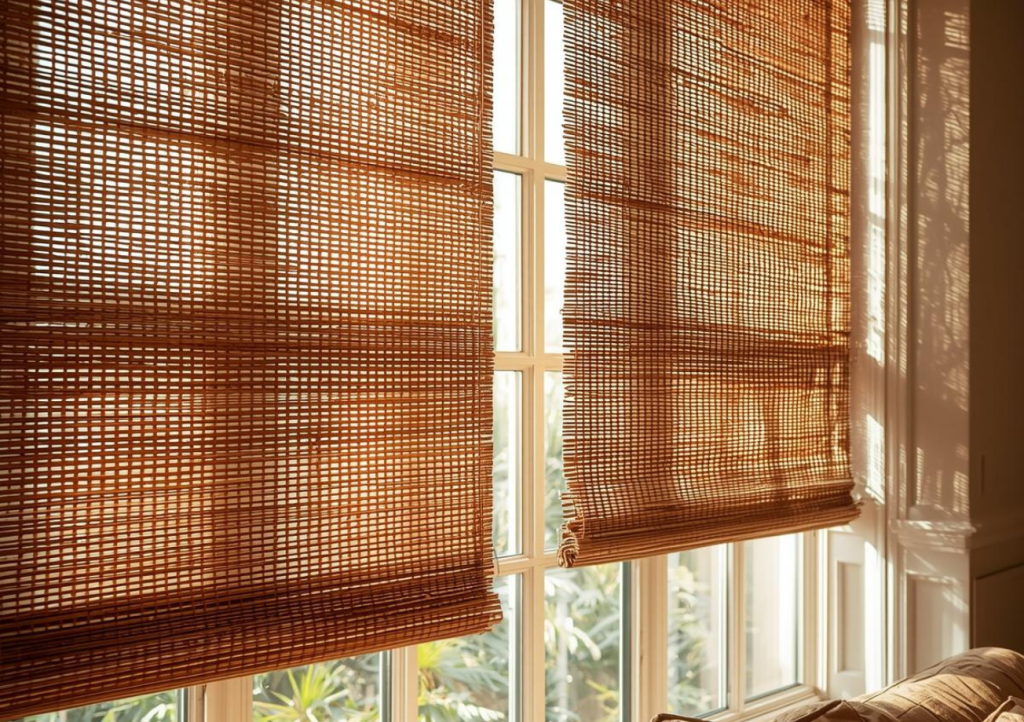
Woven wood shades are natural window coverings crafted from sustainable materials like bamboo, reeds, grasses, and jute that add organic texture and warmth to any space. While they’re stunning in the right environment, they’re generally not the best choice for Long Island’s coastal and waterfront homes due to their susceptibility to moisture damage, warping, and mold growth from salt air and high humidity. If you’re drawn to their natural aesthetic for a beach house or waterfront property, you’ll need to take specific precautions and consider alternative materials that capture the same look while standing up to coastal conditions.
Understanding Woven Wood Shades
Woven wood shades, also called bamboo shades or natural shades, are handcrafted window treatments made from renewable materials harvested from fast-growing plants. The materials are woven together in various patterns—from tight, structured weaves to loose, rustic designs—creating distinctive textures that bring an organic, earthy feel to your interior design.
These shades operate similarly to Roman shades, folding up into horizontal pleats when raised. They’re available with different lining options, including privacy liners that maintain the natural look from outside while providing room darkening from within. The aesthetic appeal is undeniable: they instantly warm up a space and complement coastal, bohemian, contemporary, and traditional design styles.
Popular materials include bamboo (the most durable and moisture-resistant of natural options), jute (soft and textured), grasses (delicate and varied), reeds (structured and linear), and combinations that create visual interest. The natural variations in color and texture mean no two shades are exactly alike, giving your Long Island home a truly custom look.
The Coastal Challenge: Why Traditional Woven Woods Struggle
For homeowners in Southampton, East Hampton, Montauk, Babylon, Sayville, or any Long Island waterfront community, woven wood shades present significant challenges that stem from their organic composition.
Moisture Absorption Problems
Natural materials absorb moisture from the air, and Long Island’s coastal areas experience high humidity during summer months combined with salt-laden air year-round. When woven wood shades absorb this moisture, they can swell, warp, and lose their shape. In homes directly on the water in communities like Sag Harbor, Greenport, or Port Washington, this problem intensifies dramatically.
The absorption issue becomes cyclical: the shades absorb moisture during humid periods, then contract as they dry, leading to structural stress that causes cracking, splitting, and eventual deterioration of the weave. This cycle accelerates near the ocean or Long Island Sound.
Mold and Mildew Growth
Organic materials in humid environments become breeding grounds for mold and mildew. Once spores establish themselves in the fibers of woven wood shades, they’re nearly impossible to remove completely. This isn’t just an aesthetic problem—it’s a health concern, particularly for family members with allergies or respiratory sensitivities.
Bathrooms, kitchens, and any room without climate control during certain seasons become high-risk environments. Even in Huntington, Smithtown, or Commack homes set back from direct waterfront exposure, humidity from bathrooms and kitchens poses risks.
Salt Air Corrosion
Salt air doesn’t just affect the natural materials—it also corrodes hardware components. The lifting mechanisms, cords, and mounting brackets on woven wood shades can deteriorate faster in coastal environments, leading to operational failures even when the shade materials remain intact.
Fading and Discoloration
Long Island’s intense summer sun, particularly on south and west-facing windows, causes natural materials to fade unevenly. This creates an aged, weathered appearance that some may find attractive initially, but often becomes progressively worse, with colors bleaching out completely over time.
When Woven Woods Can Work on Long Island
Despite these challenges, woven wood shades can succeed in certain Long Island homes with the right precautions and placement strategies.
Ideal Room Placement
Interior rooms away from exterior moisture sources work best. Consider bedrooms, living rooms, and dining rooms in homes set back from direct waterfront exposure in communities like Garden City, Great Neck, Manhasset, Jericho, or Plainview. These inland Nassau County locations experience less salt air and often have better climate control year-round.
Avoid placement in bathrooms, kitchens, screened porches, sunrooms without climate control, or any room with direct water exposure.
Climate Control Requirements
Homes with consistent HVAC operation that maintain stable humidity levels (ideally 30-50% relative humidity) create safer environments for woven wood shades. If you’re rarely home or turn off air conditioning during shoulder seasons, natural shades face greater risk.
Enhanced Protection Options
Several modifications can extend the life of woven wood shades in challenging environments:
Privacy liners add a protective layer that reduces direct moisture contact with natural fibers while improving light control and insulation. This barrier helps, though it doesn’t eliminate moisture concerns entirely.
Waterproofing treatments applied during manufacturing provide some moisture resistance, though they require reapplication over time and may alter the natural appearance you’re seeking.
Regular maintenance including gentle vacuuming, immediate attention to any moisture exposure, and annual professional cleaning can catch problems early.
Better Alternatives That Capture the Coastal Look
For Long Island waterfront and beach homes, several alternatives deliver similar aesthetic appeal with superior durability in challenging coastal conditions.
Faux Wood Blinds
High-quality faux wood blinds manufactured from composite materials or PVC offer wood-like appearance with complete moisture resistance. They’re ideal for Hamptons beach houses, North Fork waterfront properties, and South Shore coastal homes in Bay Shore or Patchogue. Modern faux wood options include textured finishes and varied slat widths that create visual interest similar to natural materials.
These blinds won’t warp, crack, or support mold growth, and they withstand salt air exposure that would destroy natural wood. They’re perfect for bathrooms, kitchens, and rooms with direct ocean views where you want maximum durability.
Woven PVC or Vinyl Shades
Manufacturers now produce synthetic woven shades that convincingly mimic the look of natural bamboo, grasses, and reeds while using moisture-resistant PVC or vinyl materials. From even a short distance, these shades read as natural materials, but they’re engineered specifically for high-humidity and coastal environments.
These synthetic options operate identically to traditional woven woods but clean easily with damp cloths and resist the warping, fading, and mold issues that plague organic materials. For Montauk, Bridgehampton, or Oyster Bay waterfront homes, they’re often the perfect compromise.
Solar Shades with Natural Textures
Modern solar shades come in textured weaves and natural colorways that provide an organic feel while delivering superior sun protection. These high-performance fabrics block Long Island’s intense UV rays—critical for protecting hardwood floors, furniture, and artwork—while maintaining views and resisting moisture, salt air, and humidity.
Solar shades work beautifully in homes throughout Suffolk County and Nassau County, particularly for those expansive picture windows common in mid-century ranch homes or the floor-to-ceiling glass in contemporary waterfront properties.
Plantation Shutters in Alternative Materials
Composite plantation shutters deliver timeless coastal elegance with zero vulnerability to moisture. Available in colors and finishes that complement natural, beachy aesthetics, they’re exceptionally popular in Long Island beach communities and waterfront estates from Glen Cove to Southold.
Shutters provide superior light control, insulation value for our cold winters and hot summers, and lasting value that makes them a smart investment for luxury homes throughout the North Shore and Hamptons communities.
Design Strategies: Achieving Coastal Natural Style
If you love the woven wood aesthetic for your Long Island home, consider these design approaches that balance style with practicality.
Selective Placement Strategy
Install genuine woven wood shades in protected interior spaces where you spend significant time—living rooms, bedrooms, and home offices—while using moisture-resistant alternatives in vulnerable areas. This approach lets you enjoy natural materials where they’ll perform best while protecting high-risk areas with appropriate alternatives.
Layering Treatments
Combine moisture-resistant primary treatments (like solar shades or faux wood blinds) with decorative natural-fiber drapery panels or valances. The hard treatments handle the functional requirements while soft treatments introduce organic textures. This layered approach works beautifully in Roslyn, Old Westbury, or Locust Valley homes where sophisticated design meets practical performance needs.
Coordinated Color Palettes
Choose faux materials in natural colorways—warm bamboos, soft taupes, weathered grays—that complement coastal and organic design schemes. When coordinated thoughtfully, synthetic materials blend seamlessly with natural textures in furniture, flooring, and accessories throughout your home.
Accent Applications
Consider woven wood shades for single statement windows or smaller windows where replacement costs remain manageable even if coastal conditions shorten their lifespan. A dramatic woven shade behind a bed or framing a protected north-facing window can deliver impact while limiting exposure to challenging conditions.
Making the Right Choice for Your Long Island Home
Selecting window treatments for Long Island properties requires balancing aesthetic desires with environmental realities. Before committing to woven wood shades, honestly assess your specific conditions.
Questions to Ask
How close is your home to water? Direct waterfront properties face dramatically different conditions than homes even a few blocks inland. A Massapequa home near the water requires different considerations than one in central Plainview.
What’s your humidity situation? Do you run HVAC consistently? Are there rooms with poor ventilation? High-moisture rooms always pose risks for natural materials.
What’s your budget for replacement? If you’re prepared to replace woven wood shades every 3-5 years in challenging conditions because you love the look, that’s a valid choice. If you want 10-15 year performance, choose alternatives.
How much maintenance will you realistically perform? Natural materials require regular attention. Busy families in Commack, Hauppauge, or Smithtown may find lower-maintenance options more practical.
Professional Assessment and Installation
The Long Island Custom Blinds team has extensive experience helping homeowners throughout Nassau County and Suffolk County navigate these decisions. We’ve installed window treatments in everything from historic North Shore estates in Great Neck to contemporary Hamptons beach houses to classic colonials in Rockville Centre.
During in-home consultations, we assess your specific conditions—proximity to water, sun exposure by window, humidity levels, existing climate control, and lifestyle factors—to recommend solutions that balance your design vision with long-term performance. We bring samples so you can see how different materials look in your actual lighting conditions, and we explain realistic expectations for each option’s longevity in your environment.
Professional measurement and installation are critical for any window treatment, but particularly for natural materials that may expand or contract with humidity changes. Proper mounting, appropriate clearances, and quality hardware installation help maximize the lifespan of whatever treatment you choose.
Investment Protection and Warranties
When you invest in window treatments for your Long Island home, understanding warranty coverage and realistic lifespan expectations helps you make informed decisions.
Traditional woven wood shades typically carry limited warranties that exclude damage from moisture, humidity, and environmental factors—precisely the challenges they face in coastal areas. This means your investment lacks protection from the most likely causes of failure in waterfront communities like Southampton, Northport, or Patchogue.
Moisture-resistant alternatives generally offer more comprehensive warranty coverage because manufacturers stand behind their products’ performance in challenging conditions. Faux wood blinds and synthetic woven shades often carry warranties covering warping, cracking, and fading—the exact problems natural materials experience near Long Island’s coastline.
Schedule Your Consultation
Choosing the right window treatments for your Long Island home doesn’t have to be complicated. Whether you’re furnishing a newly purchased Hampton’s beach house, updating a classic colonial in Garden City, or refreshing a waterfront property in Cold Spring Harbor, Long Island Custom Blinds provides expert guidance tailored to your specific location, home style, and lifestyle needs.
We bring the showroom to you, offering in-home consultations throughout Nassau County and Suffolk County. You’ll see samples in your actual lighting, receive professional recommendations based on your unique conditions, and get transparent pricing with no hidden costs.
Contact Long Island Custom Blinds today at https://longislandcustomblinds.com to schedule your complimentary consultation. Let us help you find window treatment solutions that deliver the coastal style you love with the durability your Long Island home demands.