Cellular shades with high insulation values, solar shades with UV protection, and exterior solar screens are the best window treatments for sunrooms and three-season rooms, effectively controlling heat gain and glare while protecting furniture from fading. For Long Island homes, honeycomb shades paired with light-filtering or solar shades offer year-round versatility—insulating against winter cold and blocking intense summer sun. Plantation shutters provide timeless style with adjustable louvers for ventilation control, while motorized treatments make managing multiple sunroom windows effortless with a single touch.
Why Sunrooms Need Specialized Window Treatments
Long Island sunrooms face unique environmental challenges that standard window treatments simply can’t handle. South and west-facing three-season rooms experience intense afternoon sun from May through September, with UV rays causing furniture, flooring, and artwork to fade within months. During winter, these same glass-filled spaces become difficult to heat, with cold air infiltration around windows driving up energy costs. Meanwhile, coastal communities from Port Washington to the Hamptons deal with salt air exposure that corrodes metal hardware and damages certain materials.
Your sunroom window treatments must balance contradictory needs: blocking heat and UV rays during summer while maximizing natural light, providing insulation during cold months, protecting privacy without creating a closed-in feeling, and withstanding temperature fluctuations and humidity levels that would destroy treatments suitable for interior rooms.
Top Window Treatment Solutions for Long Island Sunrooms
Cellular Shades: The Energy Efficiency Champion
Honeycomb or cellular shades are the gold standard for three-season rooms requiring year-round comfort. Their unique cellular construction traps air within honeycomb-shaped pockets, creating an insulating barrier that keeps sunrooms cooler in summer and warmer in winter—essential for Long Island’s temperature extremes.
For sunrooms in Garden City, Huntington, or Babylon, opt for double-cell shades with at least a 3/4-inch cell depth for maximum insulation value. Top-down/bottom-up configurations allow you to lower shades from the top for privacy while maintaining floor-level views—perfect for ground-level sunrooms facing neighboring properties. Light-filtering fabrics reduce glare without eliminating the natural light that makes sunrooms so appealing, while blackout options work well if you’ve converted your three-season room into a home theater or guest bedroom.
Motorized cellular shades solve the practical challenge of managing eight, ten, or twelve sunroom windows simultaneously. Program them to lower automatically during peak afternoon sun exposure, protecting your space from heat gain without manual intervention.
Solar Shades: Maximum UV Protection with Maintained Views
Solar shades specifically engineered for sunroom applications block 90-99% of harmful UV rays while preserving your outdoor views—the primary reason most Long Island homeowners added a sunroom in the first place. These specialty fabrics are rated by their openness factor (typically 1%, 3%, 5%, or 10%), with lower percentages blocking more light and heat.
For sunrooms overlooking waterfront properties in Southampton, Cold Spring Harbor, or Greenport, 3-5% openness solar shades offer the ideal balance: significant heat and glare reduction while maintaining your water views. Darker fabric colors (charcoal, bronze, black) provide better daytime visibility outward—you can see your yard or waterfront clearly while outsiders see only a reflective surface.
Consider dual roller shades that combine sheer solar fabric on one roller with blackout fabric on a second roller. During the day, use the solar shade for UV protection and view-through. In the evening, lower the blackout shade for complete privacy and room darkening—perfect for sunrooms used as yoga studios, home offices, or entertaining spaces.
Exterior Solar Screens: The Ultimate Heat Blocker
Exterior solar screens installed on the outside of sunroom windows block heat before it penetrates the glass—up to 80% more effective than interior treatments. For Long Island homes with south or west-facing sunrooms that become unbearably hot during July and August afternoons, exterior screens make these spaces genuinely usable throughout summer.
Motorized retractable exterior screens protect your sunroom during peak sun hours, then retract completely when you want unobstructed views. Marine-grade materials with stainless steel or corrosion-resistant hardware are essential for coastal properties in Montauk, East Hampton, or Oyster Bay where salt air would quickly damage standard materials.
Plantation Shutters: Classic Style Meets Functionality
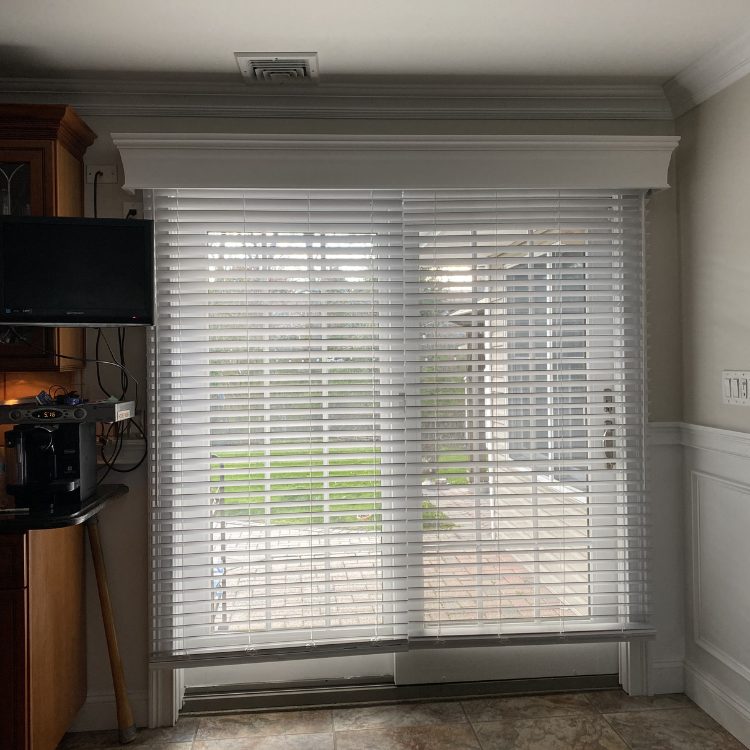
Plantation shutters deliver timeless elegance while offering practical benefits for three-season rooms. Their adjustable louvers provide precise light and ventilation control—tilt them to redirect harsh afternoon sun toward the ceiling while maintaining airflow, or close them completely for privacy and insulation.
For Long Island sunrooms with traditional colonial or Cape Cod architecture in communities like Manhasset, Roslyn, or Smithtown, white or cream painted shutters complement existing trim work beautifully. However, bypass faux wood in favor of moisture-resistant composite materials that withstand the temperature fluctuations and humidity levels common in sunrooms without warping or cracking.
Full-height shutters work well for sunrooms with uniform window sizes, while café-style shutters covering only the bottom half preserve views and natural light while providing privacy from ground-level sight lines—ideal for homes with close neighbors or street-facing sunrooms.
Material Considerations for Long Island Sunrooms
Moisture and Temperature Resistance
Three-season rooms experience greater temperature swings and humidity levels than climate-controlled interior spaces. Real wood blinds and natural fiber shades will warp, crack, or develop mold in these conditions. Instead, choose:
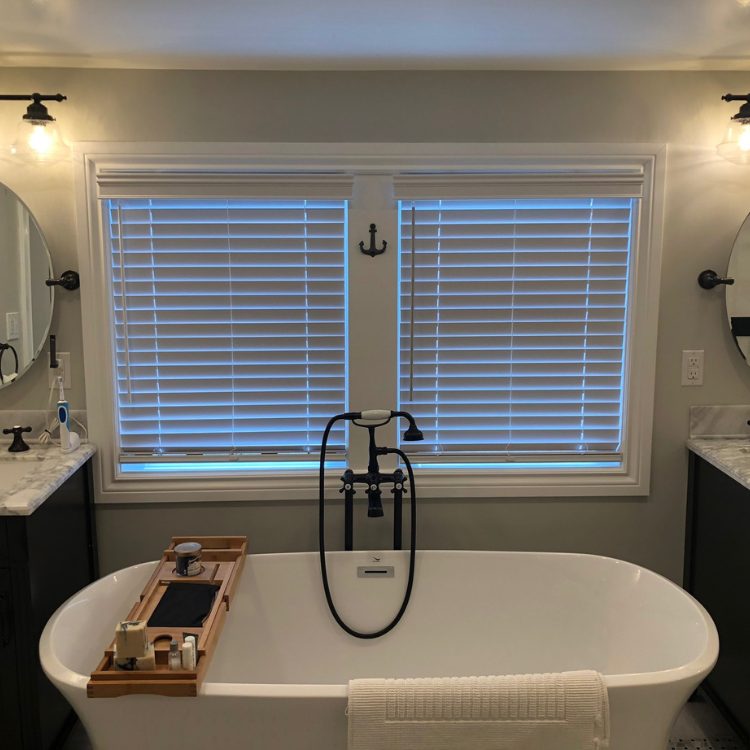
Faux wood blinds and shutters made from composite materials that look like real wood but withstand humidity without warping—perfect for sunrooms doubling as indoor/outdoor entertaining spaces
Synthetic cellular shade fabrics that resist moisture and won’t yellow from UV exposure, maintaining their appearance year after year
PVC or vinyl roller shades with antimicrobial treatments that prevent mildew growth in humid coastal environments from Patchogue to Sag Harbor
UV-Resistant Hardware and Fabrics
Long Island’s intense summer sun doesn’t just fade furniture—it deteriorates standard window treatment components. Specify UV-stabilized fabrics that won’t become brittle or discolored, and corrosion-resistant lift systems and headrails. For waterfront properties in Nassau and Suffolk County coastal communities, stainless steel or marine-grade aluminum hardware prevents the rust and corrosion that makes treatments difficult to operate within just a few seasons.
Layering Window Treatments for Maximum Versatility
The most successful Long Island sunroom window treatment plans incorporate layering—combining two complementary treatments to address different seasonal needs and usage scenarios.
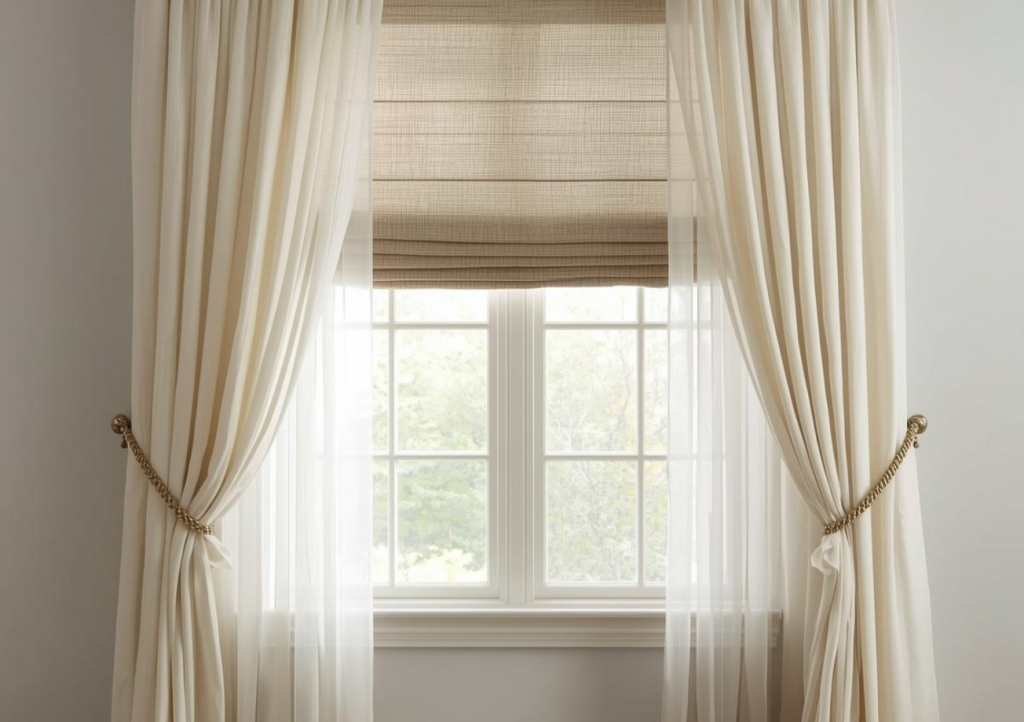
Pair cellular shades with decorative drapery panels that frame sunroom windows while providing the insulation and light control you need functionally. Combine solar shades (for daytime UV protection and view-through) with plantation shutters (for evening privacy and architectural interest). Layer sheer curtains over blackout roller shades for softness and style with on-demand room darkening.
This layered approach allows you to adapt your sunroom environment throughout the day and across seasons—light and bright for morning coffee, shaded and cool during afternoon heat, private and cozy for evening entertaining.
Smart Solutions: Motorization and Automation
Sunrooms typically feature numerous windows that are tedious to adjust manually multiple times daily. Motorization transforms the user experience while improving energy efficiency through programmable automation.
Battery-powered motorized shades require no electrical work—ideal for existing sunrooms in Great Neck, Commack, or Bay Shore where running new wiring would be disruptive and expensive. Hardwired motorized systems work well for new construction or major renovations in Bridgehampton, Locust Valley, or Hauppauge.
Integrate motorized sunroom treatments with smart home systems like Control4, Lutron, or Savant for sophisticated automation: shades automatically lower when interior temperatures exceed your set point, preventing heat gain before it affects comfort; treatments close during hurricane warnings or nor’easters, protecting window glass from wind-driven debris; and schedules adjust seasonally as sun angles change throughout the year.
Voice control through Alexa, Google Assistant, or Siri makes adjusting multiple sunroom shades as simple as saying “close the sunroom shades”—no apps, no remotes, no walking around to each window.
Expert Installation Makes the Difference
Sunroom window treatments require precise measurement and installation expertise. Improper mounting allows air infiltration that negates insulation benefits, while incorrect measurements create gaps that allow harsh sun to stream in around shade edges.
Long Island Custom Blinds provides professional measurement and installation throughout Nassau and Suffolk Counties, ensuring your sunroom treatments perform as intended. Our team understands the specific challenges Long Island homes face—from salt air exposure in waterfront properties to the extreme sun angles that affect south-facing three-season rooms—and recommends solutions proven to perform in our unique climate.
Transform Your Sunroom Into Year-Round Living Space
The right window treatments convert an uncomfortably hot summer space and freezing winter room into a comfortable, usable extension of your Long Island home throughout the year. Whether you’re planning a sunroom addition, renovating an existing three-season room, or simply replacing outdated treatments that no longer function properly, professional guidance ensures you select solutions that address your specific orientation, usage patterns, and aesthetic preferences.
Contact Long Island Custom Blinds today for a complimentary in-home sunroom consultation. We’ll assess your space’s unique challenges, discuss your functional priorities and design preferences, and provide expert recommendations with transparent pricing. Serving all of Long Island including Nassau County, Suffolk County, the Hamptons, and North Fork communities, we’re your local window treatment specialists dedicated to transforming how you experience your sunroom. Call us or visit https://longislandcustomblinds.com to schedule your consultation and discover the perfect sunroom window treatment solution for your home.