Walk through almost any Old Westbury home with shades that were bought online or pulled off a showroom floor, and you’ll likely spot the same problem — light bleeding in along the edges, the treatment sitting awkwardly inside the frame, or a mount that clearly wasn’t designed for that specific window.
The missed detail isn’t the color. It isn’t the fabric. It’s mount depth — the measurement that determines whether a shade sits cleanly inside your window frame or fights it. And in a community full of architecturally distinctive, high-value homes, getting that wrong is both visible and expensive to undo.
Why Old Westbury Homes Make This Problem Worse
Old Westbury is not a neighborhood of tract homes. The estates, custom-built colonials, and large traditional residences throughout this community share a common trait: deep window casements, substantial trim profiles, and architectural details that simply don’t accommodate mass-produced window treatments.
Older homes — and Old Westbury has many — develop subtle shifts over time. Frames settle. Openings that appear square often aren’t. A shade designed for a perfectly plumb, standard-depth window will perform poorly in a casement that’s a quarter inch off or a window frame with less clearance than the product requires.
This is the detail most shade setups miss: the actual geometry of the opening, not just its width and height.
Off-the-Shelf vs. Custom Shades: What the Difference Actually Looks Like
The gap between off-the-shelf and custom shades is wider than most homeowners expect before they’ve experienced both.
Off-the-shelf shades:
- Cut to the nearest standard size, then trimmed down if needed — which affects how the fabric rolls and how the hardware aligns
- Hardware designed for average window depths, not your specific frame
- Fabric options limited to whatever a manufacturer’s stock run includes
- Operating systems built for light-duty, general use — not the daily demands of a large or heavy shade
Custom shades:
- Fabricated to your exact window measurements — width, height, and mount depth all accounted for
- Hardware matched to the weight and width of the specific product
- Fabric selected from a full range, including options that perform better in rooms with strong sun exposure, high humidity, or specific privacy demands
- Operating systems — cord, cordless, motorized — chosen for how the window is actually used
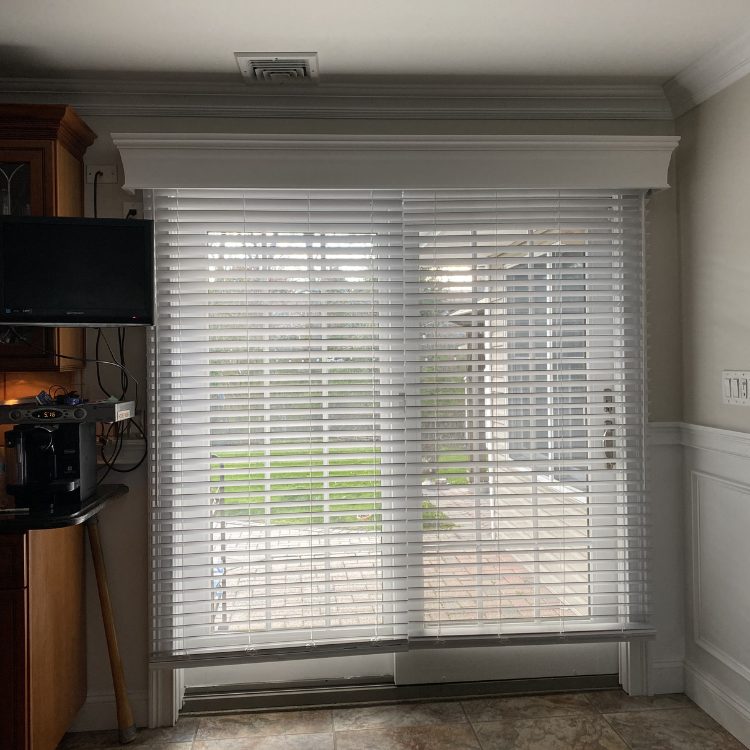
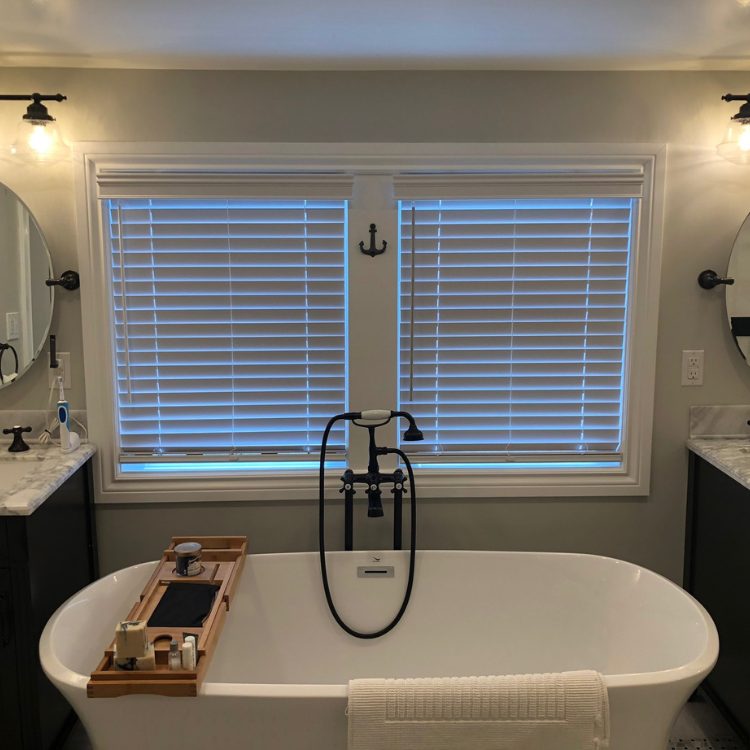
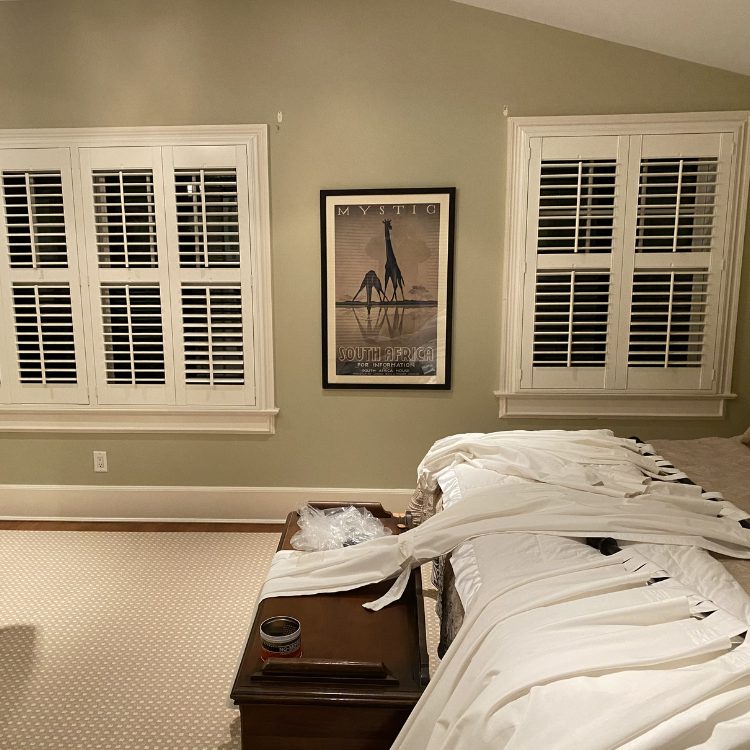
The visual difference is immediate. Custom shades sit flush, hang straight, and operate smoothly. Off-the-shelf shades often look slightly off in ways that are hard to name but impossible to ignore once you see them.
The Mount Depth Detail That Stops Most Setups Short
Inside-mount shades require a minimum depth inside the window frame to sit flat and operate without obstruction. That depth varies by product — cellular shades need more room than roller shades, for example — and it’s affected by existing hardware, window cranks, handles, and any trim or molding that projects into the frame.
Most homeowners never measure this. Most off-the-shelf products don’t flag it clearly. The result is a shade that either can’t be inside-mounted at all, or one that binds against the frame every time it’s raised or lowered.
A professional measurement accounts for all of it before anything is ordered. That’s not optional — it’s the difference between a functional installation and one that creates daily frustration.
Why Location-Based Service Matters for Design and Installation
A window treatment specialist who works regularly in Old Westbury understands something a remote retailer or national chain never will: what these homes actually look like from the inside.
That familiarity shapes better recommendations. A local provider knows which rooms in large Old Westbury homes tend to get harsh western afternoon sun, which architectural styles favor certain shade profiles, and how to work within the design language of a home without clashing with existing finishes, millwork, or furniture.
Location-based service also means a physical return visit is possible — for adjustments, warranty work, or simple fine-tuning after installation. When a shade isn’t hanging quite right after a season change shifts the frame slightly, a local provider comes back. A national e-commerce retailer sends a return label.
How to Choose the Right Shade Store for Your Home
When evaluating providers, ask these questions before you commit to anything:
- Do they measure professionally? Self-measurement is a red flag for any window with architectural complexity.
- Do they carry multiple manufacturer lines? Single-brand stores limit your options. Look for providers working with Hunter Douglas, Graber, Alta, Lafayette, or Horizon.
- Can they bring samples to your home? Shade fabric looks fundamentally different in your actual lighting and against your actual walls. Showroom or catalog swatches are a poor substitute.
- Do they handle installation themselves? Product-only retailers shift the installation risk to you. Full-service providers own the result.
- Are they familiar with your area? Ask directly if they’ve worked in Old Westbury or nearby communities like Brookville, Muttontown, or Upper Brookville. Local familiarity is a legitimate differentiator.
Red Flags Worth Taking Seriously
Pause before purchasing if:
- The provider asks you to measure your own windows without any guidance
- Price quotes exclude installation or don’t specify what’s included
- You’re shown digital swatches or catalog images rather than physical samples
- There’s no clear answer on what happens if the shade doesn’t fit after fabrication
- The consultation happens entirely over the phone or online with no in-home visit
Any of these signals a process that wasn’t designed around your home — which means the result probably won’t be either.
Bottom Line
The detail most shade setups in Old Westbury homes miss isn’t glamorous — it’s a measurement. But mount depth, window geometry, and precise fabrication are exactly what separates a shade installation that looks intentional from one that looks like an afterthought.
Custom shades from a local provider who knows these homes aren’t a luxury upgrade. For windows with the architectural character common throughout Old Westbury, they’re the straightforward right answer.
Next Steps: Call Long Island Custom Blinds at (516) 580-1958 to schedule your free in-home consultation. A specialist will measure every window, bring samples to your home, and walk you through shade options built for your specific rooms — not the nearest approximation of them.