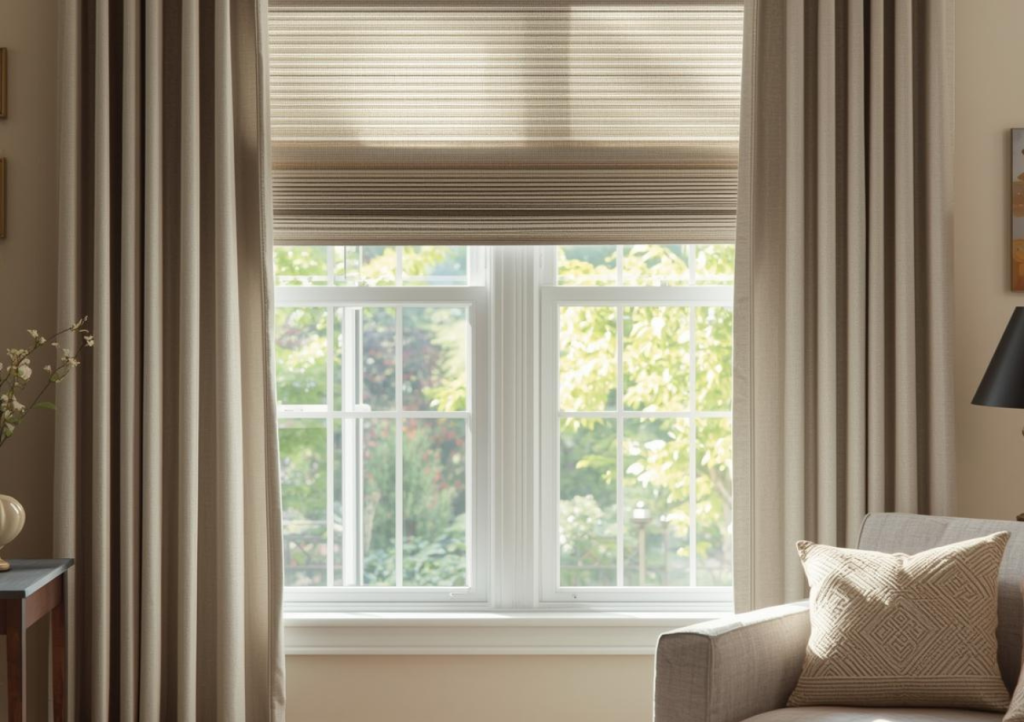
UV-blocking window treatments are your best defense against fading furniture and artwork near windows. Solar shades, UV-protective cellular shades, UV-filtering films, and exterior shutters can block up to 99% of harmful ultraviolet rays while still allowing natural light into your rooms. For Long Island homes dealing with intense summer sun—especially those with south and west-facing windows—investing in proper UV protection can extend the life of your valuable furnishings, hardwood floors, and artwork by years or even decades.
Understanding UV Damage in Long Island Homes
The intense summer sun on Long Island creates significant challenges for homeowners trying to protect their interiors. UV radiation doesn’t just cause sunburn—it breaks down the chemical bonds in fabrics, wood finishes, leather, artwork, and even plastics. In Nassau County and Suffolk County homes, south-facing and west-facing windows receive the most intense exposure, with summer sun streaming through windows for extended hours (sunrise before 5:30 AM during peak summer months).
The damage happens gradually but relentlessly. That beautiful sofa in your Garden City living room or the antique chair near the window in your East Hampton beach house can fade from rich, vibrant colors to washed-out shadows of their former selves in just a few seasons without proper protection. Hardwood floors develop uneven color patches where sunlight hits them daily, and valuable artwork can suffer irreversible damage.
Waterfront properties in communities like Sag Harbor, Northport, and Patchogue face additional challenges with reflected light from the water intensifying UV exposure through windows. The combination of direct sunlight and water reflection can accelerate fading damage significantly.
Most Effective UV-Blocking Window Treatment Options
Solar Shades and UV-Protective Roller Shades
Solar shades represent one of the most effective solutions for UV protection without completely sacrificing your view. These specialized window treatments are engineered with tightly woven fabrics that block harmful UV rays while still allowing filtered natural light to enter your space.
Available in various openness factors (typically ranging from 1% to 14%), solar shades let you choose how much light transmission you want. A 1% openness factor blocks approximately 99% of UV rays while still maintaining outward visibility—perfect for homes in Huntington, Manhasset, or Southampton where you want to protect interiors while enjoying water or garden views. A 5% or 10% openness allows more light while still providing substantial UV protection, ideal for darker rooms in Syosset or Commack that need brightness without the damage.
For Long Island’s climate, choose solar shades with high UV-blocking ratings specifically designed for intense sun exposure. Many premium options also provide heat reduction, lowering your air conditioning costs during brutal summer months—a significant consideration for homes throughout Nassau and Suffolk Counties.
UV-Protective Cellular and Honeycomb Shades
Cellular shades with UV-blocking fabrics offer dual benefits: protection from fading and excellent energy efficiency. The honeycomb construction creates insulating air pockets that reduce heat gain in summer and heat loss during Long Island’s cold winters, making them ideal for homes in Jericho, Plainview, or Oyster Bay where energy costs are a concern.
Many cellular shade fabrics now incorporate UV-protective treatments that block harmful rays while offering light-filtering or room-darkening options. For artwork protection in your Roslyn home office or antique furniture in your Port Washington formal living room, choose cellular shades with UV-protection ratings of 95% or higher.
Window Films and UV-Blocking Treatments
For homeowners who prefer unobstructed views or have architectural windows that make traditional treatments challenging, UV-protective window films offer an excellent solution. These transparent films adhere directly to window glass and can block up to 99% of UV radiation while remaining virtually invisible.
Window films work particularly well in mid-century ranch homes throughout Long Island with large picture windows, or in beach houses in Montauk and Bridgehampton with expansive glass walls. They provide constant protection without needing to operate shades daily, and they don’t interfere with window operation or views of the water, gardens, or surrounding landscape.
Plantation Shutters with UV-Blocking Louvers
Plantation shutters offer adjustable UV control combined with timeless style that complements Long Island’s classic colonial and Cape Cod architecture. By angling the louvers, you can block direct sunlight while still allowing diffused natural light to illuminate your rooms.
For waterfront homes in Glen Cove, Bay Shore, or Greenport, choose composite or faux wood shutters that resist moisture and salt air while providing UV protection. These materials won’t warp, crack, or fade in coastal conditions, and they maintain their UV-blocking properties indefinitely with minimal maintenance.
Strategic Placement and Layering Techniques
Identify Your Highest-Risk Windows
Not all windows require the same level of UV protection. Assess which windows in your home receive the most intense, prolonged sunlight exposure. In most Long Island homes, south-facing windows receive consistent year-round sun, while west-facing windows bear the brunt of intense afternoon summer heat and UV radiation.
East-facing windows in bedrooms and breakfast areas receive strong morning sun, particularly problematic during extended summer daylight hours. Windows in these locations should receive priority when budgeting for UV-protective window treatments in your Massapequa, Hauppauge, or Islip home.
Layering Window Treatments for Maximum Protection
Consider layering different window treatment types for optimal UV protection combined with aesthetic versatility. A common and effective approach pairs solar shades or UV-protective roller shades (for daily UV blocking) with decorative draperies or curtains (for style, privacy, and additional insulation).
This layering strategy works beautifully in Locust Valley estates, Old Westbury manor homes, and throughout the Hamptons where homeowners want both functional protection and design sophistication. The solar shade or UV film provides constant protection while shutters or draperies can be closed during peak sun hours or opened for entertaining.
Motorization for Consistent Protection
Motorized window treatments ensure consistent UV protection by making it effortless to adjust shades throughout the day. For homeowners in Smithtown, Babylon, or Sayville with multiple windows requiring daily adjustment, motorization means you’ll actually use your UV-protective treatments rather than leaving them open out of convenience.
Smart home integration allows you to program window treatments to close automatically during peak UV hours (typically 10 AM to 4 PM) and open during gentler morning or evening light. This automation is particularly valuable for vacation homes in the Hamptons or North Fork that sit empty for periods—your furnishings stay protected even when you’re not there.
Additional Furniture and Artwork Protection Strategies
Combining Window Treatments with Interior Placement
Even with excellent UV-protective window treatments, strategic furniture and artwork placement adds an extra layer of protection. Avoid placing your most valuable or fade-sensitive pieces in direct sunlight paths, especially near south and west-facing windows in your Cold Spring Harbor or Patchogue home.
Consider rotating artwork seasonally and using UV-protective glass or acrylic glazing for framed pieces displayed near windows. Museum-quality UV-protective glazing blocks up to 99% of UV rays and is worth the investment for valuable artwork in your Great Neck or Southampton collection.
Maintain and Upgrade Your Window Treatments
UV-protective capabilities can diminish over time, especially in fabrics exposed to years of intense Long Island sunlight. Inspect your window treatments annually for signs of fading, deterioration, or reduced effectiveness. Solar shade fabrics that have become brittle or discolored may have lost their UV-blocking properties and should be replaced.
For coastal properties in Sag Harbor, Southold, or Montauk, salt air can degrade hardware and fabrics more quickly. Choose marine-grade or corrosion-resistant components and schedule regular professional cleaning and maintenance to ensure your UV protection remains effective.
Consider Exterior Solutions for Maximum Protection
For the most comprehensive UV and heat protection, consider exterior window treatments like retractable awnings, exterior solar screens, or bahama shutters. These solutions block sunlight before it enters the glass, preventing heat buildup and UV penetration more effectively than any interior treatment.
Exterior solutions work particularly well for waterfront homes, pool houses, and sunrooms throughout Nassau and Suffolk Counties where glass exposure is extensive and temperature control is challenging. However, they must withstand Long Island’s weather extremes, including nor’easters and occasional hurricanes, so professional installation with proper reinforcement is essential.
Climate-Specific Considerations for Long Island Homes
Long Island’s unique climate creates specific challenges for UV protection. The extended summer daylight hours mean your windows receive UV exposure for 15+ hours daily during peak season. The combination of direct sun and reflected light from water surfaces in coastal communities intensifies UV damage potential.
Salt air in waterfront areas can corrode metal components and degrade certain fabrics, so choose window treatments specifically rated for coastal environments. Look for stainless steel or composite hardware, and fabrics treated for moisture and salt resistance in your Bay Shore, Port Washington, or East Hampton beach house.
Winter sun angles differ significantly from summer, with lower-angle light penetrating deeper into rooms. This seasonal variation means UV protection remains important year-round, not just during summer months. Window treatments that adjust easily allow you to maximize natural light and passive solar heating in winter while maintaining protection for your furnishings.
Making the Right Investment for Your Home
Protecting your furniture, flooring, and artwork from UV damage is an investment that pays dividends for years. Quality window treatments with proper UV protection typically cost significantly less than replacing faded furniture, refinishing damaged hardwood floors, or restoring artwork.
When budgeting for UV-protective window treatments in your Rockville Centre, Commack, or Bridgehampton home, prioritize the rooms with the most valuable furnishings and the most intense sun exposure. You can implement protection strategically over time rather than treating every window at once.
Schedule Your Free UV Protection Consultation
Long Island Custom Blinds specializes in UV-protective window treatment solutions tailored to Long Island’s unique climate challenges and your home’s specific needs. Our design experts serve all of Nassau County and Suffolk County, from Great Neck to Montauk, with free in-home consultations that include UV exposure assessment, fabric samples you can test in your actual lighting conditions, and customized recommendations that balance protection with your aesthetic preferences.
We’ll measure your windows, discuss your most valuable pieces that need protection, and create a comprehensive plan that fits your budget and timeline. Our professional installation ensures proper fit and function, maximizing the UV-blocking capabilities of your new window treatments.
Contact Long Island Custom Blinds today at longislandcustomblinds.com to schedule your free consultation and start protecting your furniture and artwork from Long Island’s intense sun exposure. Don’t wait until fading becomes visible—prevention is always more effective and affordable than restoration.