For most Long Island homes, cellular shades are worth it. Their honeycomb pockets trap air at the window, which is the best insulation of any window covering and a real help against high Nassau and Suffolk energy bills. They cost a bit more than basic blinds, usually $60 to $220 per window, but they lower heating and cooling costs, soften light beautifully, and come in light-filtering to full blackout. The main tradeoffs are price and fabric care, which we cover below.
What are cellular shades?
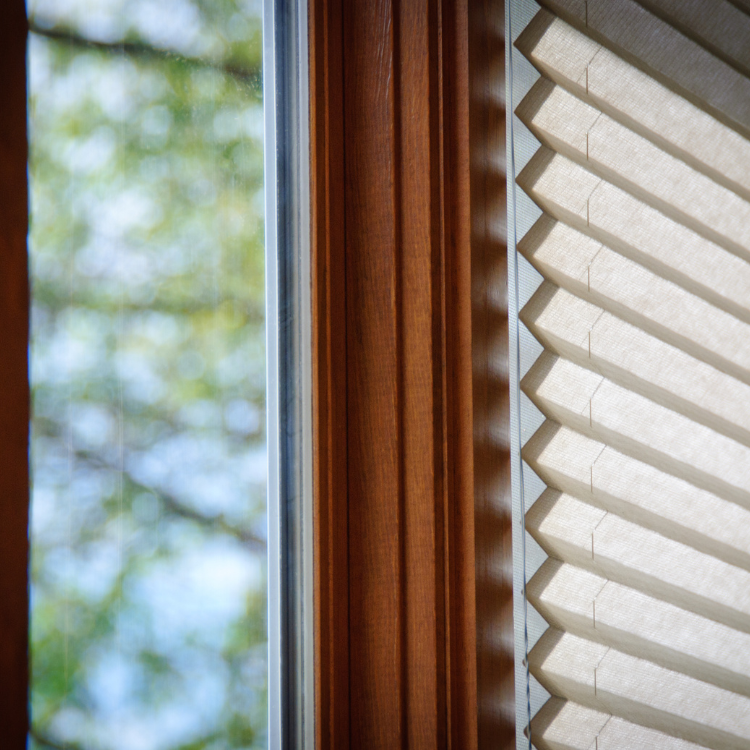
Cellular shades, also called honeycomb shades, are made of pleated fabric that forms rows of small air pockets when you look at them from the side, like a honeycomb. Those pockets are the whole point: the trapped air creates a layer of insulation between your room and the glass. They raise and lower as one soft piece, come in single, double, and triple-cell versions, and range from sheer light-filtering to complete blackout depending on the fabric.
How much do cellular shades save on energy?
More than any other shade. The U.S. Department of Energy reports that 25 to 30 percent of a home’s heating and cooling energy is lost through windows, and insulating cellular shades are the strongest window-covering fix. The DOE finds they can cut heat loss through windows by up to 40 percent in winter and reduce unwanted solar heat gain by up to 80 percent in summer. On an older Long Island home with single-pane or aging double-pane windows, that shows up directly on the ConEd or PSEG bill through our cold winters and hot, humid summers.
How much do cellular shades cost?
Custom cellular shades on Long Island typically run $60 to $220 per window installed, depending on size, fabric, and cell type. A double-cell shade insulates better than a single-cell and costs a little more. Adding motorization, which is popular and child-safe, adds roughly $150 to $400 per window. A whole-home order usually lowers the per-window price. These are planning estimates; every window is priced to its exact size, so an in-home measure gives the real number.
What are the downsides of cellular shades?
They are not perfect for every room. The pleated fabric can collect dust and is harder to spot-clean than a wipeable faux-wood blind, so a steamy bathroom or a greasy kitchen window is not their best use. They cost more than basic aluminum or vinyl blinds up front. And because they raise and lower as one piece without tilting slats, you get less fine-grained daytime light control than blinds. For bedrooms, living rooms, and family rooms, though, the comfort and energy savings usually outweigh those points.
Do cellular shades look cheap or dated?
No, when you choose quality fabric. Premium cellular shades from brands like Hunter Douglas, Graber, and Norman come in rich textures, colors, and cordless or motorized lifts that read clean and current, not builder-grade. The thin, flimsy look people associate with cheap honeycomb shades comes from bargain stock versions. A custom shade in a good fabric, fit precisely to the window, looks tailored and modern.
Are cellular shades right for your Long Island home?
They are an easy yes for bedrooms and main living spaces, especially in older South Shore and North Shore homes where drafty windows drive up energy costs. Choose blackout cells for bedrooms and nurseries, and light-filtering cells where you want a soft glow with privacy. For kitchens, baths, and waterfront-facing rooms with high humidity near the Great South Bay or the Sound, a faux-wood blind may serve better. The best call comes from seeing samples in your own light, which is exactly what an in-home consultation is for.
FAQ
What are the cons of cellular shades?
They cost more than basic blinds, the fabric collects dust and is harder to clean than a wipeable slat, and they offer less precise daytime light control since they do not tilt. In the right rooms, the insulation and look outweigh these.
Do cellular shades really lower energy bills?
Yes. The DOE reports they can cut window heat loss by up to 40 percent in winter and solar heat gain by up to 80 percent in summer, which matters on Long Island’s high energy costs and older windows.
Single-cell or double-cell shades, which is better?
Double-cell shades have two rows of air pockets, so they insulate better and are the stronger choice for very cold or very sunny windows. Single-cell shades cost a little less and are fine for milder rooms.
Are cellular shades good for blackout in bedrooms?
Yes. Blackout cellular shades with room-darkening fabric, especially paired with side channels, block nearly all light, making them a top pick for bedrooms, nurseries, and media rooms.
Want to see cellular shades in your own light? Long Island Custom Blinds brings the showroom to you with a free in-home consultation across Nassau, Suffolk, and Queens. Call (516) 363-4670 or visit longislandcustomblinds.com.
Related services: Custom Shades | Motorized Window Treatments | Shop-at-Home Consultation
More from the blog: Blinds vs. Shades: Which Is Better for Long Island Homes? | How Much Do Custom Blinds Cost on Long Island?