
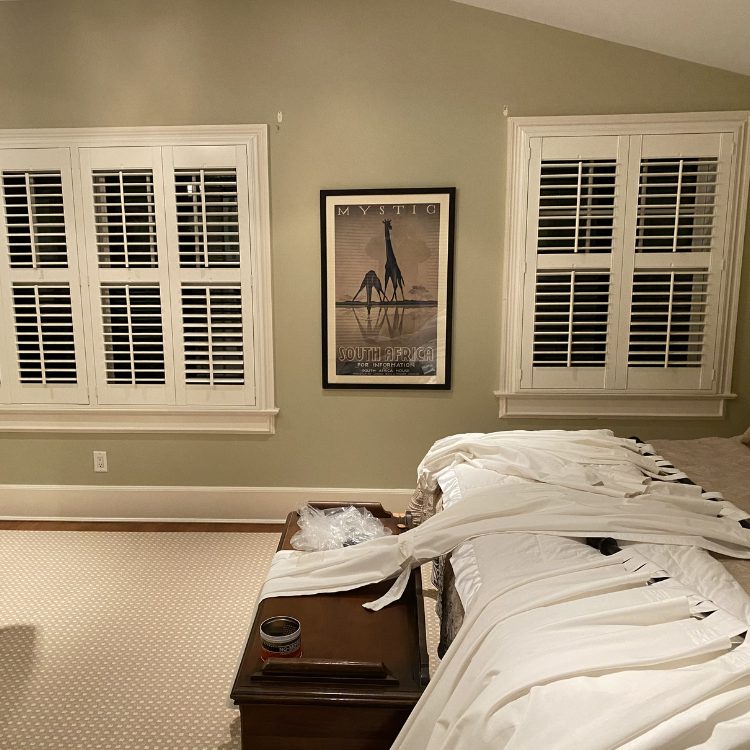
Most people spend more time thinking about their mattress than their windows — but the window is where the light comes in at 5:47am, where streetlights bleed through at night, and where a passing car’s headlights sweep across the ceiling at 2am. If you’re sleeping lighter than you should, the window treatment is worth looking at before you blame anything else.
The good news is that bedroom window treatments are one of the most impactful and least expensive sleep upgrades available. The challenge is that most homeowners in Garden City, Manhasset, Syosset, and across Nassau County choose bedroom treatments based on aesthetics alone — and end up with something that looks fine but doesn’t actually perform.
This is the complete breakdown of what works, why it works, and how to choose it.
Why Bedrooms Demand a Different Standard
Every other room in the house tolerates some light and privacy compromise. The living room can get away with a light-filtering shade that doesn’t fully block the street. The kitchen doesn’t need blackout anything. But the bedroom is the one room where light control isn’t a preference — it’s a functional requirement.
Human sleep is regulated by light exposure. Even low levels of ambient light during sleep — from streetlights, early sunrise, or neighboring homes — suppress melatonin production and reduce sleep quality in ways most people don’t consciously connect to their windows. Homeowners in Great Neck’s waterfront neighborhoods deal with reflected light off the water. Those in Jericho and Old Westbury contend with large windows and wooded lots where early morning light comes in at unexpected angles. These aren’t minor inconveniences — they’re fixable problems with the right treatment.
Blackout Shades: What They Actually Do and What to Look For
Blackout shades are the most direct solution to light infiltration — but not all blackout products perform equally, and the difference matters significantly in a bedroom.
What true blackout means:
- The fabric itself has a blackout liner or coating that blocks 99% or more of light transmission
- The mounting and side channels determine whether light leaks around the edges — a blackout fabric on a poorly fitted shade still lets in significant light
What to look for:
- Cassette-style roller shades with side channels or recessed mounting that closes the gap between the shade and the window frame
- Cellular blackout shades with honeycomb construction — they block light and add insulation, which matters for temperature regulation during sleep
- Any blackout product should be professionally measured for inside-mount depth; a shade that doesn’t fit the frame correctly creates edge gaps that defeat the purpose
Homeowners searching for a window shade store near them in Syosset or a blind store near them in Garden City should ask specifically about side-channel options and how the shade is mounted — not just the fabric rating.
Layered Treatments: The Setup That Gives You Everything
The most functional bedroom window setup isn’t a single product — it’s two working together.
The layered approach:
- Blackout roller or cellular shade as the primary light-blocking layer, mounted inside or close to the frame
- Drapery panels as the secondary layer — either a soft sheer for daytime softness or room-darkening drapes for an additional blackout layer and visual warmth
This combination solves what single products can’t:
- During the day, raise the blackout shade and let the drapery filter soft light for a calm, usable space
- At night, lower the blackout shade and close the drapes for complete darkness and privacy
- The drapes add thermal mass at the window, reducing heat gain in summer and cold drafts in winter — both of which affect sleep comfort
Layered treatments are increasingly common in primary bedrooms throughout Manhasset, Old Westbury, and Great Neck, where high-end interiors call for window setups that look intentional from both inside and out.
Light Control Strategies for Better Sleep and Daily Comfort
Beyond the product itself, how you control light throughout the day matters as much as what you install.
Practical strategies that work:
- Top-down/bottom-up shades let you raise the shade from the bottom while keeping the top closed — useful for bedrooms where you want morning light to enter gradually at ceiling level rather than directly hitting the bed
- Motorized shades with a timer allow the shade to open gradually in the morning rather than flooding the room with full light — a gentler wake-up that works with your body’s natural rhythm
- Dual shades on a single bracket — one sheer, one blackout — give daytime flexibility and nighttime performance from a single hardware installation
- Cordless operation keeps the window area clean and uncluttered, which contributes to the sense of calm a bedroom needs
If you’re visiting a window treatment store near you in Garden City or exploring options as a window blind store in Great Neck, ask to see motorized options demonstrated — the difference between a shade that opens at sunrise versus one that floods the room all at once is worth experiencing before you decide.
Soft Materials and Styles That Create a Calm Environment
Light control is functional. Material selection is what makes a bedroom feel like a bedroom rather than a utility room.
Materials that work best:
- Linen and linen-blend fabrics — naturally textured, soft in appearance, and available with blackout liners that don’t change the face fabric’s character
- Velvet or chenille drapery — adds acoustic softness and visual weight that makes a large bedroom feel more intimate and settled
- Woven wood shades with a blackout liner — the warmth of natural fiber with the performance of a blackout product; a strong option for primary bedrooms in traditional homes throughout Jericho and Old Westbury
- Cellular shades in soft neutrals — understated, clean-lined, and thermally efficient; the right choice when the room’s design doesn’t need the window to be a statement
Colors that support rest:
- Warm whites, soft taupes, and greyed-out naturals keep the window area from becoming a visual focal point — the goal is for the treatment to recede, not compete
- Deep charcoals and navy drapery panels work as intentional design choices that also improve blackout performance when layered with a lighter shade
What Nassau County Bedrooms Specifically Need
Homes across Garden City, Manhasset, Syosset, Great Neck, Jericho, and Old Westbury share some common bedroom challenges that make professional selection more valuable than guesswork:
- East-facing master bedrooms are common in older colonial-style homes and receive direct sunrise light year-round — blackout performance at the eastern exposure is non-negotiable
- Large windows and high ceilings in custom-built homes require treatments that can handle wider spans and heavier fabric without sagging or operating problems
- Street-facing bedrooms in denser neighborhoods like parts of Great Neck and Garden City need treatments that provide full nighttime privacy without creating a closed-off feel during the day
A local provider who regularly works in these communities will recognize these patterns before you have to explain them.
Stop and reconsider if:
- A provider recommends the same product for a bedroom without asking about your sleep schedule, light exposure, or which direction the windows face
- The quoted price doesn’t include professional installation and measurement
- Nobody mentions edge gaps, mounting depth, or side-channel options
- The “blackout” product offered has no lining or sealing mechanism at the frame
Bottom Line
Bedroom window treatments are a sleep investment, not a decorating detail. Blackout shades — properly measured, properly mounted, and paired with the right secondary layer — make a measurable difference in how dark and quiet the room is, which directly affects how well you sleep.
Homeowners across Garden City, Syosset, Manhasset, Great Neck, Jericho, and Old Westbury get the best results from a local window treatment specialist who can evaluate the room in person, assess which direction light enters and when, and recommend products that perform — not just ones that look good in a catalog.
Next Steps: Call Long Island Custom Blinds at (516) 580-1958 to schedule your free in-home bedroom consultation. A specialist will come to you, assess your windows and light conditions, bring samples to evaluate in your actual room, and recommend the right blackout and layering setup for how you actually sleep.