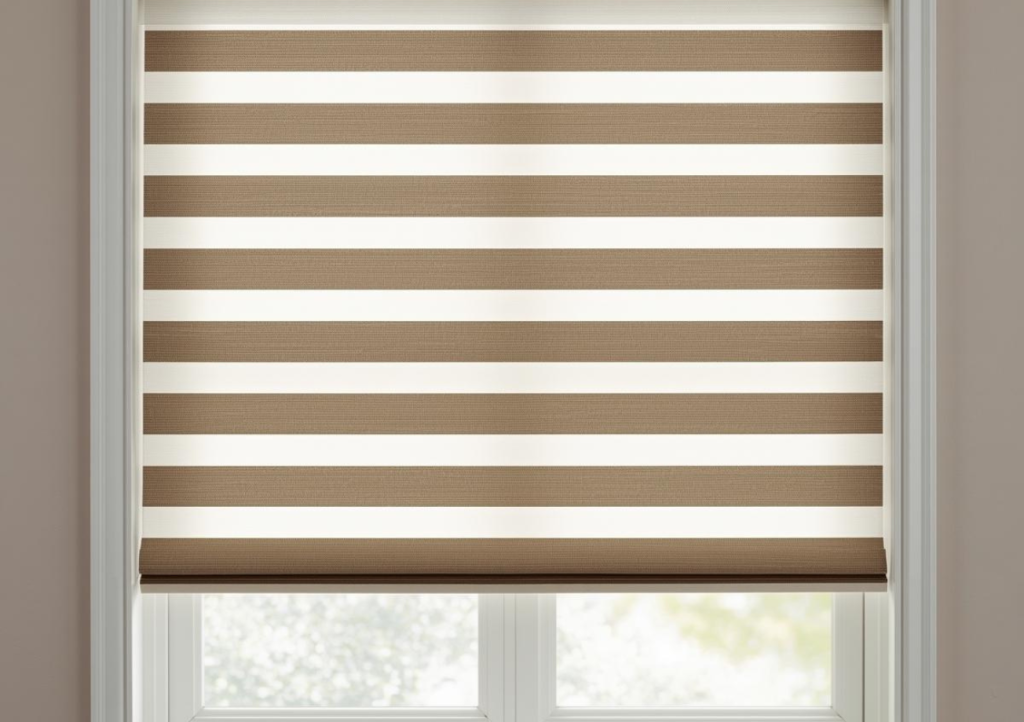
Zebra shades, also called dual shades or layered shades, feature two layers of fabric with alternating solid and sheer horizontal stripes that roll on a single mechanism. By adjusting the fabric alignment, you can shift between privacy with the solid bands aligned, filtered light with the sheer bands aligned, or complete openness when fully raised. This innovative design provides exceptional versatility for controlling natural light and privacy throughout the day. They’ve become increasingly popular among Long Island homeowners who want contemporary style with practical light management for our region’s intense sun exposure and varying privacy needs.
How Zebra Shades Work: The Mechanics Behind Dual Shades
The ingenious design of zebra shades consists of two layers of fabric that contain alternating transparent and opaque horizontal bands. As you adjust the shade using a continuous cord loop, chain control, or motorized system, these two fabric layers move independently, allowing the stripes to align in different configurations.
When the solid bands align perfectly, you achieve maximum privacy and light blocking—ideal for Nassau County homes with close neighbors or street-facing windows in communities like Garden City and Great Neck. When you shift the fabric so the sheer bands align, filtered natural light flows through while maintaining daytime privacy. This configuration works beautifully for Suffolk County waterfront properties in Huntington or Cold Spring Harbor where you want to enjoy views while controlling the intense afternoon sun.
The “zebra” name comes from the striped appearance created by these alternating bands, which typically range from two to three inches wide. Unlike traditional roller shades that offer only up-or-down positions, zebra shades provide three distinct light control options: open view, light filtering, and privacy—all from a single, streamlined window treatment.
Key Benefits of Zebra Shades for Long Island Homes
Superior Light Control Without Sacrificing Views
Long Island’s extended summer daylight hours—with sunrise before 5:30 AM—create unique light management challenges. Zebra shades excel in these conditions because you can quickly transition from room-darkening privacy for sleeping to light-filtering mode for daytime activities, all without completely covering your windows. This makes them exceptional for bedrooms in Massapequa or Syosset where early morning sun can disrupt sleep, yet you want natural light during the day.
Contemporary Aesthetic with Clean Lines
The streamlined profile and modern appearance of zebra shades complement both traditional Long Island colonials and contemporary waterfront properties throughout the Hamptons. Unlike horizontal blinds with multiple slats, zebra shades present an uncluttered, sophisticated look that works beautifully in open-concept layouts common in newer construction. When fully raised, they roll into a compact headrail that virtually disappears, preserving your architectural details and water views.
Energy Efficiency for Long Island’s Climate Extremes
The dual-layer fabric construction provides an additional insulating barrier against heat gain during our humid summers and heat loss during cold Long Island winters. When closed with solid bands aligned, zebra shades create an air pocket that helps reduce cooling costs in communities like Commack and Hauppauge, where temperatures regularly exceed 85°F in July and August. This energy efficiency matters significantly given our region’s high utility costs.
UV Protection for Your Interior Investment
Long Island’s southern exposure and reflection off surrounding water creates particularly damaging UV conditions. The opaque bands in zebra shades block harmful ultraviolet rays that fade hardwood floors, upholstery, and artwork. This protection proves especially valuable in South Shore communities like Babylon and Bay Shore, or North Fork homes in Greenport and Southold where water reflection intensifies sun exposure.
Ideal Applications for Zebra Shades Throughout Your Home
Living Rooms and Great Rooms
For the large picture windows common in Long Island ranch homes or the expansive glass in waterfront properties, zebra shades provide flexible light control throughout the day. You can enjoy filtered natural light during daytime entertaining while quickly adjusting to privacy mode for evening gatherings. The clean aesthetic works particularly well in Manhasset and Roslyn homes where contemporary design meets classic architecture.
Bedrooms Requiring Darkness and Privacy
Zebra shades offer room-darkening capabilities when the solid bands align, making them excellent for bedrooms in communities like Port Washington and Rockville Centre where streetlights or neighboring homes create privacy concerns. However, unlike blackout cellular shades, they provide the versatility to transition to light-filtering mode when you want natural morning light.
Home Offices and Media Rooms
The ability to reduce glare on computer screens and television displays while maintaining some natural light makes zebra shades ideal for home offices throughout Jericho and Plainview. You can fine-tune the light level to eliminate screen glare without creating a completely dark environment that requires artificial lighting.
Kitchens and Dining Areas
While zebra shades work in kitchens, consider moisture levels and proximity to sinks or cooking areas. For Nassau County homes in Oyster Bay or Glen Cove, mounting zebra shades on windows away from direct water exposure works well. For windows directly above sinks or in high-humidity areas, moisture-resistant alternatives like faux wood blinds might serve better.
Material and Fabric Considerations
Zebra shades come in various fabric options, from light-filtering to room-darkening materials. For Long Island’s intense summer sun, particularly in south and west-facing rooms, choose fabrics with higher opacity ratings in the solid bands. Solar reflective options help deflect heat while maintaining your view during light-filtering mode.
The fabric weight and weave quality affect durability and light control performance. Higher-quality fabrics maintain their shape and alignment better over time—important for salt air environments in coastal communities from Southampton to Montauk where humidity and airborne salt can affect lesser materials.
Color Selection for Long Island Interiors
Lighter colors reflect heat and work beautifully in beach houses throughout East Hampton and Sag Harbor, complementing coastal color palettes while providing practical solar heat rejection. Darker fabrics absorb more heat but offer superior light blocking and create dramatic contemporary statements in modern Bridgehampton or Locust Valley homes.
Consider how colors appear in both open and closed positions. A cream shade with gray stripes creates subtle pattern when light-filtering but appears more neutral when privacy bands align. Bold contrast stripes make a stronger design statement that remains visible in all positions.
Motorization Options for Zebra Shades
Motorized zebra shades offer exceptional convenience for Long Island homeowners with hard-to-reach windows, skylights, or multiple windows requiring coordinated control. Smart home integration through systems like Alexa, Google Home, or sophisticated Control4 platforms allows you to program shades to adjust automatically based on time of day or sun position.
For waterfront properties in Islip or Sayville with expansive glass, motorization eliminates the need to manually adjust multiple shades throughout the day. Programming them to close during peak afternoon sun hours protects interiors while reducing cooling costs. Battery-powered motorization options eliminate the need for electrical work during installation—ideal for historic North Shore estates in Old Westbury where preserving original architecture matters.
Maintenance and Cleaning for Longevity
Zebra shades require minimal maintenance compared to horizontal blinds with multiple slats that collect dust. Regular light dusting or vacuuming with a brush attachment keeps fabric fresh. For deeper cleaning, spot-treat stains with mild soap and water, testing an inconspicuous area first.
In coastal communities from Patchogue to Montauk where salt air affects window treatments, wipe down mounting hardware and mechanisms quarterly with a slightly damp cloth to prevent salt buildup that could impede smooth operation. This simple maintenance extends the life of your shades significantly in waterfront environments.
Comparing Zebra Shades to Other Window Treatment Options
Zebra Shades vs. Traditional Roller Shades
While both roll on similar mechanisms, traditional roller shades offer only up-or-down positioning—you either have light or you don’t. Zebra shades provide the intermediate light-filtering option that makes them more versatile for varied Long Island lighting conditions throughout the day. However, roller shades in true blackout fabrics provide more complete darkness for bedrooms requiring total light blocking.
Zebra Shades vs. Horizontal Blinds
Horizontal blinds allow infinite tilt adjustment of individual slats, providing excellent directional light control. However, they collect more dust, require more maintenance, and present a busier visual appearance. Zebra shades offer a sleeker, more contemporary aesthetic with simpler operation, though with less precise control over light direction. For humid Long Island bathrooms and coastal homes, faux wood blinds resist moisture better than fabric zebra shades.
Zebra Shades vs. Cellular Shades
Cellular (honeycomb) shades provide superior insulation due to their air-pocket construction, making them the energy efficiency champion for Long Island’s temperature extremes. However, they typically function as either up or down, with some models offering top-down/bottom-up capability. Zebra shades sacrifice some insulating value for greater light control versatility and a more contemporary appearance.
Professional Installation Considerations
While zebra shades appear straightforward, professional installation ensures proper operation and longevity. Accurate measurements determine whether inside or outside mounting works best for your window frames—critical for the varied window styles found in Long Island homes from historic colonials to modern new construction.
Inside mounting provides a clean, built-in appearance that works beautifully when you have adequate window depth and want to showcase decorative trim. Outside mounting covers the entire window frame, providing better light blocking around edges and working well for windows with shallow depth or when you want to make windows appear larger.
For waterfront homes from Bay Shore to Southampton, professional installers ensure mounting hardware can withstand humid, salt-air conditions, selecting appropriate anchors and brackets for your specific wall construction.
Transform Your Long Island Home with Zebra Shades
Zebra shades represent the perfect intersection of contemporary style, practical functionality, and versatile light control for modern Long Island living. Whether you’re managing intense summer sun in a Suffolk County ranch, seeking privacy in a Nassau County colonial with close neighbors, or adding sophisticated window treatments to your Hamptons beach house, zebra shades adapt to your changing needs throughout the day and seasons.
Ready to explore how zebra shades can enhance your Long Island home’s comfort, style, and energy efficiency? Contact Long Island Custom Blinds today for a complimentary in-home consultation. We’ll help you select the perfect fabric, color, and control options for your specific windows and lifestyle, with professional installation throughout Nassau County, Suffolk County, and all Long Island communities. Visit https://longislandcustomblinds.com or call us to schedule your free design consultation and discover the versatility of zebra shades for your home.