
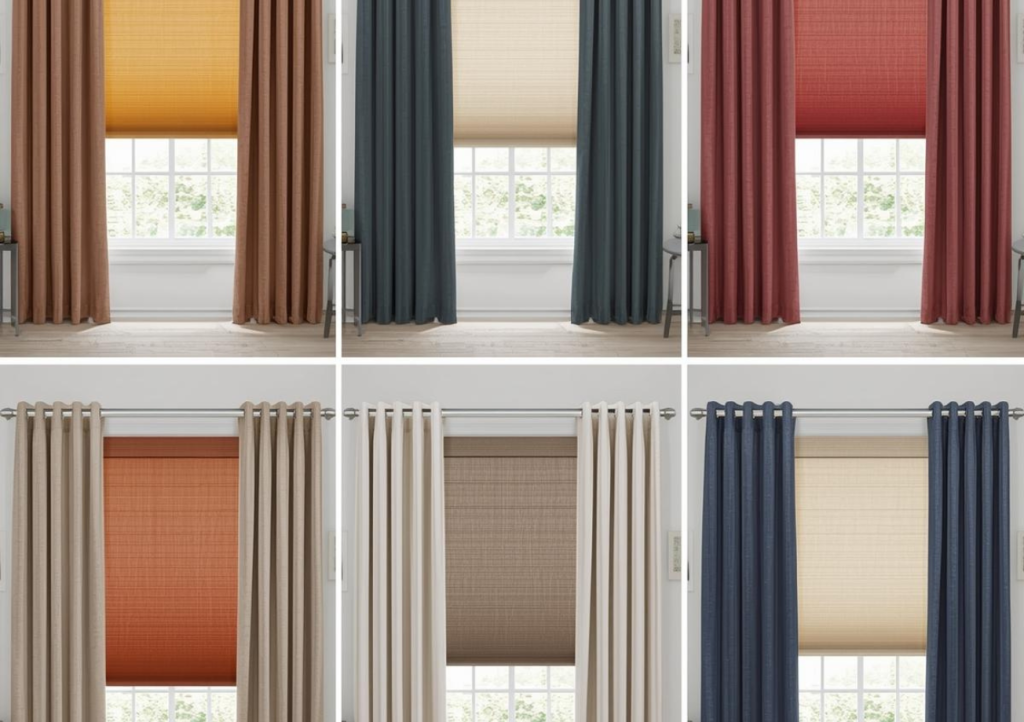
Choosing the right color for your window treatments depends on your wall colors, existing furniture, flooring, and the amount of natural light in each room. Lighter colored treatments reflect heat and sunlight while making spaces feel brighter and more spacious—ideal for Long Island homes dealing with intense summer sun. Darker treatments absorb heat and create dramatic focal points but work best in rooms with ample natural light or where you want a cozier atmosphere. The most versatile approach is coordinating with your room’s largest visual elements while considering both aesthetic goals and practical needs like UV protection and energy efficiency.
Understanding Color Psychology and Functionality
Color selection for window treatments goes far beyond simple aesthetics—it directly impacts how your Long Island home looks and feels throughout the day and across seasons. Light-colored treatments in whites, creams, beiges, and soft grays create an airy, open feeling while reflecting the intense summer sunlight that streams through south and west-facing windows in Nassau and Suffolk County homes. This reflective quality helps reduce heat gain during those sweltering July and August days, potentially lowering your air conditioning costs.
Conversely, darker window treatments in charcoals, rich browns, deep blues, or black create sophisticated focal points and provide superior light control—perfect for bedrooms in Hamptons beach houses or Manhasset colonials where early summer sunrises before 5:30 AM can disrupt sleep. However, darker fabrics absorb more heat, which can be problematic on sun-drenched windows unless you choose cellular shades or other insulating options that trap heat within their structure rather than transferring it into your room.
Coordinating With Your Existing Design Elements
Wall Colors as Your Foundation
Your wall color should serve as the primary reference point when selecting window treatment colors. For a cohesive, seamless look that makes rooms feel larger, choose treatments within two shades of your wall color—slightly lighter or slightly darker. This approach works beautifully in open-concept ranch homes throughout Commack and Smithtown where visual flow between spaces matters.
For contrast and drama, select window treatments that complement rather than match your walls. If you have gray walls, consider crisp white treatments for a modern look or warm taupe for traditional elegance. In Garden City colonials with classic white or cream walls, you have maximum flexibility to introduce color through your window treatments—navy for sophistication, sage green for tranquility, or warm neutrals for timeless appeal.
Flooring and Furniture Considerations
Your largest furniture pieces and flooring create visual weight in a room that your window treatments should acknowledge. If you have dark hardwood floors common in North Shore estates or rich leather furniture, lighter window treatments prevent the space from feeling too heavy. Conversely, if your Port Washington home features light oak or blonde hardwood floors with pale upholstery, you can introduce depth through medium to darker window treatments.
In waterfront homes from Oyster Bay to Montauk where natural materials and coastal palettes dominate, consider how window treatment colors interact with weathered wood, wicker, and nautical blues. Faux wood blinds in driftwood gray or sand tones coordinate beautifully while offering the moisture resistance essential for Long Island’s humid summers and salt air exposure.
Room-by-Room Color Strategy
Living Rooms and Great Rooms
These high-traffic spaces benefit from neutral window treatments that won’t clash with changing décor. White, cream, greige (gray-beige blend), and soft taupe work in virtually any design scheme and provide a sophisticated backdrop in formal living rooms throughout Great Neck and Roslyn. For homes with bold accent walls or colorful furniture, neutral treatments prevent visual competition while still providing necessary UV protection for your investment pieces.
Bedrooms and Private Spaces
Bedrooms offer more opportunity for personal color expression. Consider calming blues and greens for master suites in Huntington or Northport, warm grays for contemporary bedrooms in Syosset, or classic whites with blackout linings for children’s rooms anywhere on Long Island dealing with those early summer sunrises. Remember that color affects room temperature perception—cooler tones (blues, greens, grays) feel refreshing in south-facing bedrooms that get intense afternoon sun, while warmer tones (beiges, taupes, warm whites) add coziness to north-facing spaces.
Kitchens and Bathrooms
Moisture-prone spaces require faux wood blinds, vinyl blinds, or aluminum blinds in colors that hide wear while resisting humidity damage. White and light colors show water spots and splatter more readily, so consider medium tones in kitchens. In bathrooms, especially in beach communities like Bay Shore or the Hamptons where salt air accelerates deterioration, choose moisture-resistant materials in colors that complement your tile and fixtures while maintaining privacy.
Architectural Style Considerations
Your home’s architectural style should influence color choices. Traditional Long Island colonials and Cape Cods look stunning with classic white plantation shutters, wood blinds in warm stains, or tailored Roman shades in neutral palettes. Mid-century ranch homes throughout Jericho and Plainview suit the clean lines of white or gray cellular shades and contemporary roller shades. Waterfront contemporary homes with expansive glass can handle bolder color choices or maintain focus on water views with barely-there white solar shades.
Historic estates on Long Island’s Gold Coast require more formal treatments—custom draperies with coordinating wood blinds or shutters in traditional wood stains that honor the home’s heritage while providing modern functionality.
Practical Color Considerations for Long Island Homes
Light Level Management
Rooms with limited natural light benefit from light-reflecting white or cream treatments that maximize available daylight—particularly important in north-facing rooms or homes with close neighbors in densely populated areas like Massapequa or Rockville Centre. Sun-drenched rooms with southern or western exposures need treatments that manage glare and UV damage; light colors reflect heat while solar shade fabrics in any color provide protection through their specialized weave.
UV Protection and Fading
Long Island’s intense summer sun causes significant fading to window treatments themselves. Light colors show sun damage less noticeably than dark colors, which can fade to uneven lighter shades over time. If you love dark treatments, choose high-quality fabrics with UV-resistant finishes or consider cellular shades where the color is on the interior, protected cells rather than constantly sun-exposed surfaces.
Testing Colors Before Committing
Never select window treatment colors based solely on small swatches or online images. Request actual fabric samples or material samples from Long Island Custom Blinds and observe them in your space at different times of day. Morning light has cool blue tones, afternoon light skews warm and golden, and evening light changes everything. What looks perfect at noon might appear completely different at 7 AM or 6 PM.
View samples against your walls, next to your furniture, and on the actual windows where treatments will be installed. Colors look dramatically different when backlit by windows versus viewed in reflected room light. This testing process is especially important in open-concept homes where window treatments in adjacent spaces need to coordinate.
Creating Cohesion Throughout Your Home
While every room doesn’t need identical window treatments, maintaining color consistency creates visual flow and increases your home’s resale value. Consider establishing a palette of two to three coordinating neutral colors used throughout main living areas, with the freedom to introduce accent colors in private spaces. A common approach in Long Island homes: white or cream cellular shades in bedrooms for energy efficiency and light control, coordinating wood or faux wood blinds in living areas, and moisture-resistant faux wood in kitchens and baths—all in complementary tones.
For colonial and traditional homes in Old Westbury or Locust Valley, classic white or cream throughout creates timeless elegance. In contemporary homes, varying shades of gray from light to charcoal adds depth while maintaining modern simplicity.
When to Seek Professional Color Consultation
If you’re uncertain about color selection, struggling to coordinate multiple rooms, or investing in custom treatments for your entire home, professional guidance prevents costly mistakes. Long Island Custom Blinds offers complimentary in-home consultations where design experts bring extensive sample collections directly to your space, helping you visualize how different colors interact with your specific lighting, furnishings, and architectural features.
This service is particularly valuable when dealing with challenging spaces like great rooms with vaulted ceilings, waterfront homes where interior and exterior views must balance, or historic properties requiring sensitivity to period-appropriate design while incorporating modern functionality.
Transform Your Home With Perfectly Colored Window Treatments
The right window treatment color enhances your Long Island home’s beauty, improves comfort, and provides essential protection from our region’s intense sun and temperature extremes. Whether you’re updating a single room or coordinating treatments throughout your Nassau or Suffolk County home, professional guidance ensures choices you’ll love for years to come.
Contact Long Island Custom Blinds today for your free in-home color consultation. Our design experts serve all of Long Island including Nassau County, Suffolk County, the Hamptons, and North Fork communities with personalized service, premium products, and professional installation. Call us or visit https://longislandcustomblinds.com to schedule your appointment and discover the perfect colors for your custom blinds, shades, or shutters.